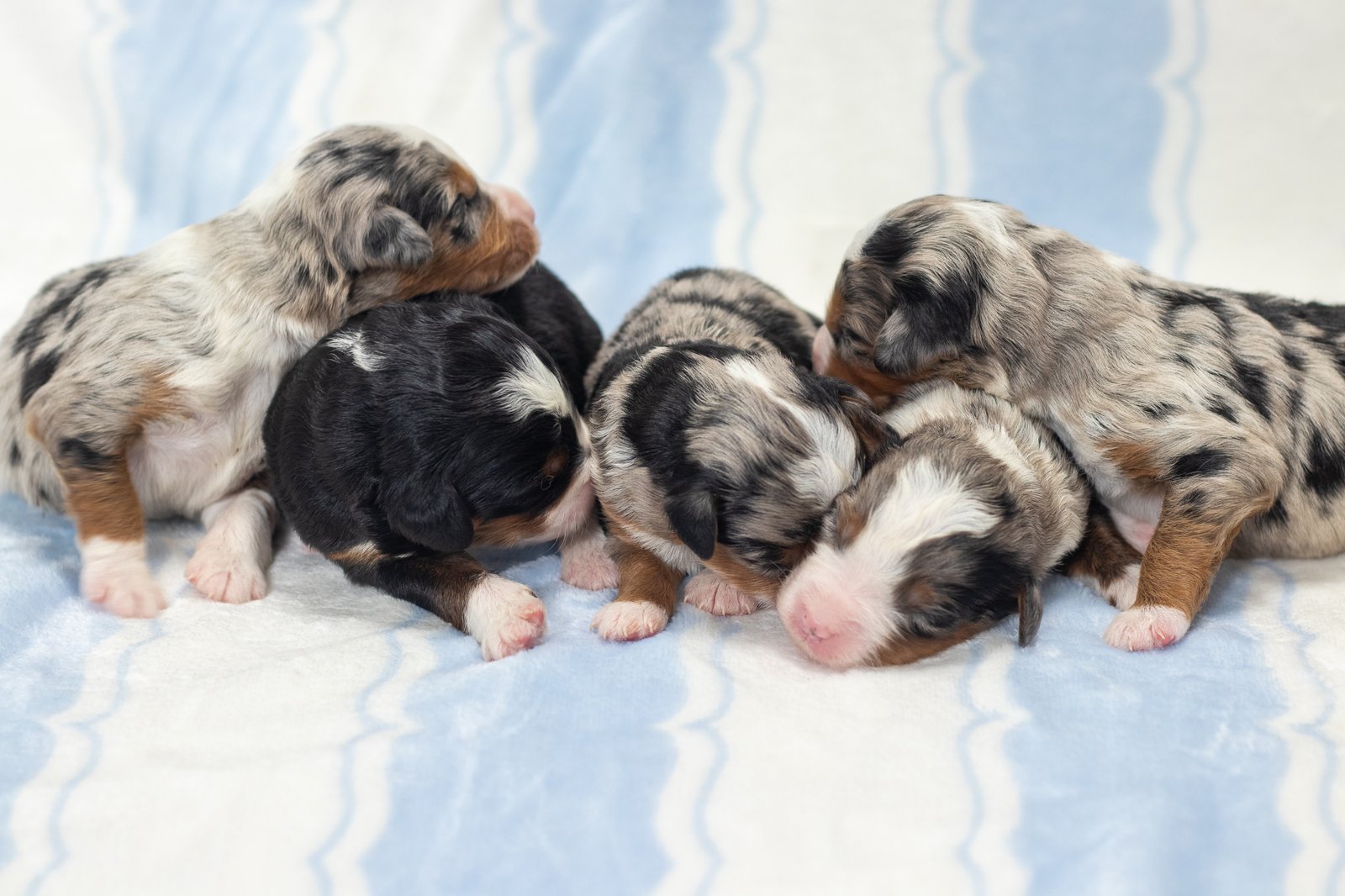
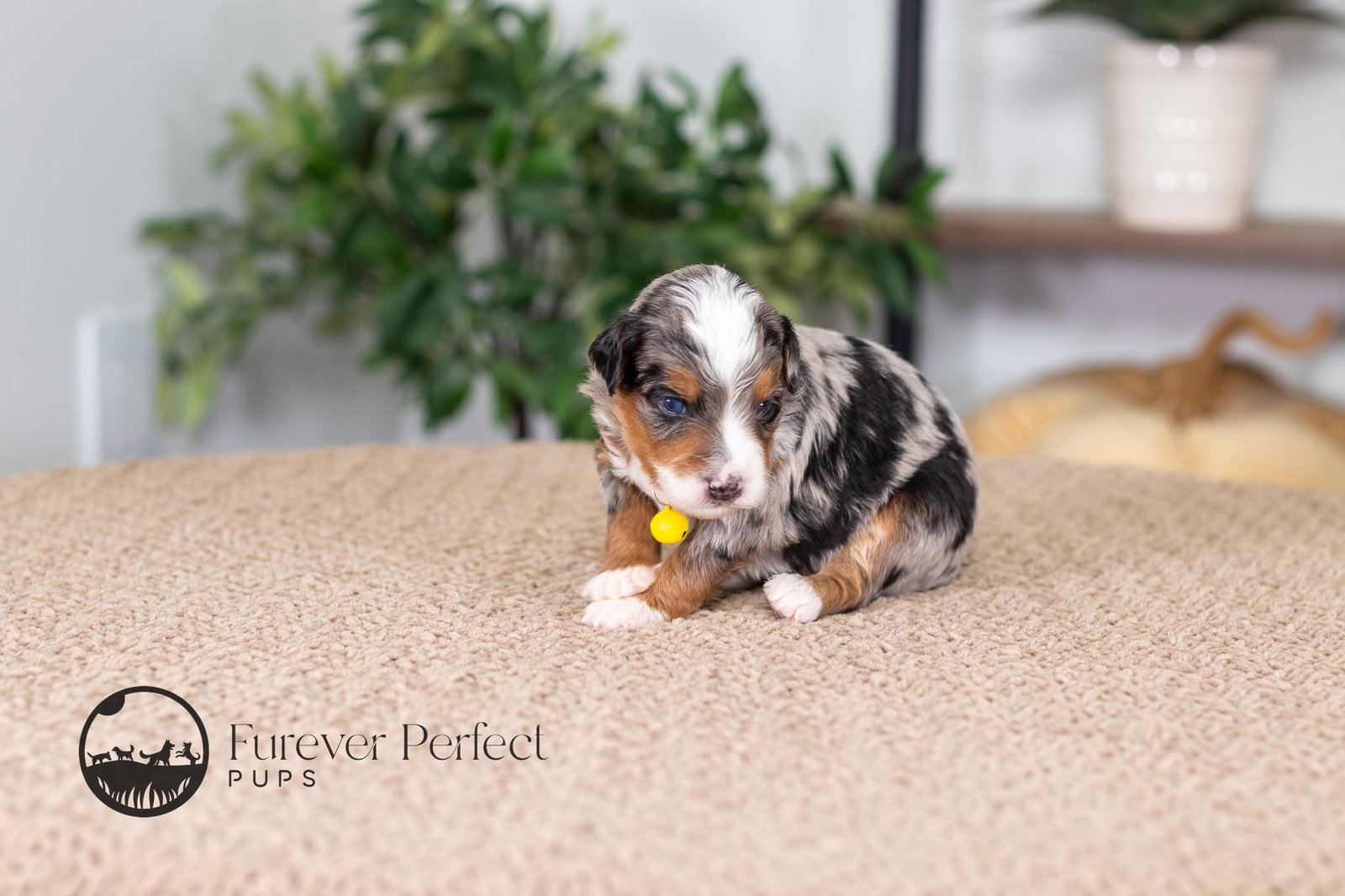
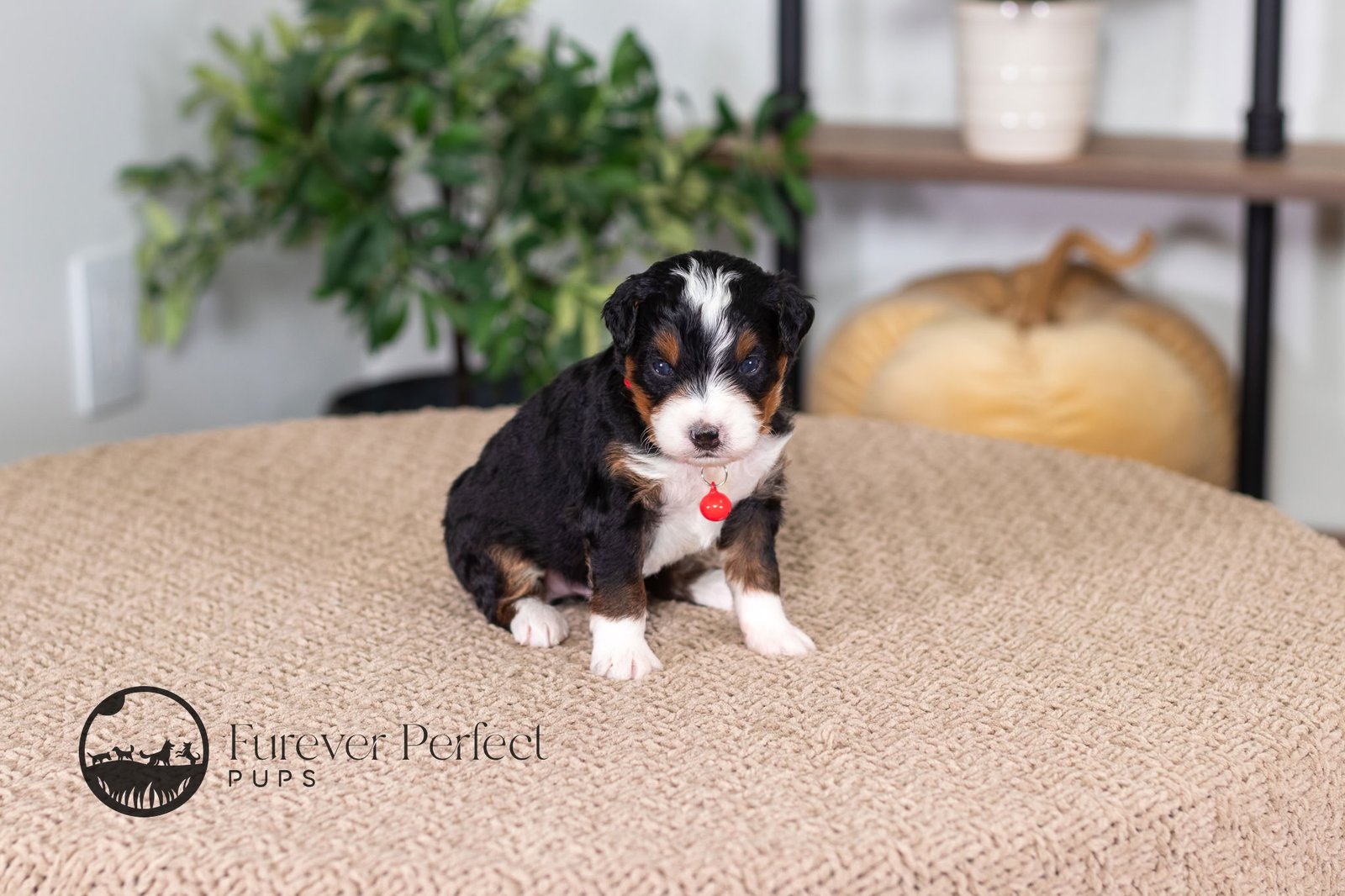
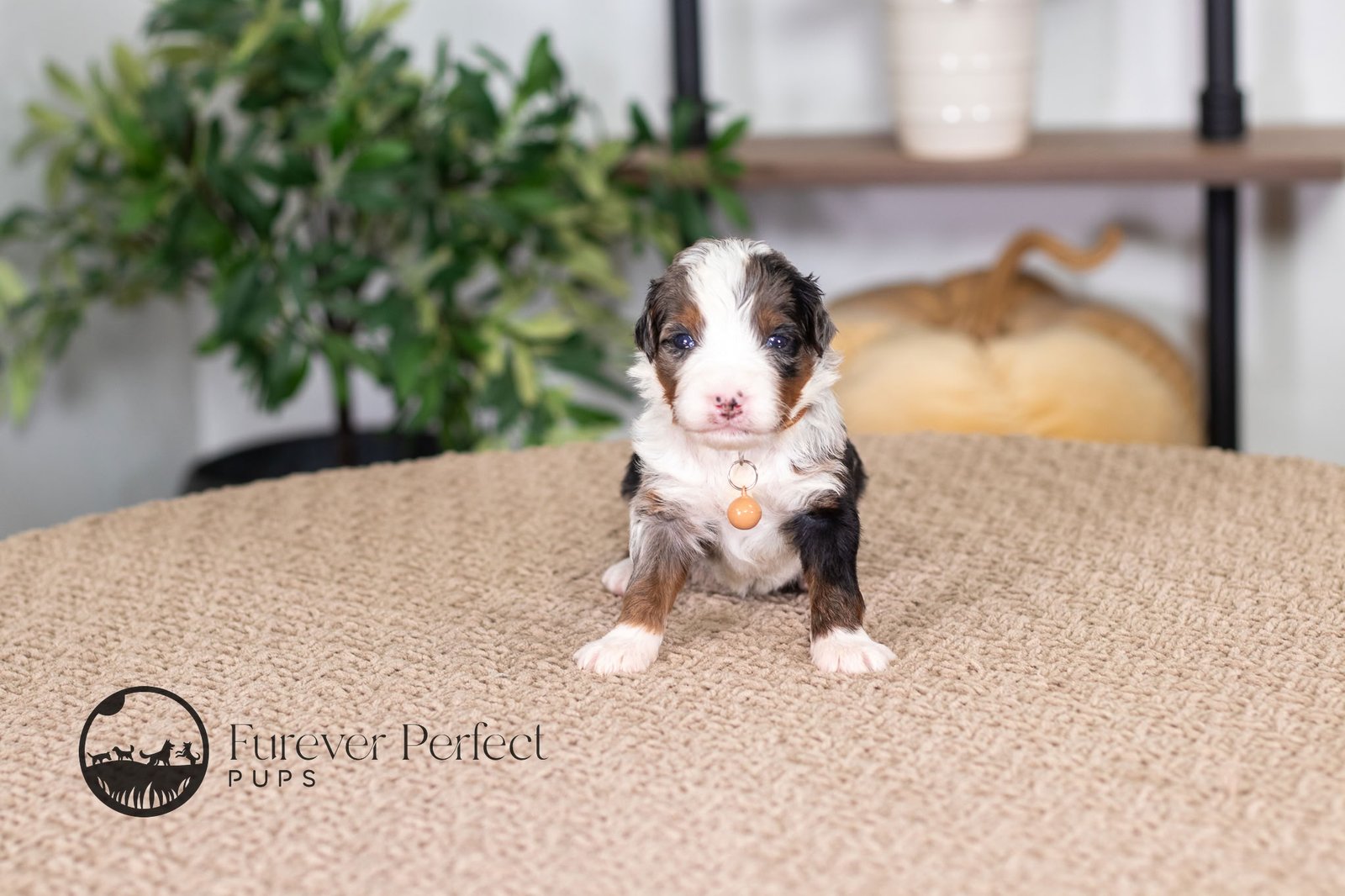
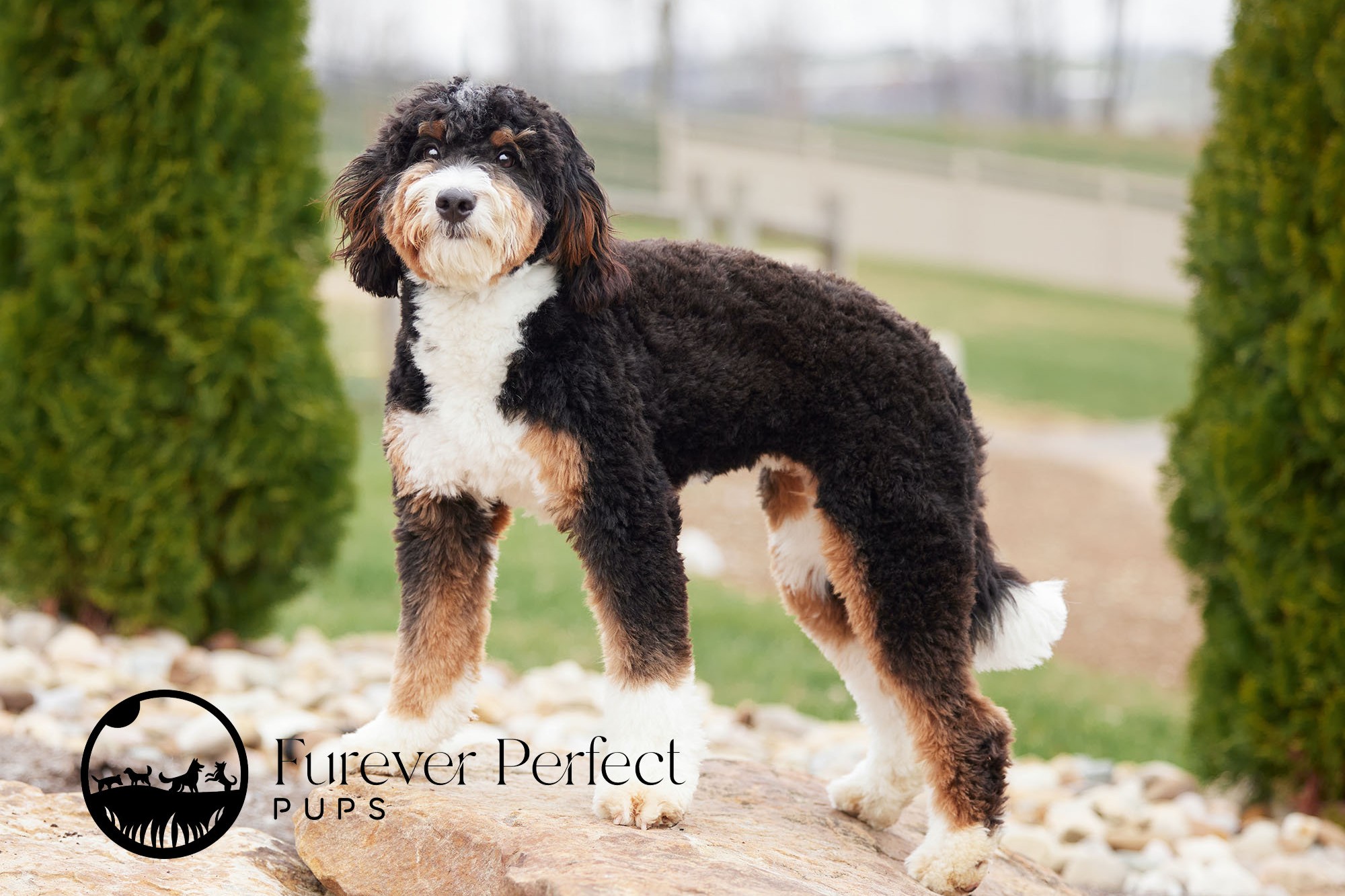
Bernedoodles Puppies

Bernedoodle Puppies For Sale

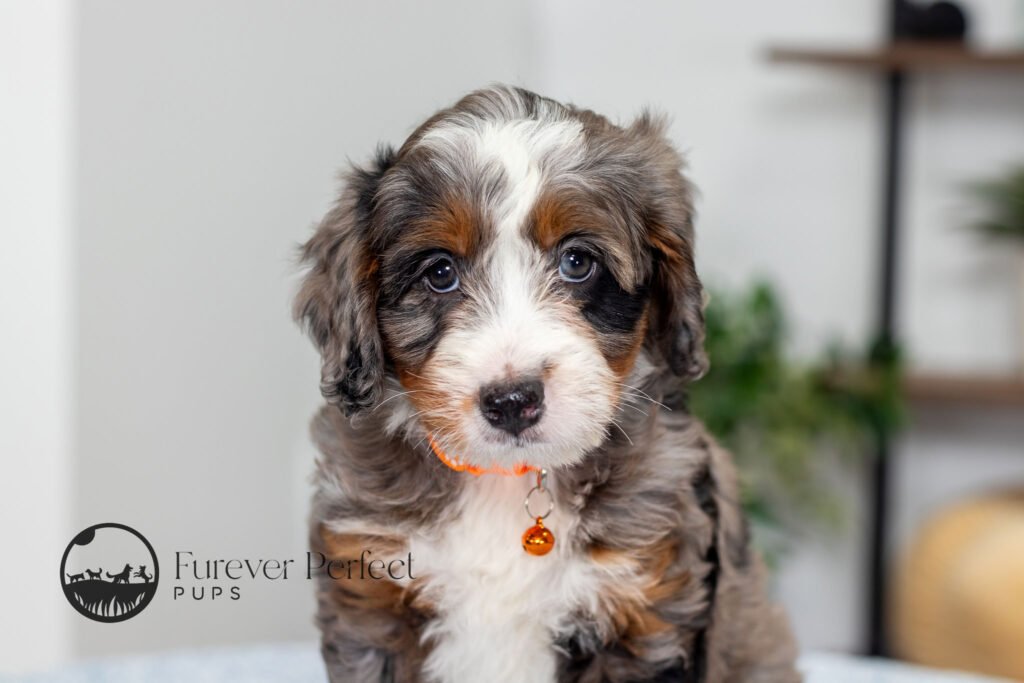
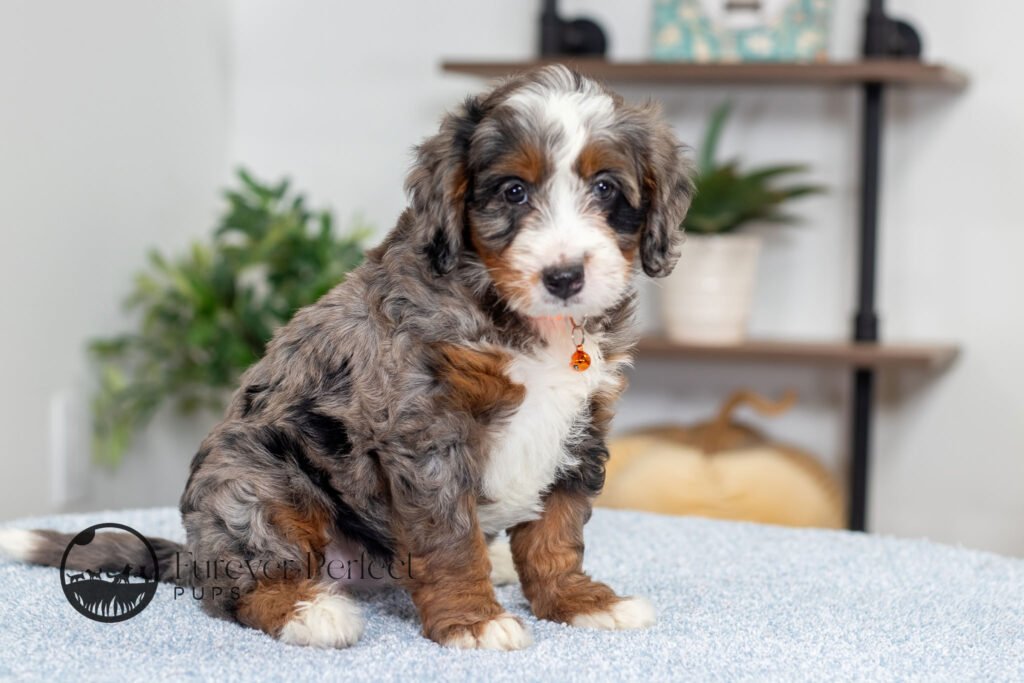
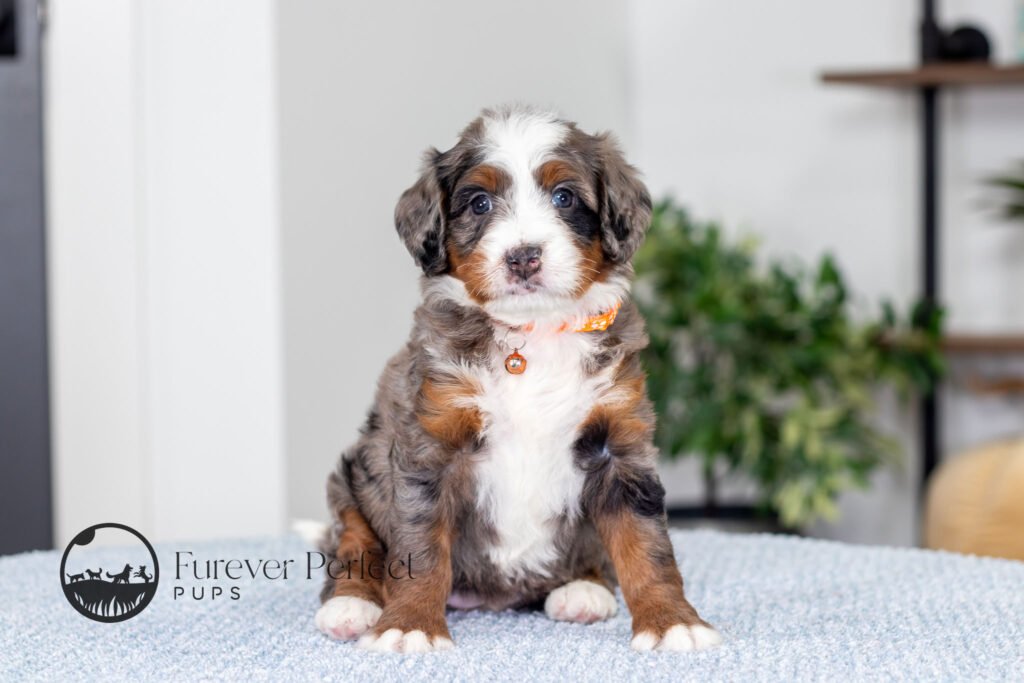
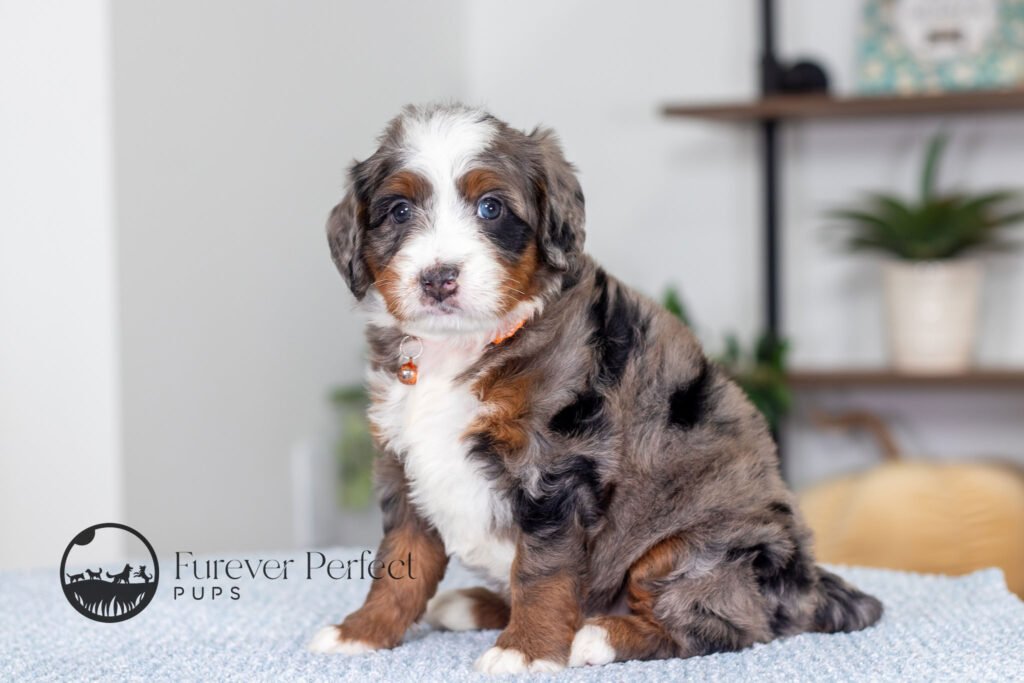
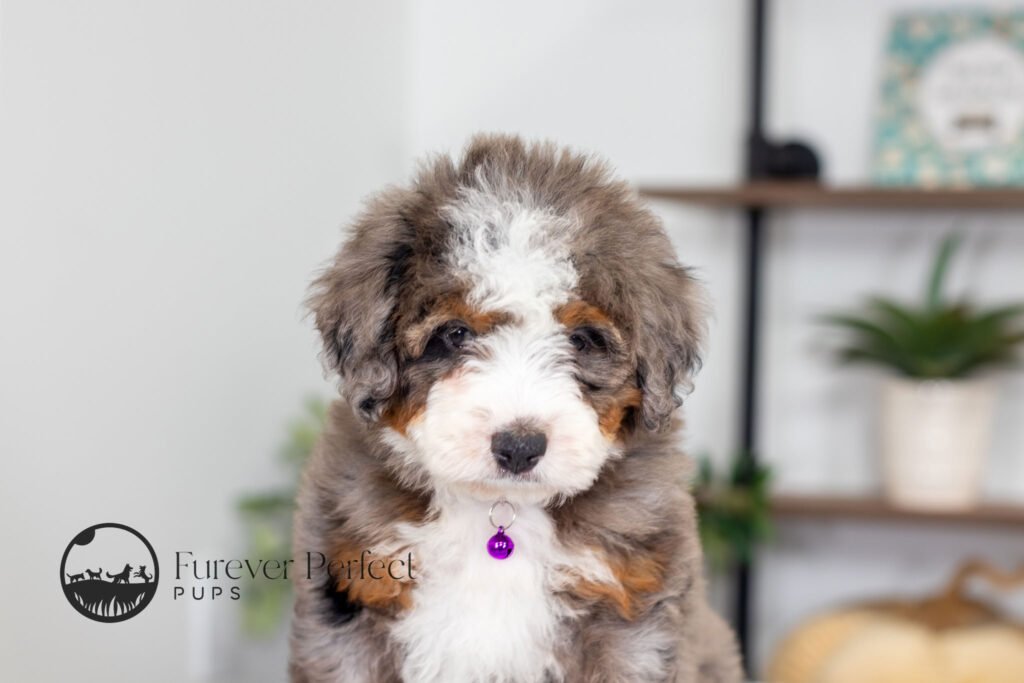
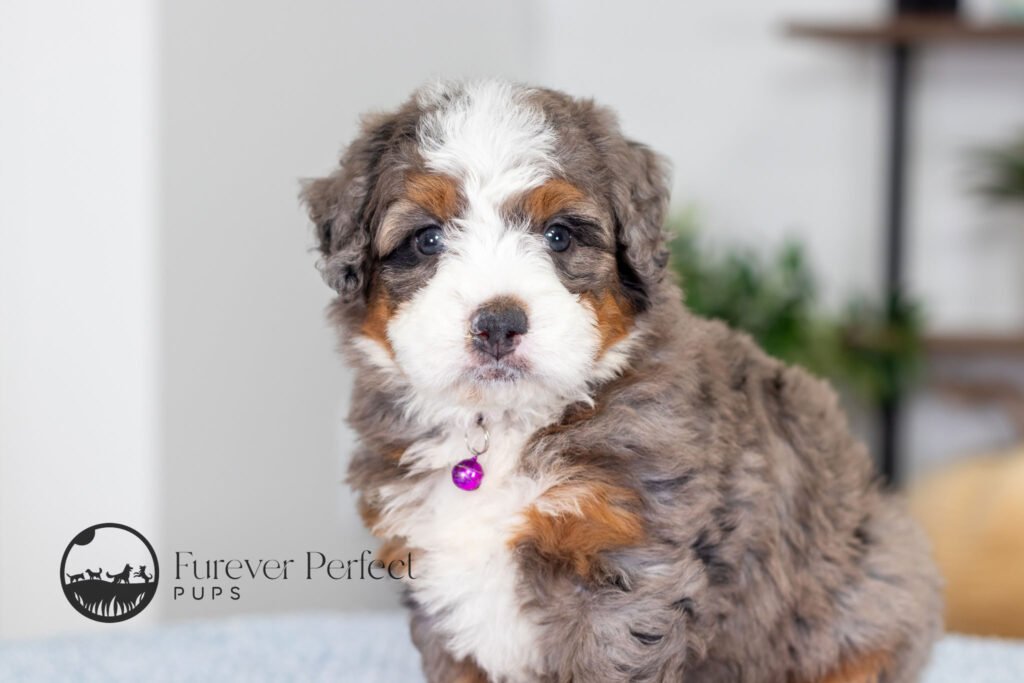
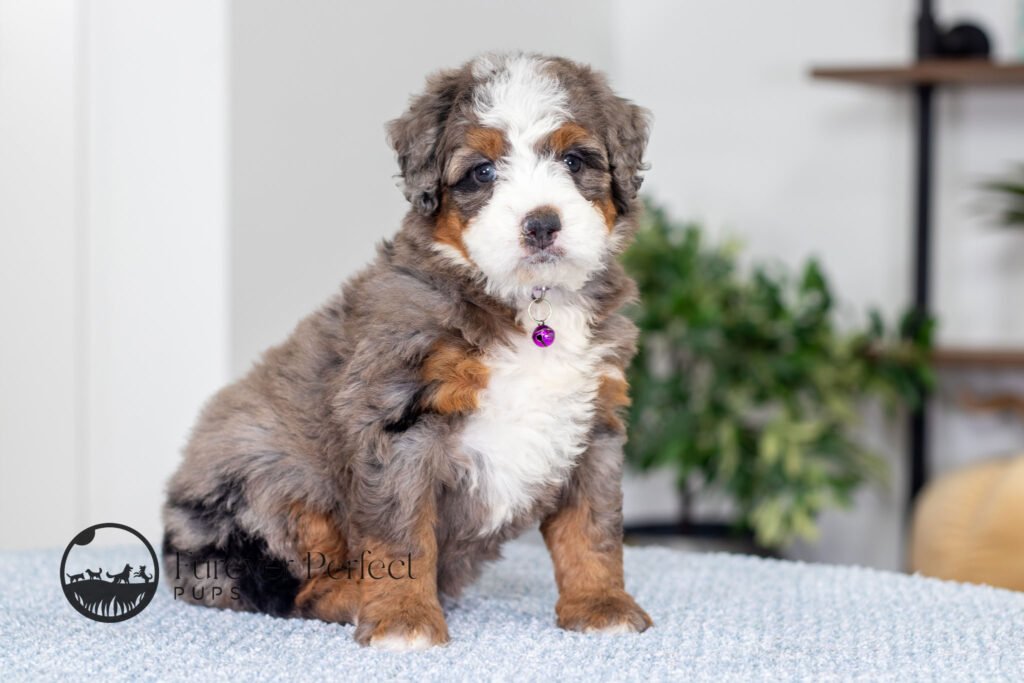
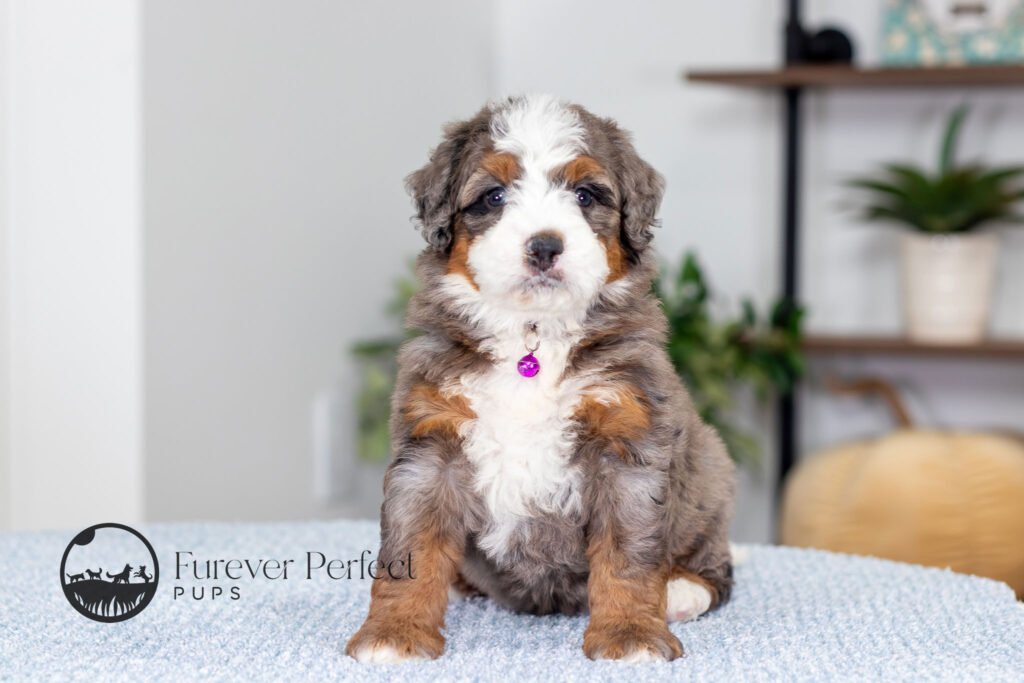
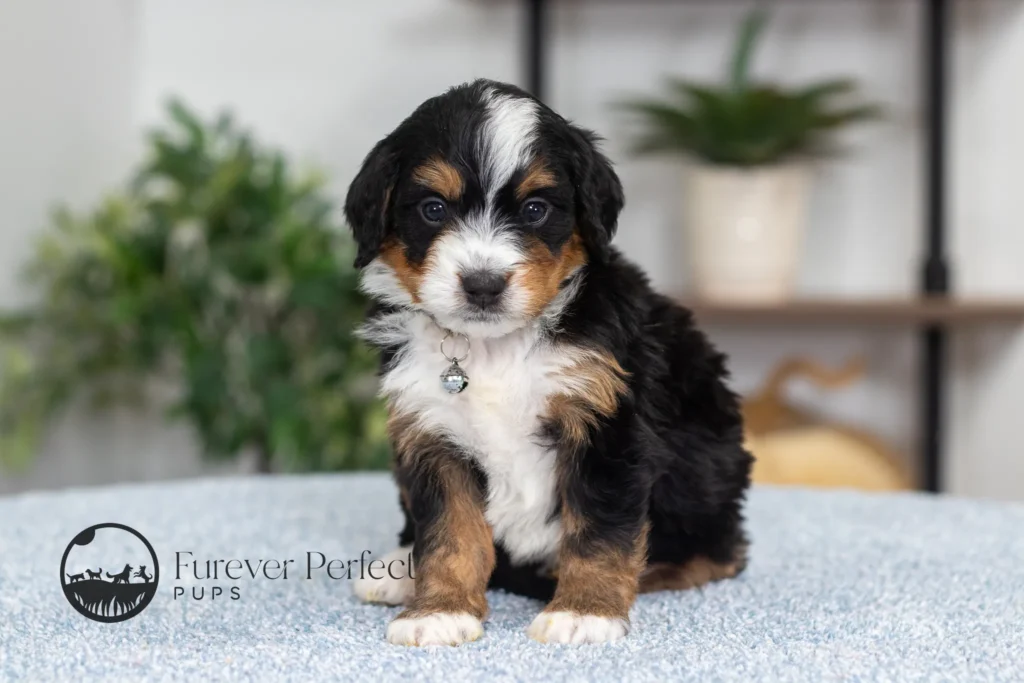
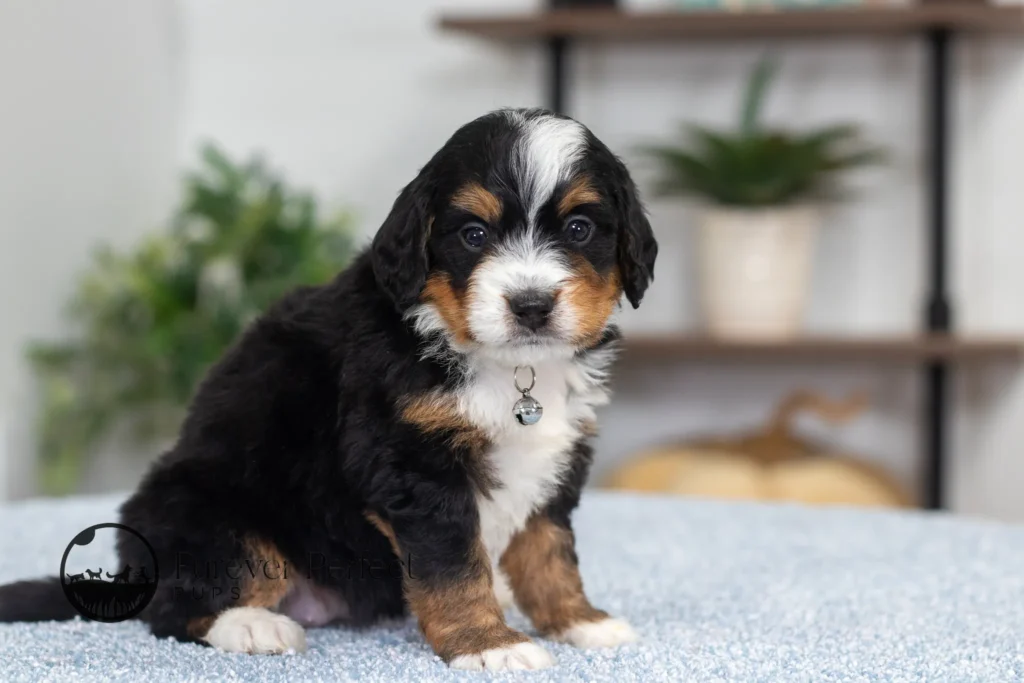
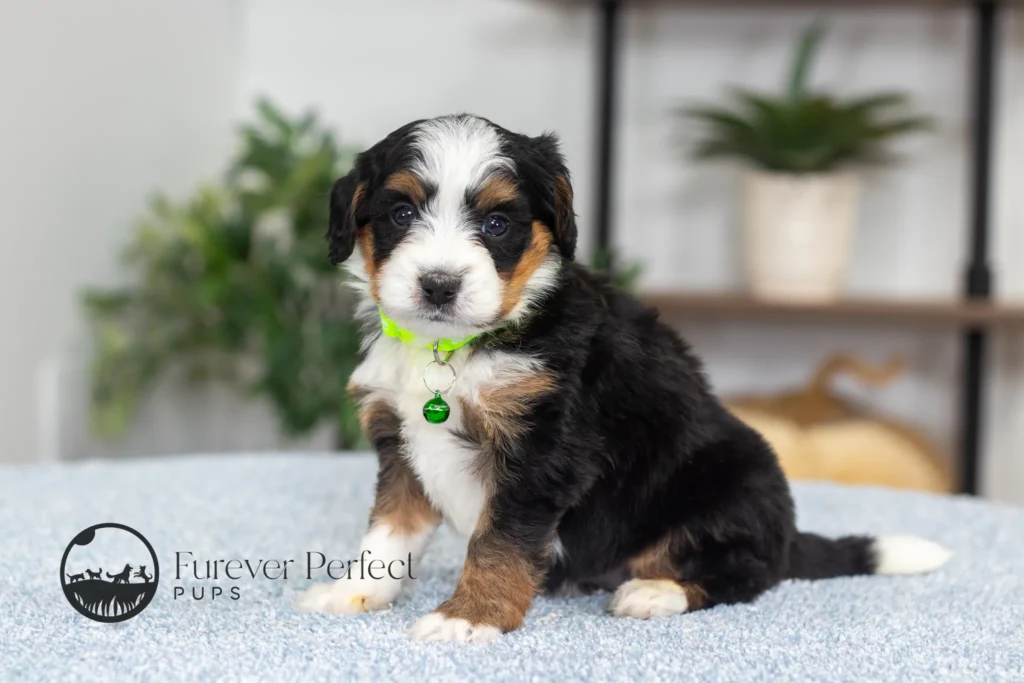
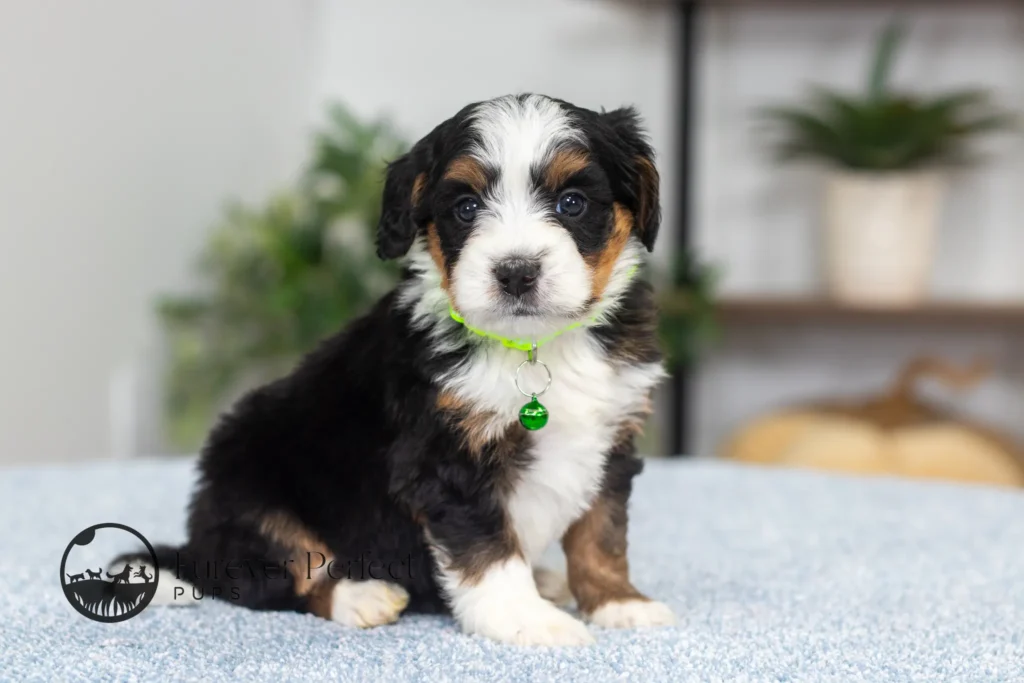
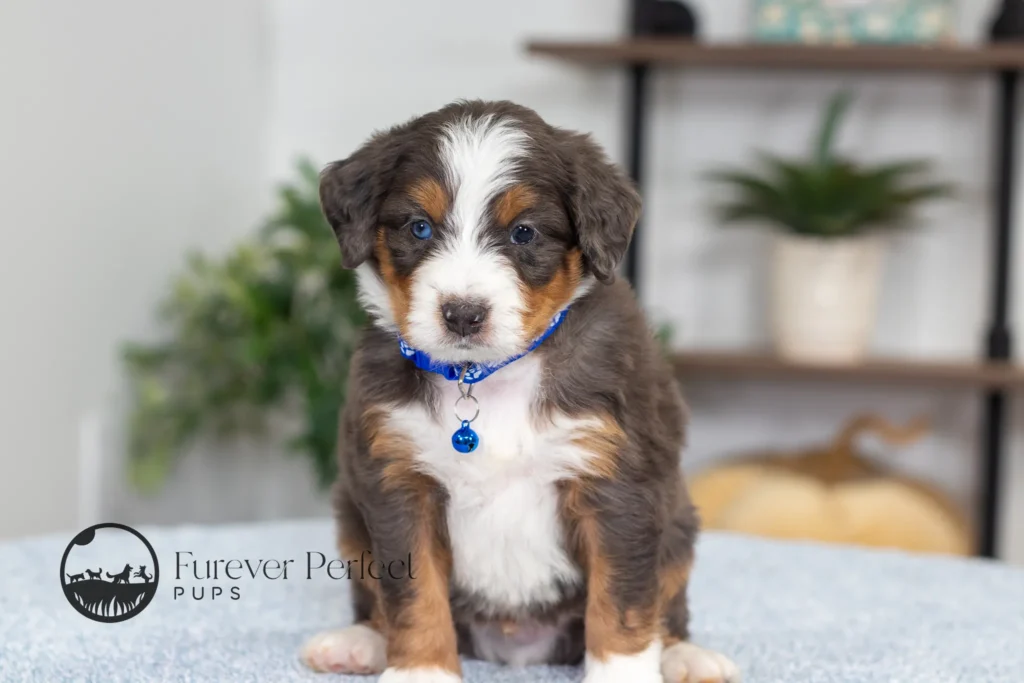
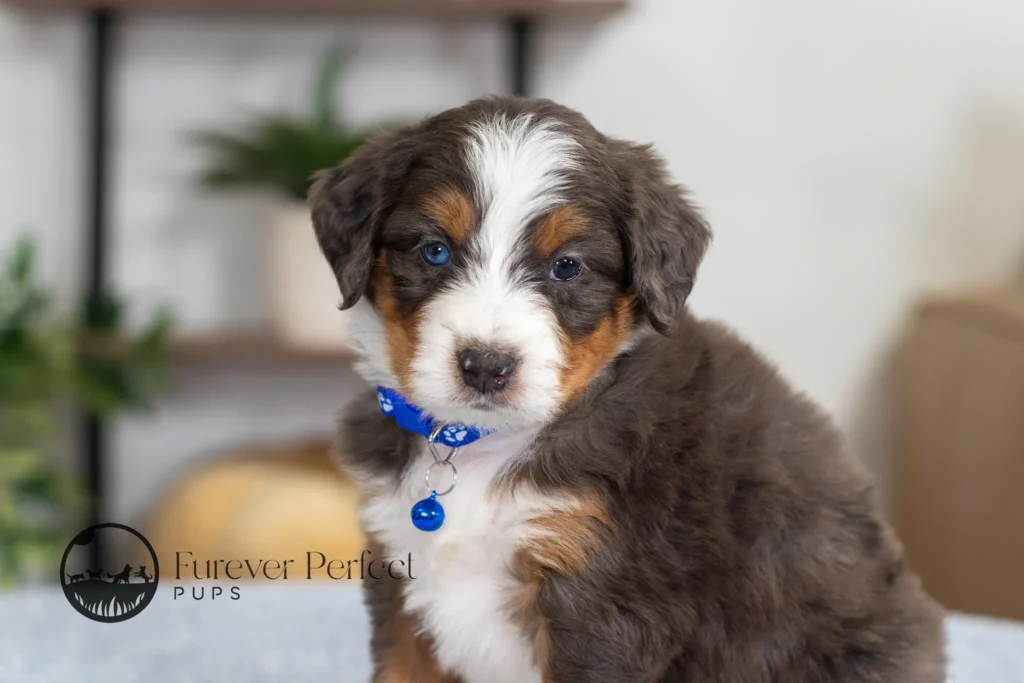
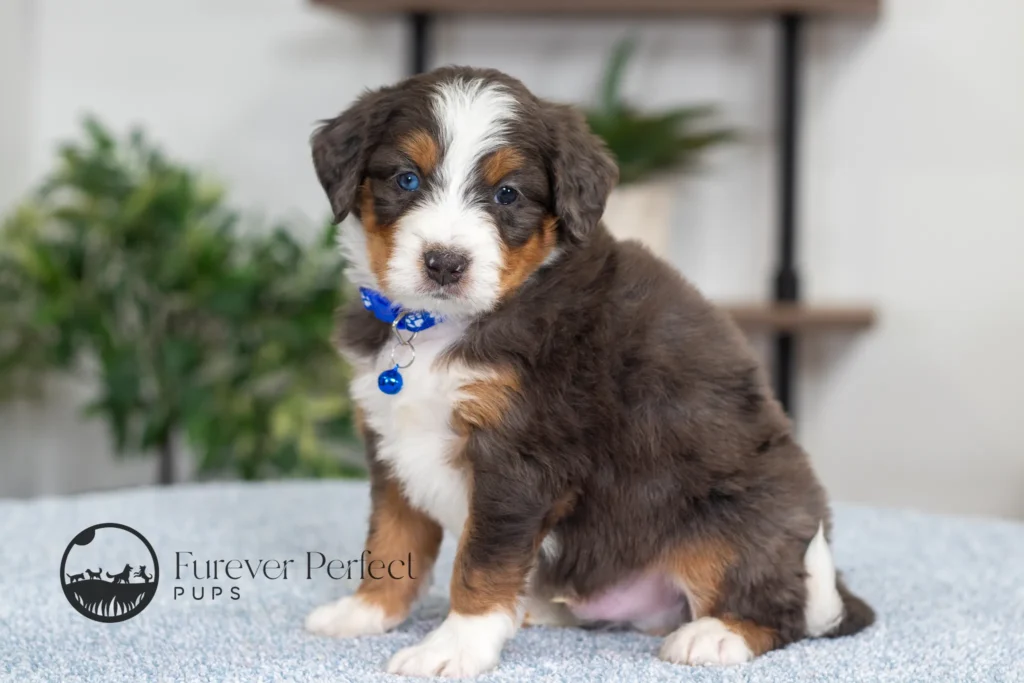
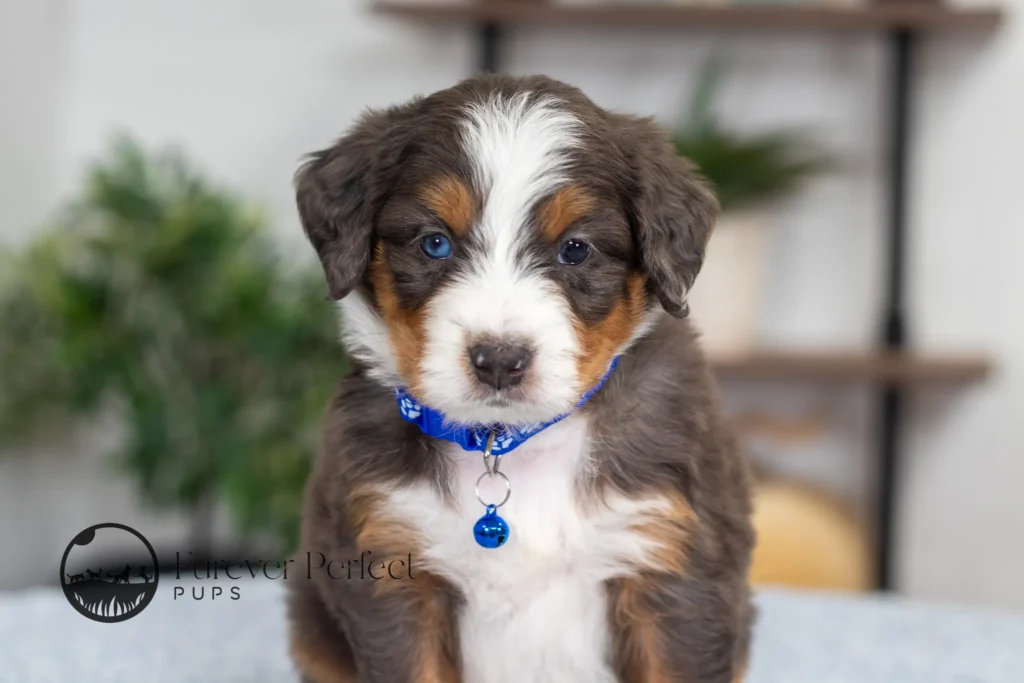
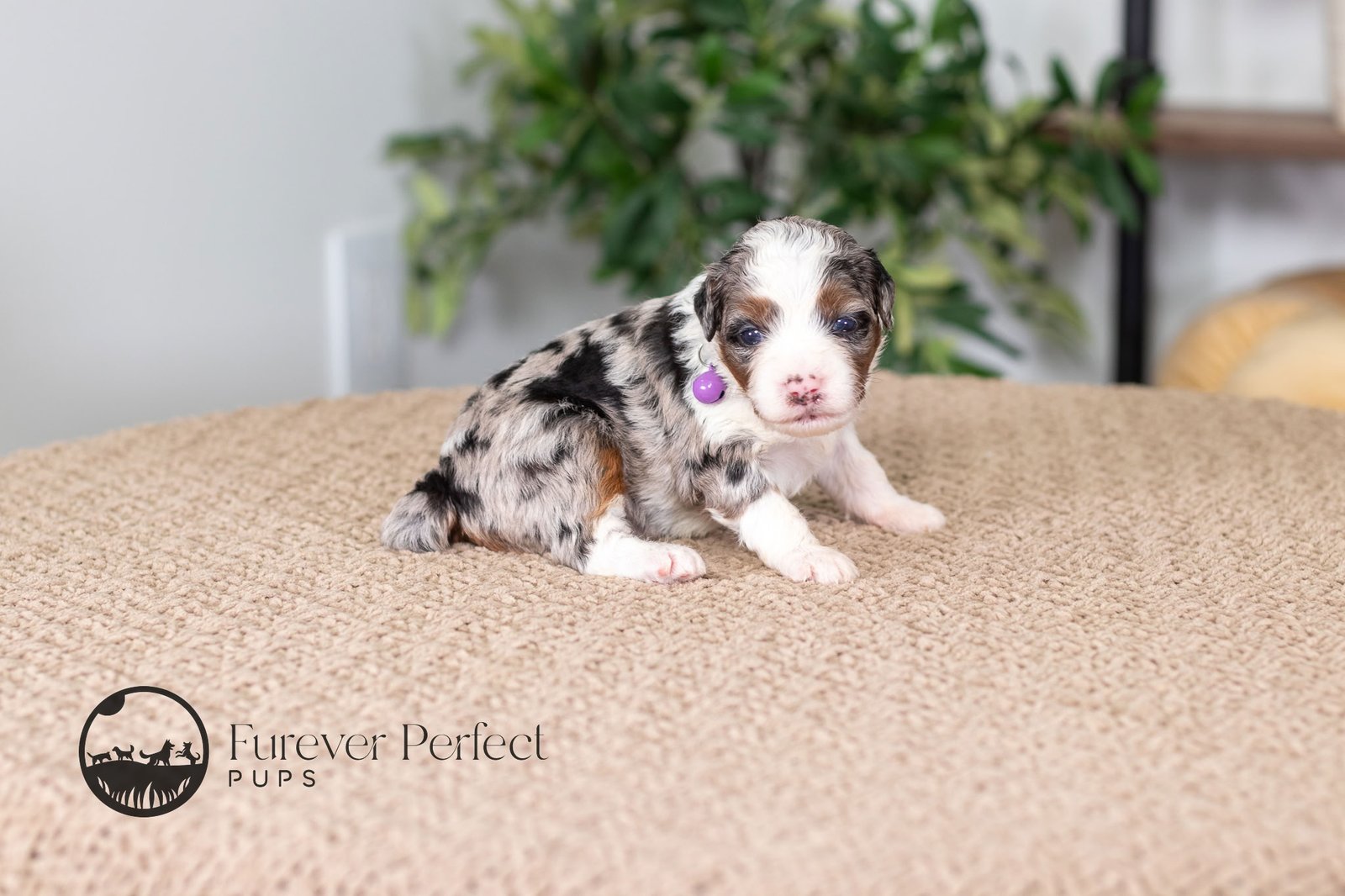
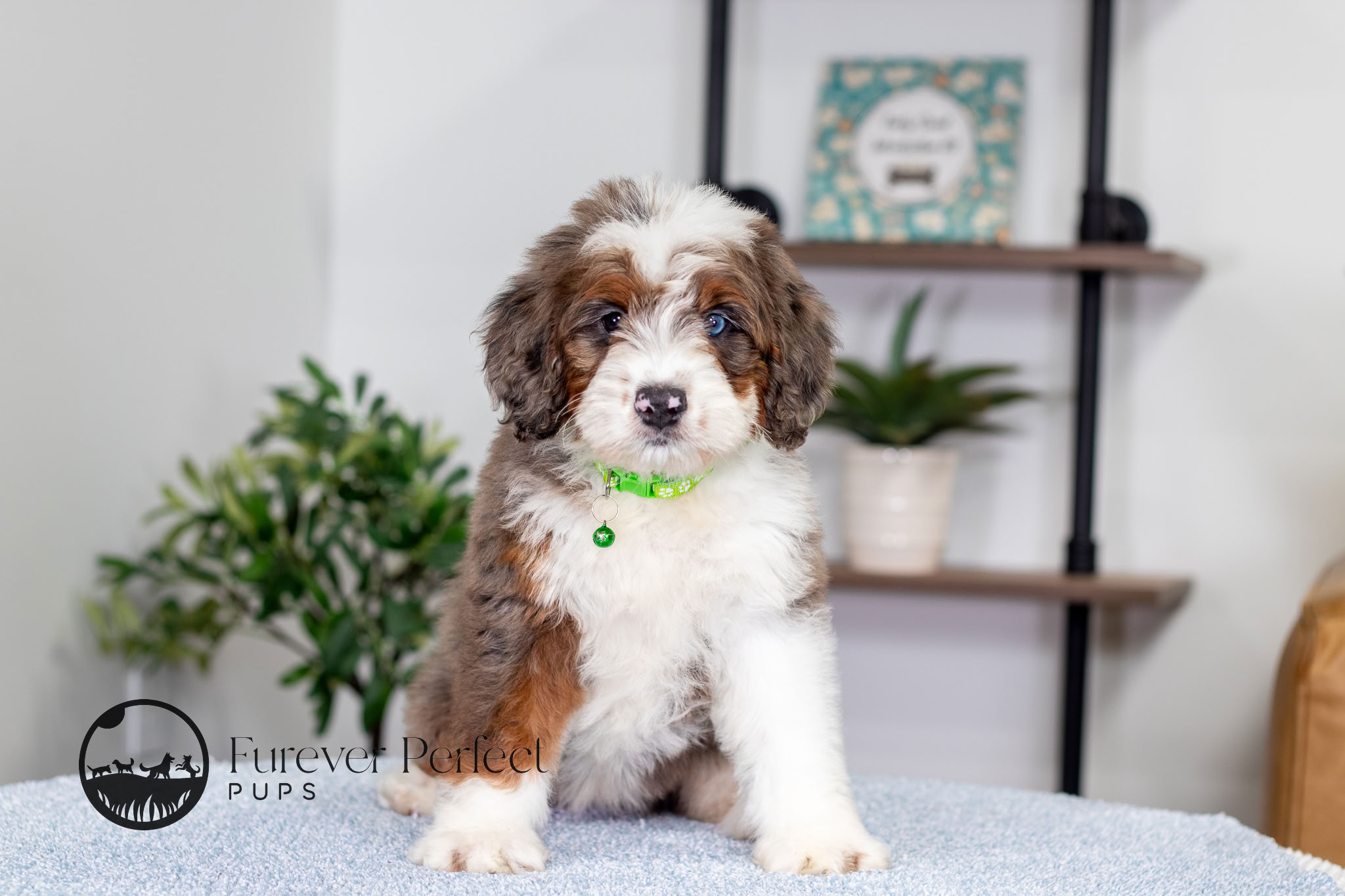
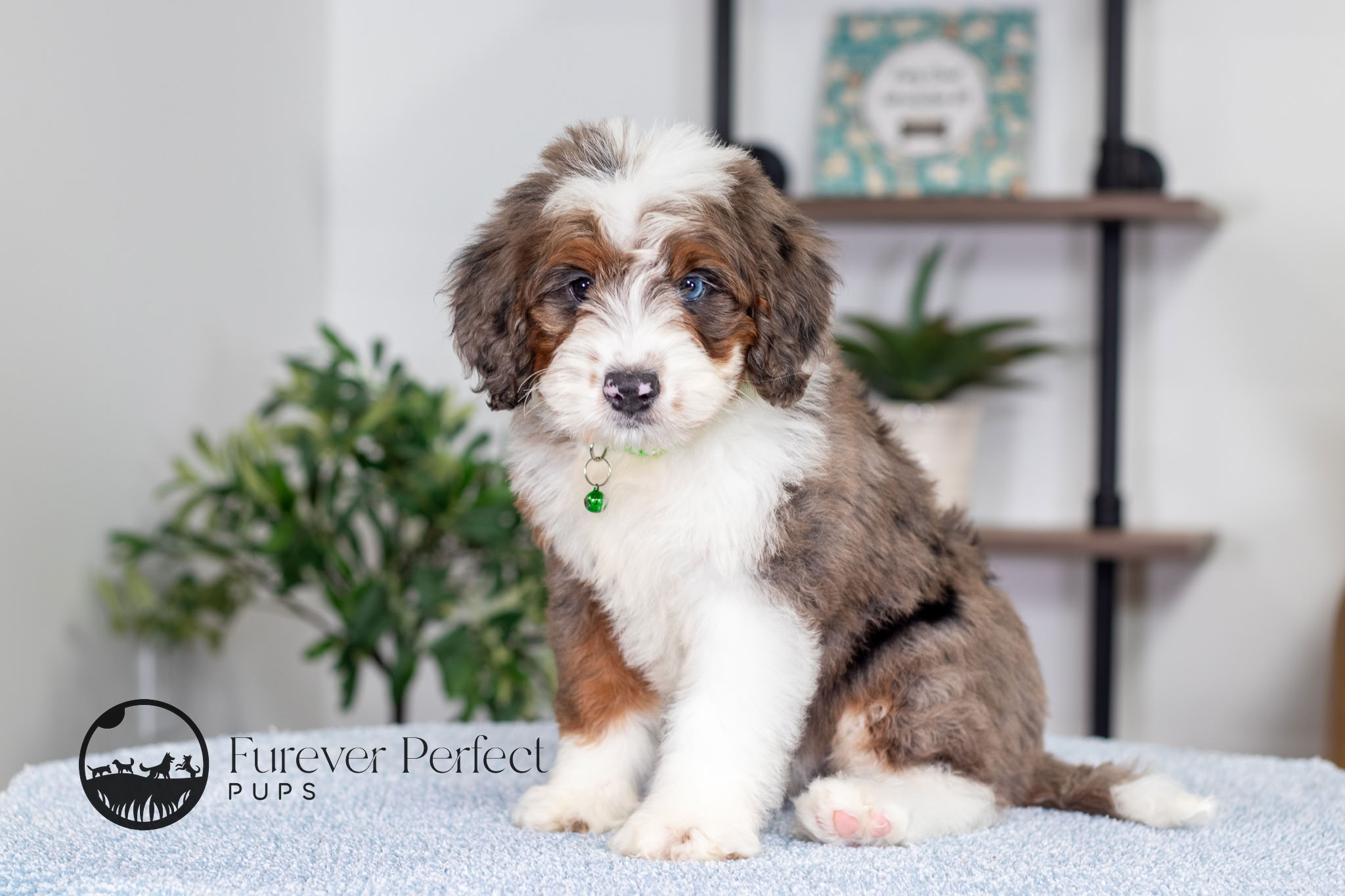
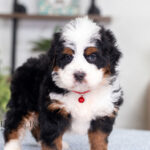
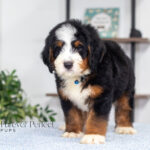
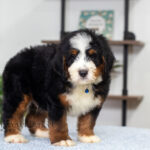
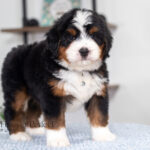
A Bernedoodle is a delightful combination of the Bernese Mountain dog and Poodle breed. The Bernedoodle inherits a blend of active loyal, intelligent, calm, and strong characteristics.

Bernedoodle Pre Training ENS & ESI

Each Bernedoodle puppy is taken through our specially designed and advanced puppy pre-training program.

Genetic & OFA Testing

Each of our Bernedoodle parents come from strong genetic lines with extensive testing and health screenings for optimum health.

Health & Nutrition

Our Bernedoodle puppies come with a complete health record and receive a head to tail physical exam by our licensed veterinarian.

Client Focused

Furever’s focus will always be on the whole dog and the life of companionship the family will enjoy.

Bernedoodle Puppies for Sale

Bambi & Buddy's Bernedoodle Puppies

Aria
Available: January 24 2026
Female • Bernedoodle
DOB: November 29 2025
More Info 🡢

Upcoming Bernedoodle Litters

Willow & Arlo

Bernedoodle
DOB: December 30, 2025
Available: January 20, 2026
$2,495

Reservation List

  • Pick 1: Available
  • Pick 2: Available
  • Pick 3: Available
  • Pick 4: Available
  • Pick 5: Available
  • Pick 6: Available
  • Pick 7: Available
Willow
Female
More Info
Arlo
Male
More Info
Males
Females

This is a reservation list for future litters that have not been posted on our website. We notify you when the upcoming litter is posted and allow picks to happen in the order that reservations are received.

Call / Text

‪(330) 275-3611‬

Email

fureverperfectpups@gmail.com

Facetime

Reach out to schedule a facetime and meet our Bernedoodles in action

*We are not available on Sundays. All calls, texts, and emails will be returned on Monday. 

Mini Bernedoodle Program

Our Mini Bernedoodle program is designed to promote confident, healthy and emotionally well-rounded puppies from day one. We start with quality parents chosen for temperament, health history and pedigree. Then we follow through with appropriate Early Neurological Stimulation (ENS) and Early Scent Introduction (ESI) to provide real experiences that promote early brain development and ability to become resilient to stress. Daily socialization occurs on an ongoing basis, puppies are engaged with household sights and sounds, exposure to safe handling, and pleasant crate experiences. So, when your Mini Bernedoodle comes home to your family he/she has already had a start to a supervised, loving, and structured life – making the transition easier, and building a trust bond for the future of companionship.

Adopted Bernedoodle Puppies

Janet & Murphy's Bernedoodle Puppies

ADOPTED
Nadia
Available: December 31 2025
Female • Bernedoodle
DOB: November 1 2025
Adopted 🡢
ADOPTED
Nola
Available: December 31 2025
Female • Bernedoodle
DOB: November 1 2025
Adopted 🡢
ADOPTED
Nash
Available: December 31 2025
Male • Bernedoodle
DOB: November 1 2025
Adopted 🡢
ADOPTED
Nevin
Available: December 31 2025
Male • Bernedoodle
DOB: November 1 2025
Adopted 🡢
Mini Bernedoodle Puppy for sale
ADOPTED
Nico
Available: December 31 2025
Male • Bernedoodle
DOB: November 1 2025
Adopted 🡢
ADOPTED
Nolan
Available: December 31 2025
Male • Bernedoodle
DOB: November 1 2025
Adopted 🡢

Bambi & Buddy's Bernedoodle Puppies

ADOPTED
Alexa
Available: January 24 2026
Female • Bernedoodle
DOB: November 29 2025
Adopted 🡢
ADOPTED
Angel
Available: January 24 2026
Female • Bernedoodle
DOB: November 29 2025
Adopted 🡢
ADOPTED
Ace
Available: January 24 2026
Male • Bernedoodle
DOB: November 29 2025
Adopted 🡢
ADOPTED
Adkin
Available: January 24 2026
Male • Bernedoodle
DOB: November 29 2025
Adopted 🡢
ADOPTED
Archer
Available: January 24 2026
Male • Bernedoodle
DOB: November 29 2025
Adopted 🡢

The Complete Guide to Bernedoodle Puppies: Everything You Need to Know

If you’re searching for the perfect family companion that combines intelligence, affection, and a hypoallergenic coat, Bernedoodle puppies might be exactly what you’re looking for. This comprehensive guide covers everything from understanding what makes Bernedoodles special to choosing the right puppy for your lifestyle.

What Are Bernedoodle Puppies?

Bernedoodle puppies are an intentionally bred crossbreed that combines the best qualities of two beloved dog breeds: the Bernese Mountain Dog and the Poodle. This designer breed has captured the hearts of dog lovers across the country, offering a unique blend of the Bernese Mountain Dog’s gentle, loyal nature with the Poodle’s intelligence and low-shedding coat.

The result is a versatile, loving companion that fits seamlessly into various lifestyles, whether you live in a spacious suburban home or a cozy apartment. Bernedoodle puppies inherit remarkable traits from both parent breeds, creating dogs that are not only beautiful but also incredibly well-suited for family life.

Understanding Mini Bernedoodle Puppies

Mini Bernedoodle puppies, also known as Miniature Bernedoodles, Mini Bernadoodles, or Mini Bernese Poodles, represent a smaller version of the standard Bernedoodle. These adorable puppies are created by crossing a Miniature Poodle or Toy Poodle with a Bernese Mountain Dog, resulting in a medium-sized dog that’s perfect for families wanting the Bernese Mountain Dog experience in a more compact package.

What makes Mini Bernedoodle puppies particularly appealing is their ability to thrive in various living situations. They’re large enough to be sturdy playmates for children yet small enough to adapt comfortably to apartment living or homes with limited outdoor space.

The History of Bernedoodles

The intentional breeding of Bernedoodle puppies began in 2003 when innovative dog breeders in Ontario, Canada, recognized the potential of combining Miniature Poodles with Bernese Mountain Dogs. These pioneering breeders weren’t simply creating a new mixed breed for novelty—they had specific goals in mind.

The breeding program focused on capturing the intelligence, stunning appearance, and calm demeanor of both parent breeds while incorporating the Poodle’s highly sought-after low-shedding, hypoallergenic qualities. This thoughtful approach to breeding created a designer dog that addresses many of the concerns modern families have when choosing a puppy, particularly regarding allergies and shedding.

Since those early days in Canada, Bernedoodle puppies have grown tremendously in popularity throughout North America and beyond. Reputable breeders continue to refine the breed, focusing on health, temperament, and the characteristics that make Bernedoodles such exceptional companions.

Temperament and Personality of Bernedoodle Puppies

One of the most compelling reasons families choose Bernedoodle puppies is their outstanding temperament. These dogs consistently demonstrate a wonderful combination of personality traits that make them ideal for various family dynamics.

Affectionate and Loving Nature

Bernedoodle puppies are incredibly affectionate animals that form deep bonds with their families. They’re happiest when surrounded by their loved ones and will eagerly participate in whatever activities their family enjoys. Whether you’re relaxing on the couch watching television or heading out for an adventurous hike, your Bernedoodle will be thrilled to join you.

This breed thrives on human companionship and demonstrates their love through gentle cuddles, playful interactions, and constant devotion. Many Bernedoodle owners describe their dogs as “velcro dogs” who prefer to stay close to their family members throughout the day.

Intelligence and Trainability

Thanks to their Poodle heritage, Bernedoodle puppies are exceptionally intelligent and eager to learn. This intelligence makes training a rewarding experience for both the puppy and the owner. They quickly grasp new commands, respond enthusiastically to positive reinforcement training methods, and often excel at obedience training.

First-time dog owners particularly appreciate how readily Bernedoodle puppies adapt to training. Their desire to please their owners, combined with their natural intelligence, means they pick up house training, basic commands, and even advanced tricks with relative ease.
Gentle with Children

Bernedoodle puppies demonstrate remarkable patience and gentleness with children of all ages. They seem to instinctively understand how to interact appropriately with young family members, adjusting their play style to match the child’s age and energy level.

While Bernedoodles are protective of their families, they’re not typically aggressive. Instead, they serve as watchful guardians who will alert their family to unusual activity but remain friendly and welcoming to guests once properly introduced.

Sociable with Other Pets

With proper socialization starting in puppyhood, Bernedoodles typically get along wonderfully with other dogs and even cats. Their friendly, adaptable nature makes them excellent additions to multi-pet households. Many Bernedoodle owners report that their dogs actively seek out friendships with other animals and enjoy having companion pets in the home.

Adaptable Energy Levels

Bernedoodle puppies possess a wonderful ability to match their energy to their family’s lifestyle. If you’re an active family that enjoys outdoor adventures, your Bernedoodle will enthusiastically join you for hiking, swimming, running, camping, or playing fetch. Conversely, if your household is more relaxed, your Bernedoodle will be perfectly content with moderate exercise and plenty of cuddle time.

This adaptability makes Bernedoodles suitable for a wide range of living situations and activity levels, from active young couples to families with small children to retirees seeking a loving companion.

Physical Characteristics of Bernedoodle Puppies

Size and Weight

Bernedoodle puppies come in different size categories depending on the type of Poodle used in breeding:

Mini Bernedoodles typically weigh between 25 and 45 pounds when fully grown, standing approximately 18 to 22 inches tall at the shoulder. This medium size makes them substantial enough to be active play partners yet small enough to travel easily and adapt to various living spaces.

Standard Bernedoodles are considerably larger, usually weighing between 60 and 90+ pounds. These dogs offer the full Bernese Mountain Dog experience with the added benefits of Poodle genetics.

The ultimate size of your Bernedoodle puppy will depend on several factors, including the specific generation, the size of the parent dogs, and individual genetic variation. Reputable breeders can provide estimates based on the puppy’s parents and lineage.

Coat Colors and Patterns

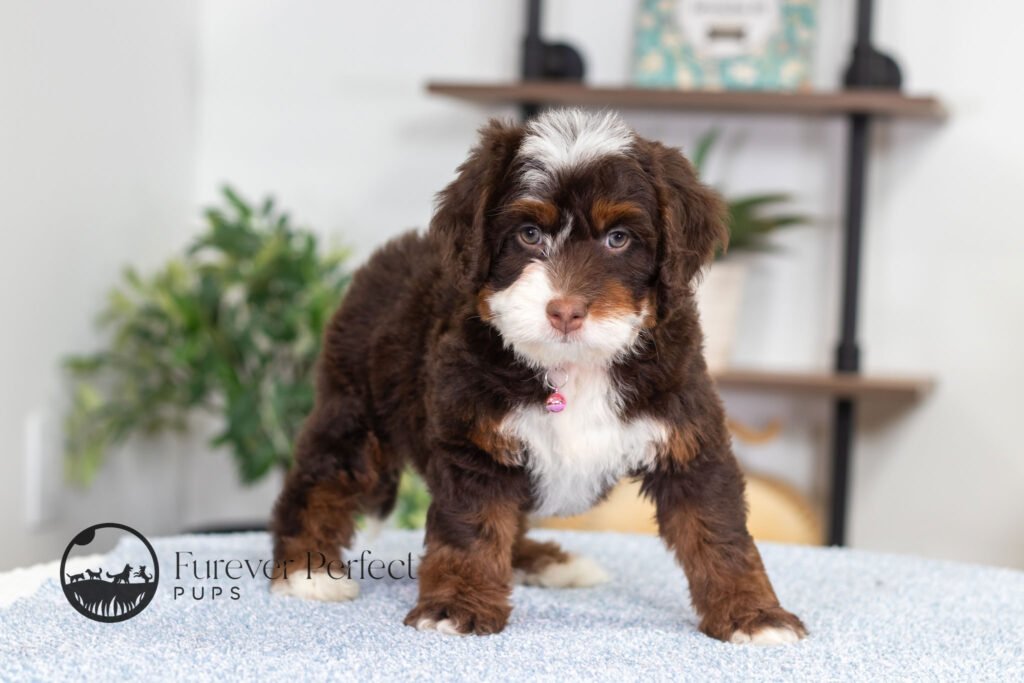
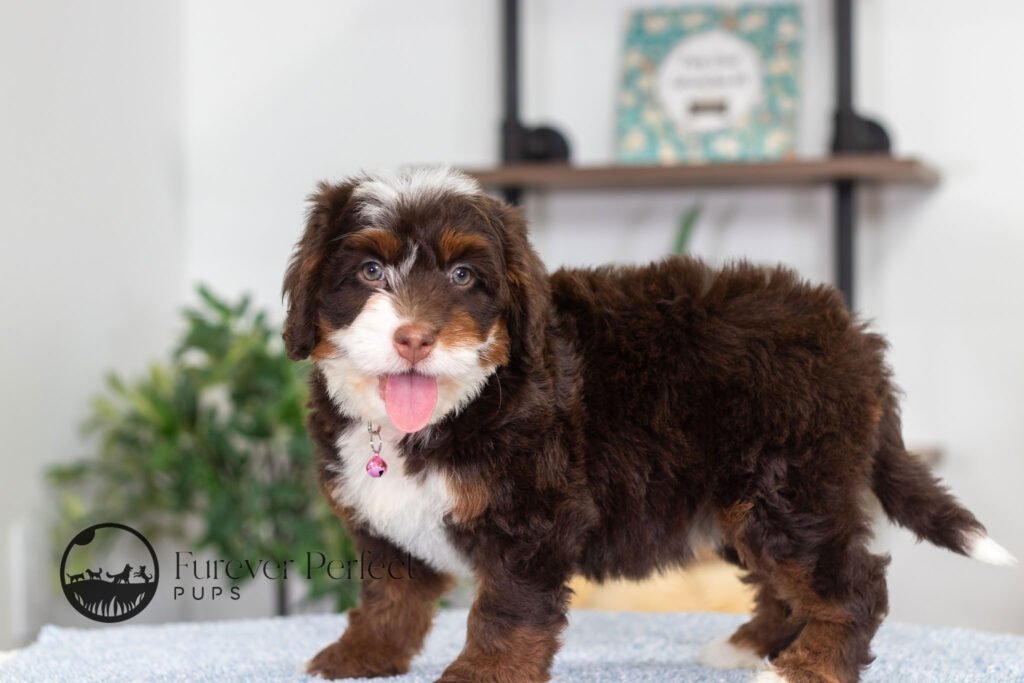
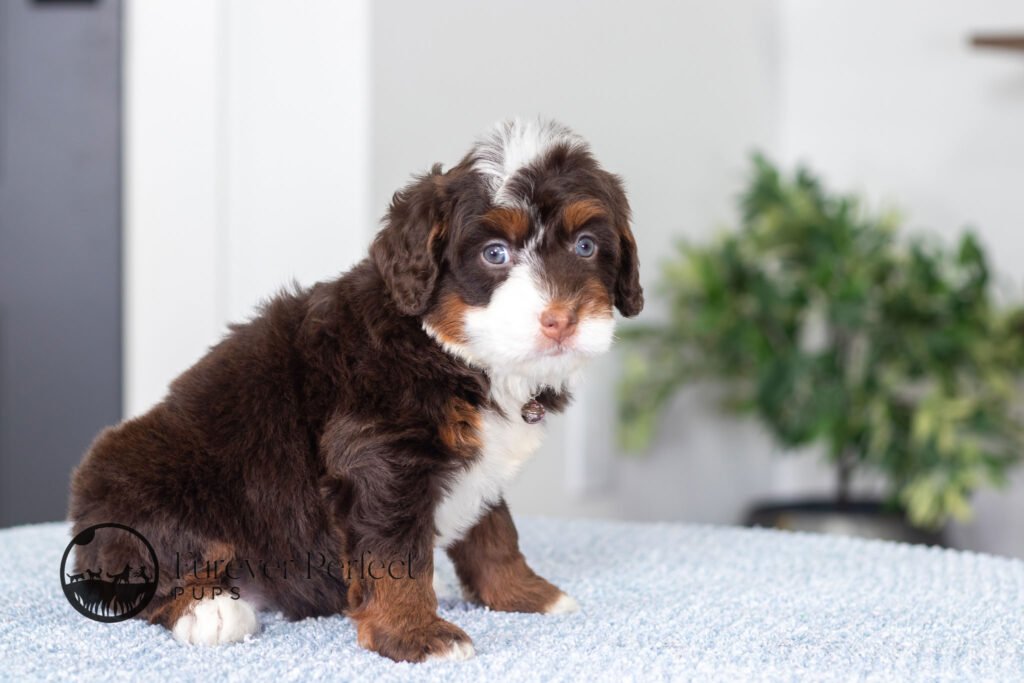
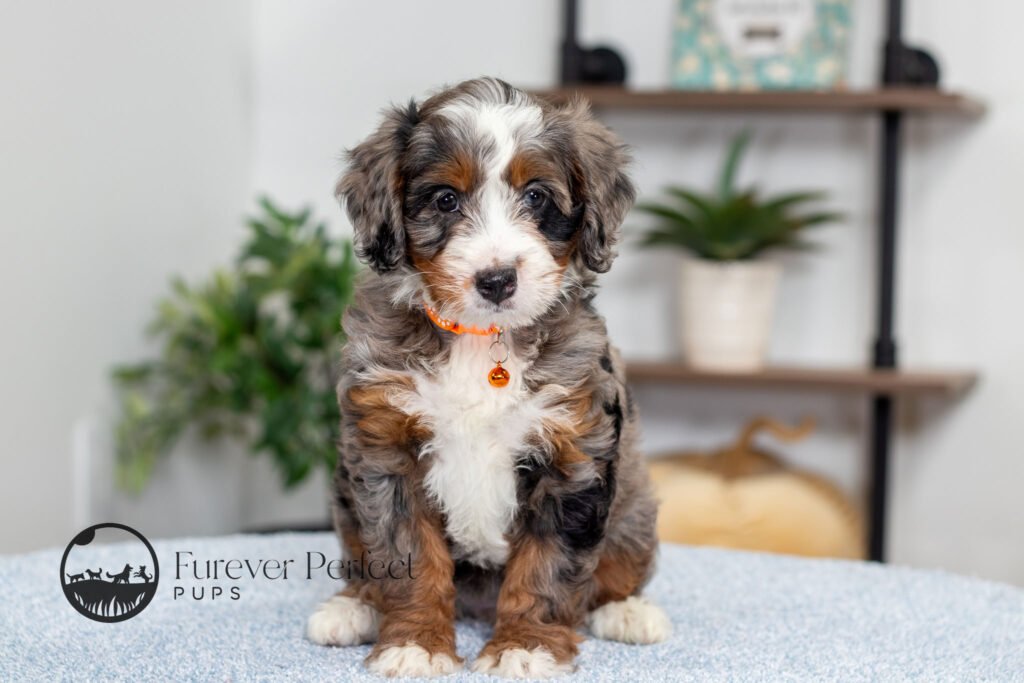
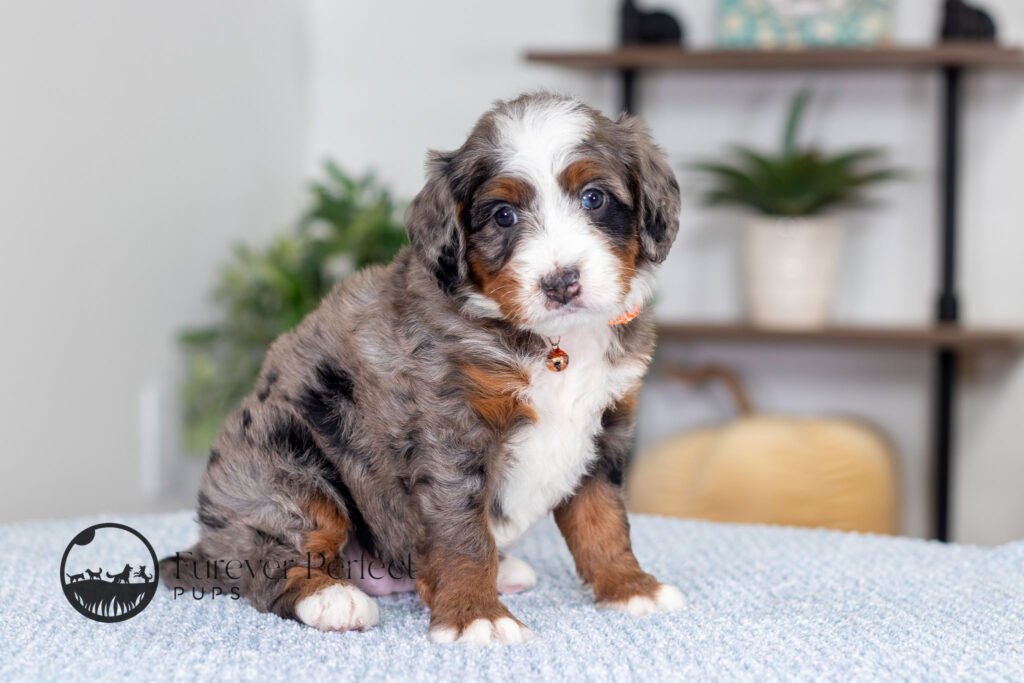
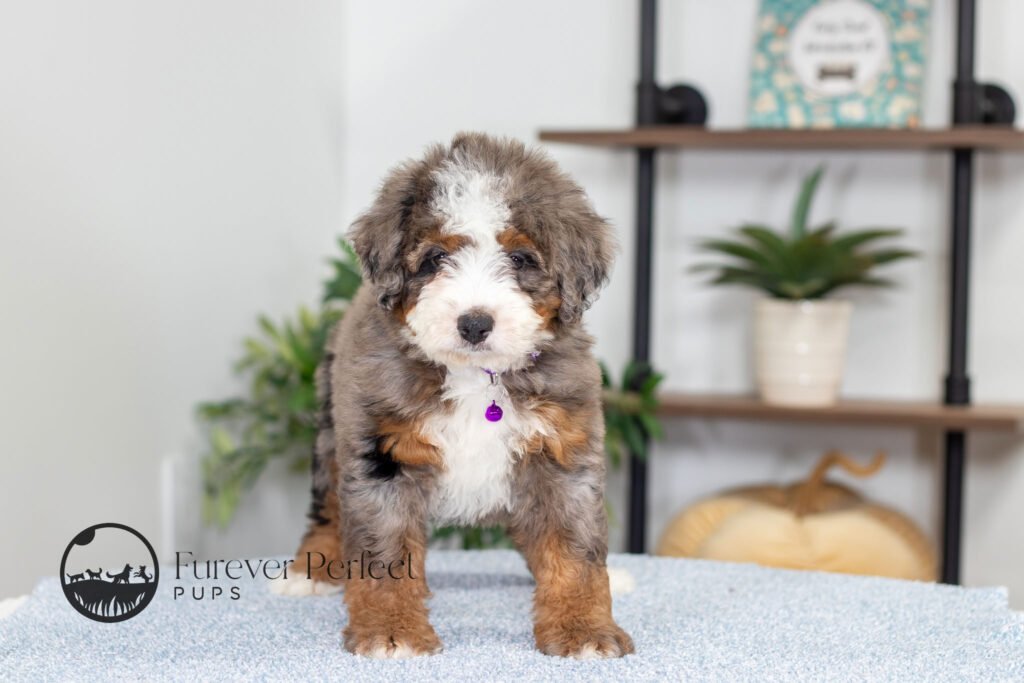
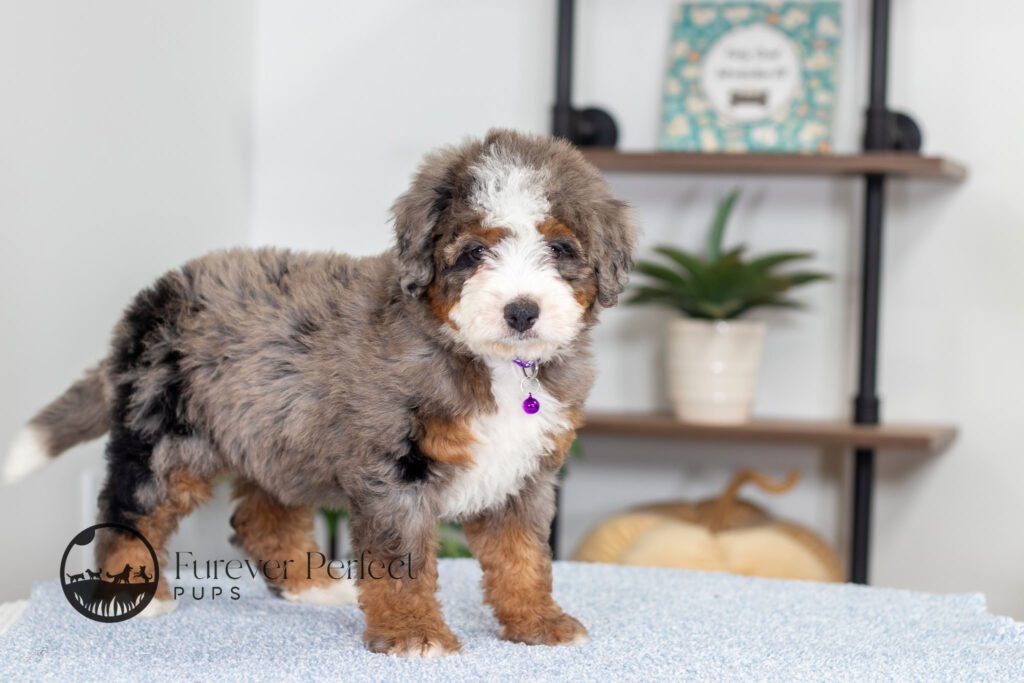
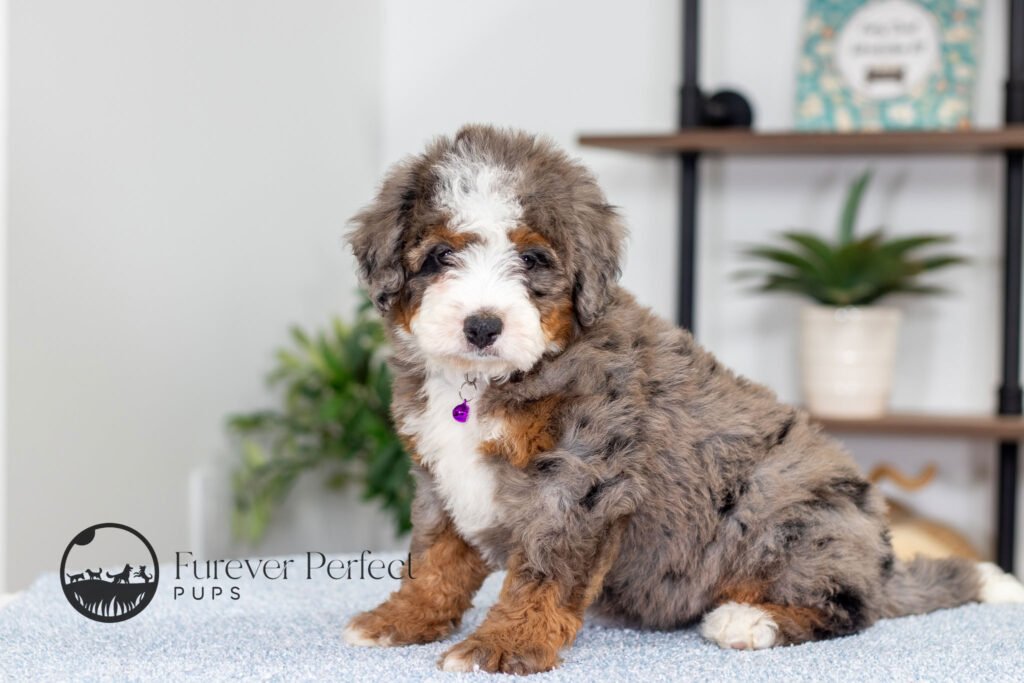
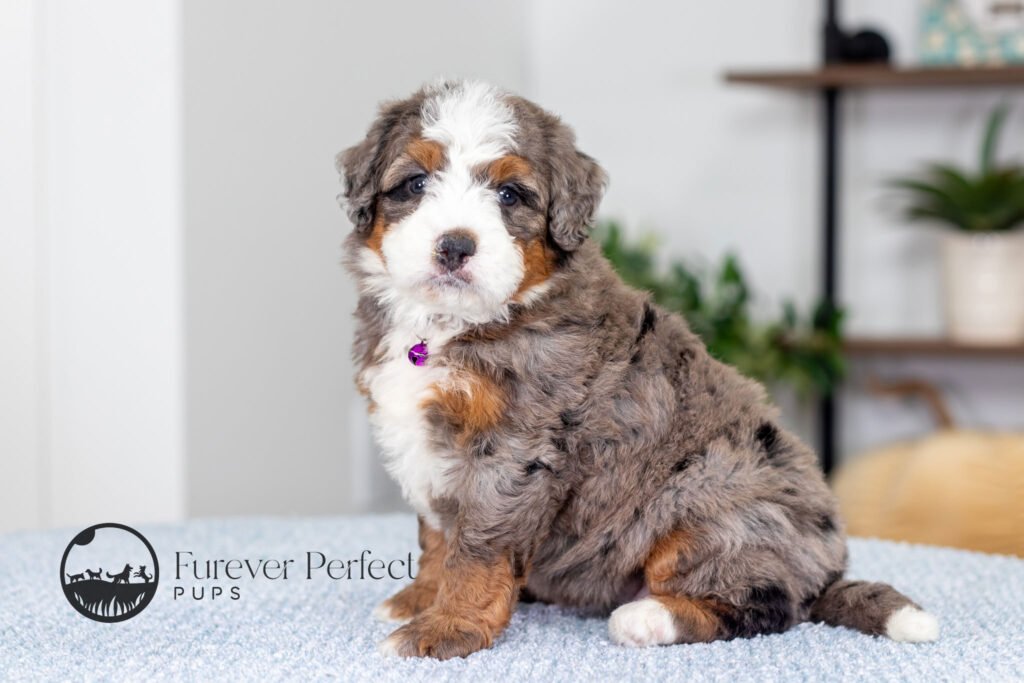
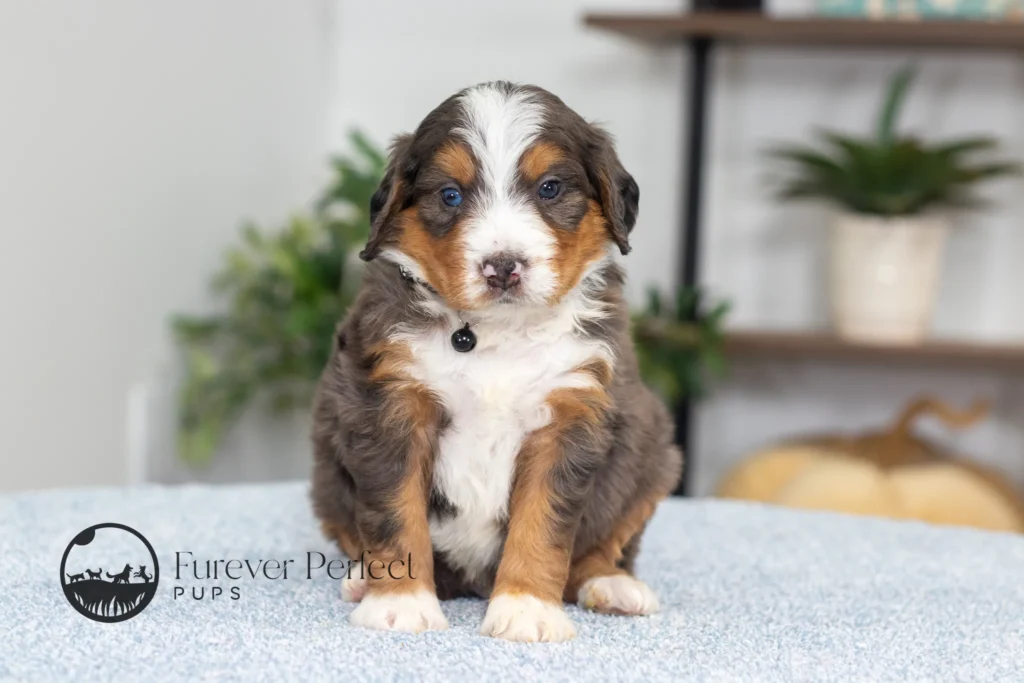
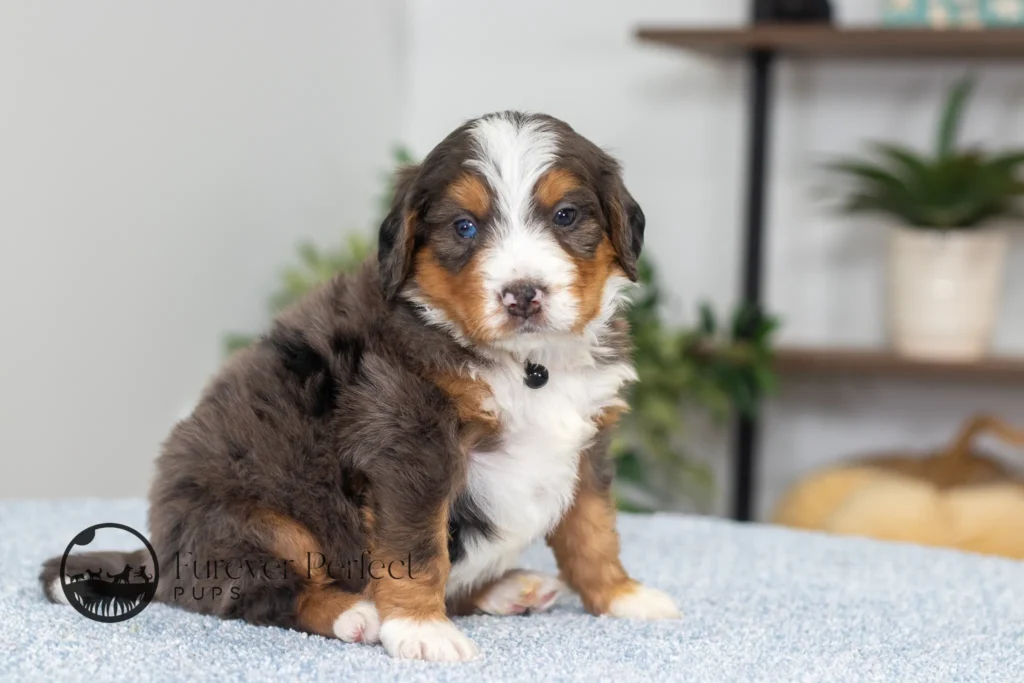
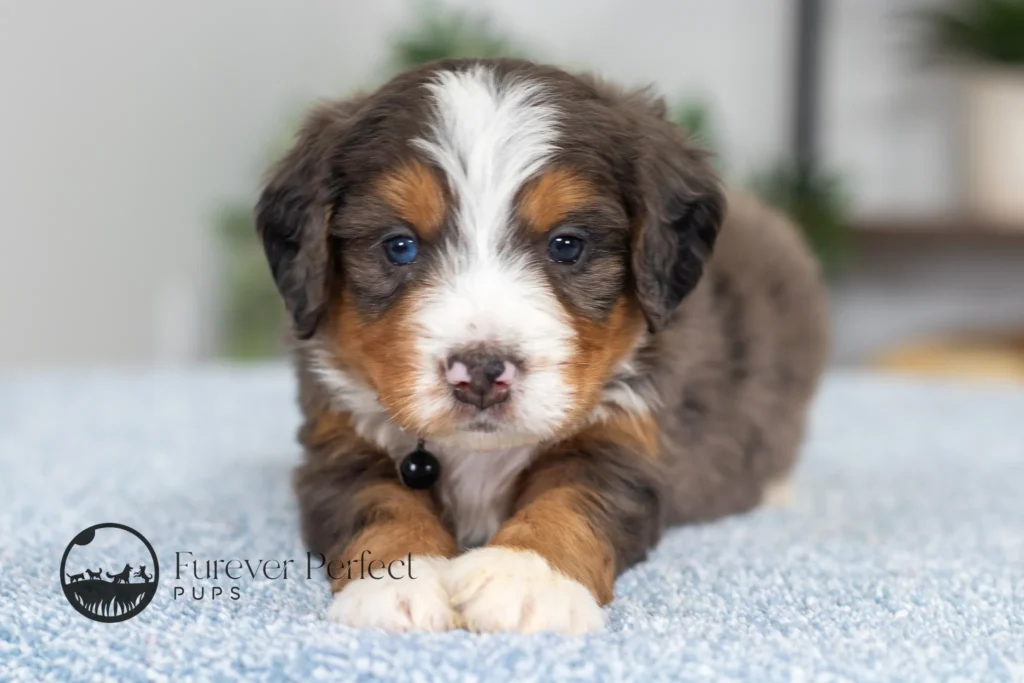
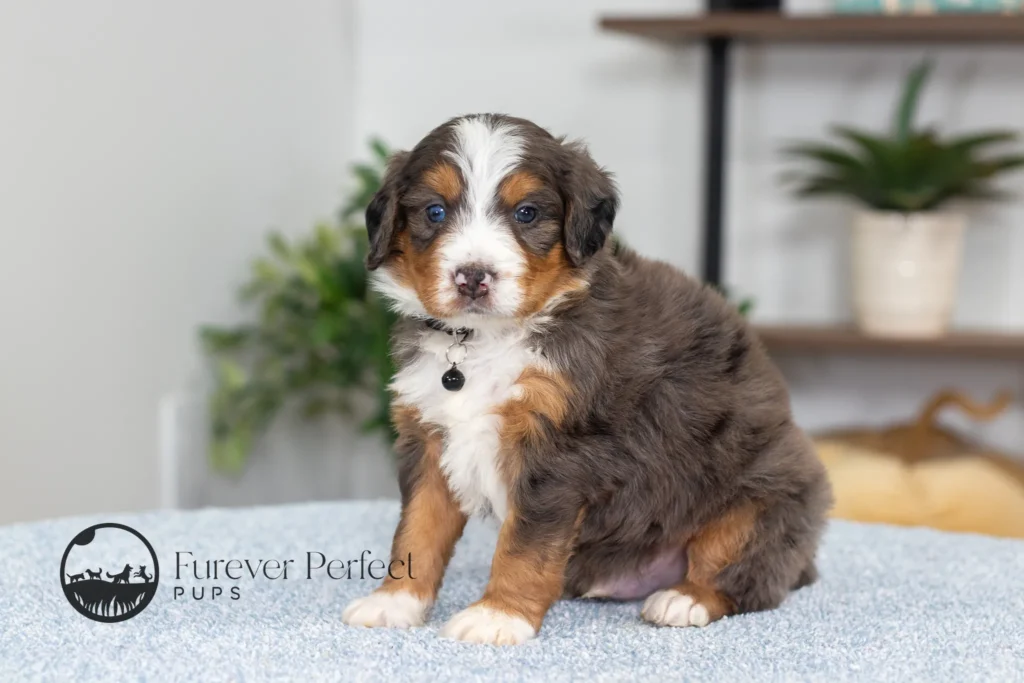
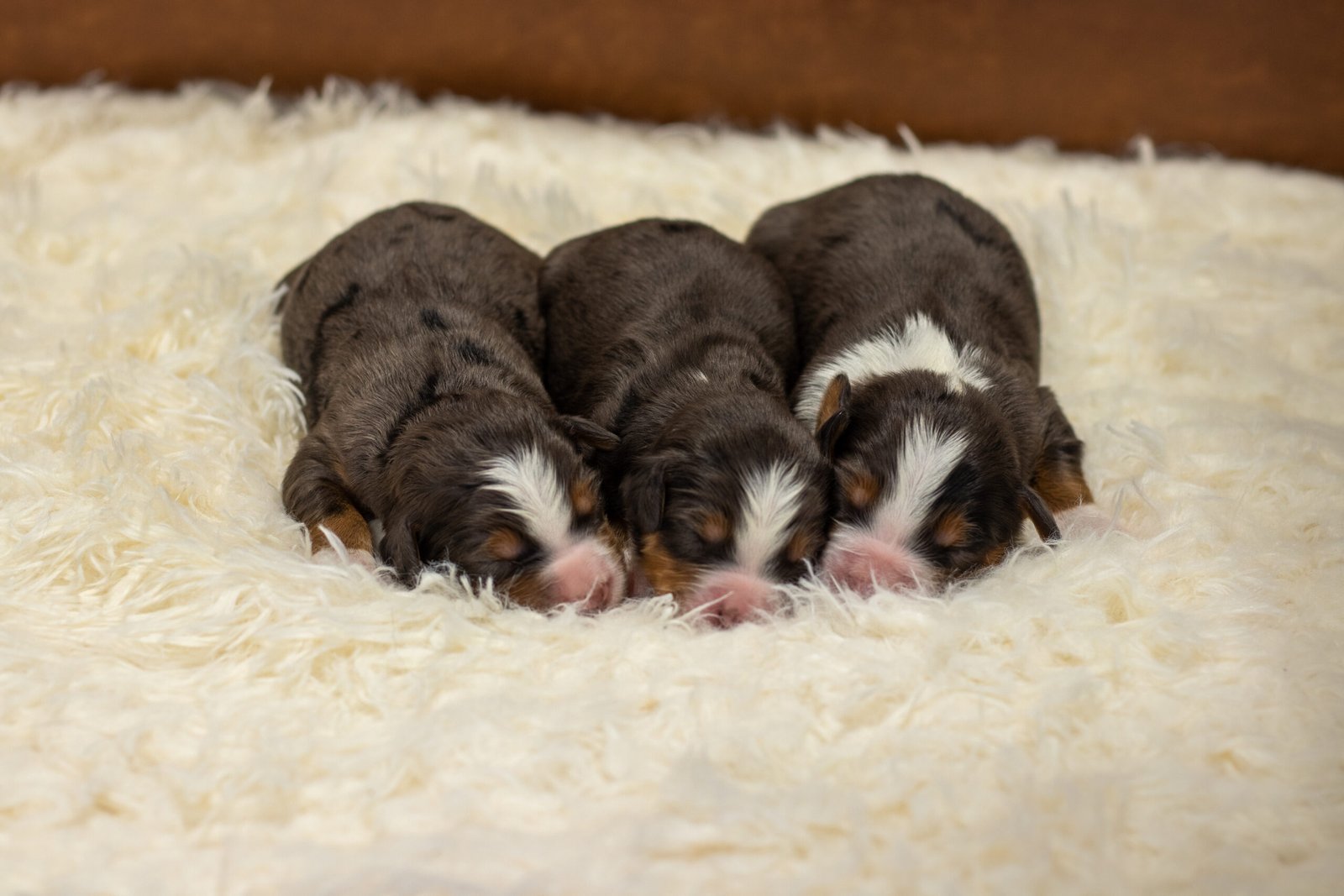
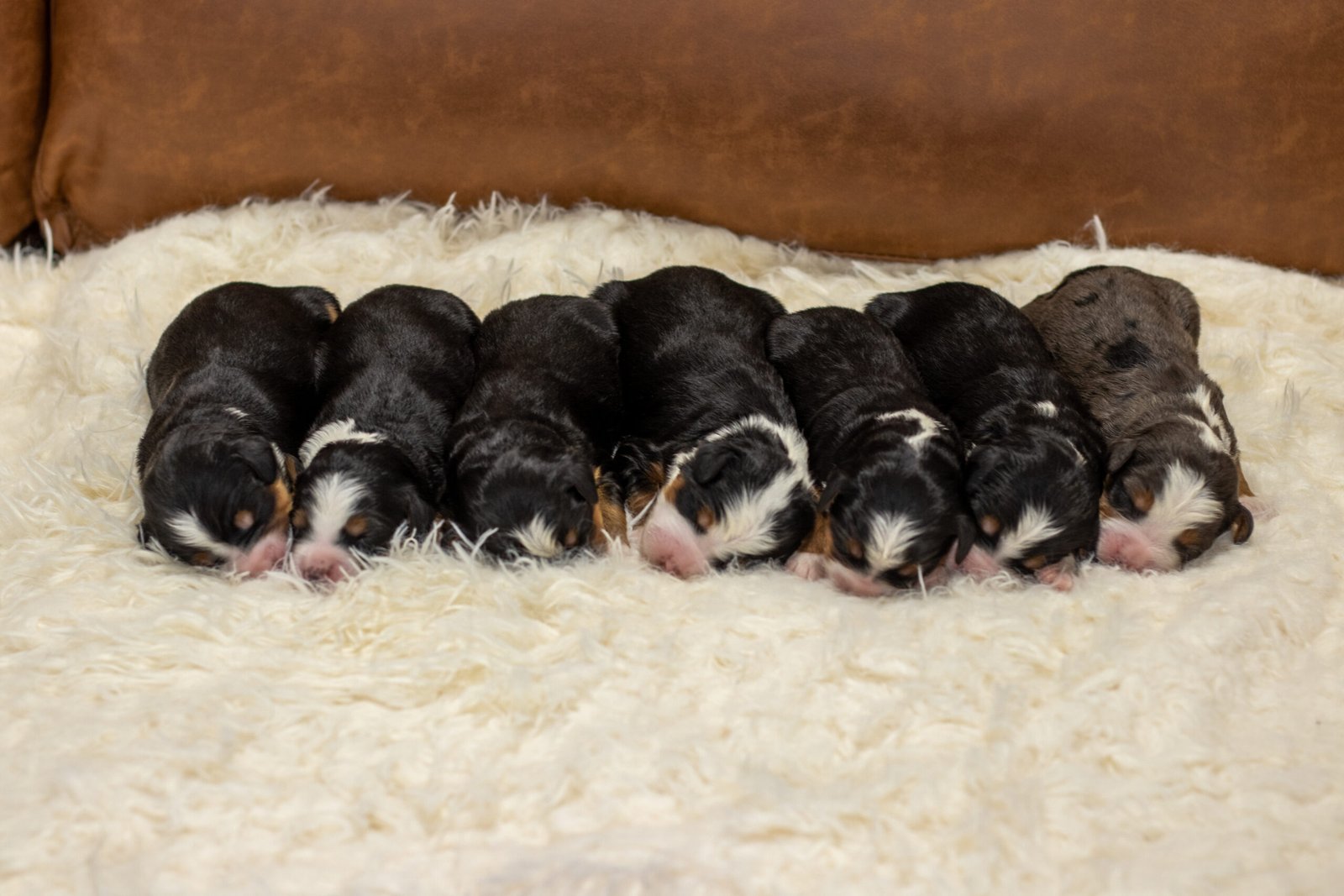
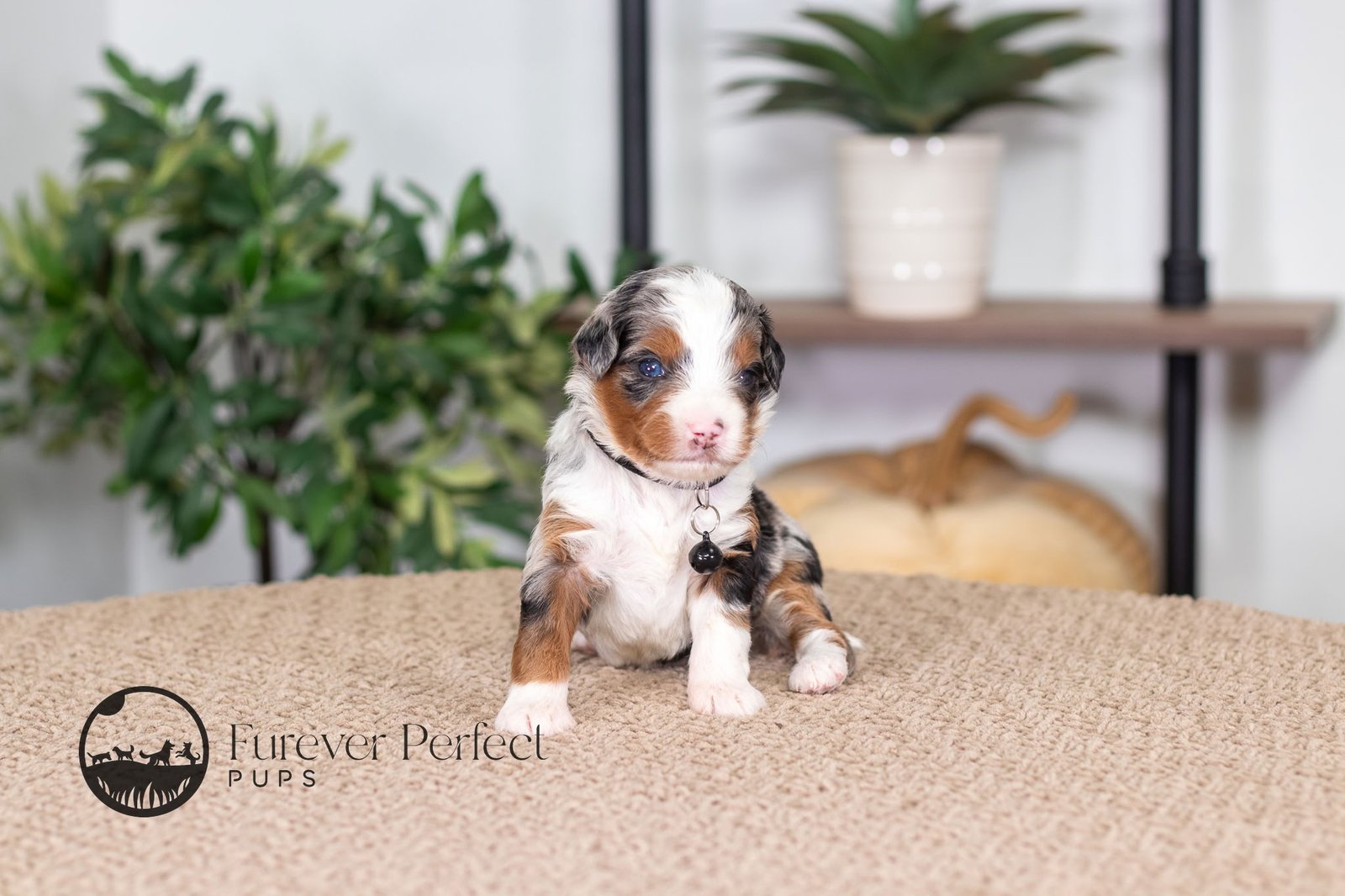
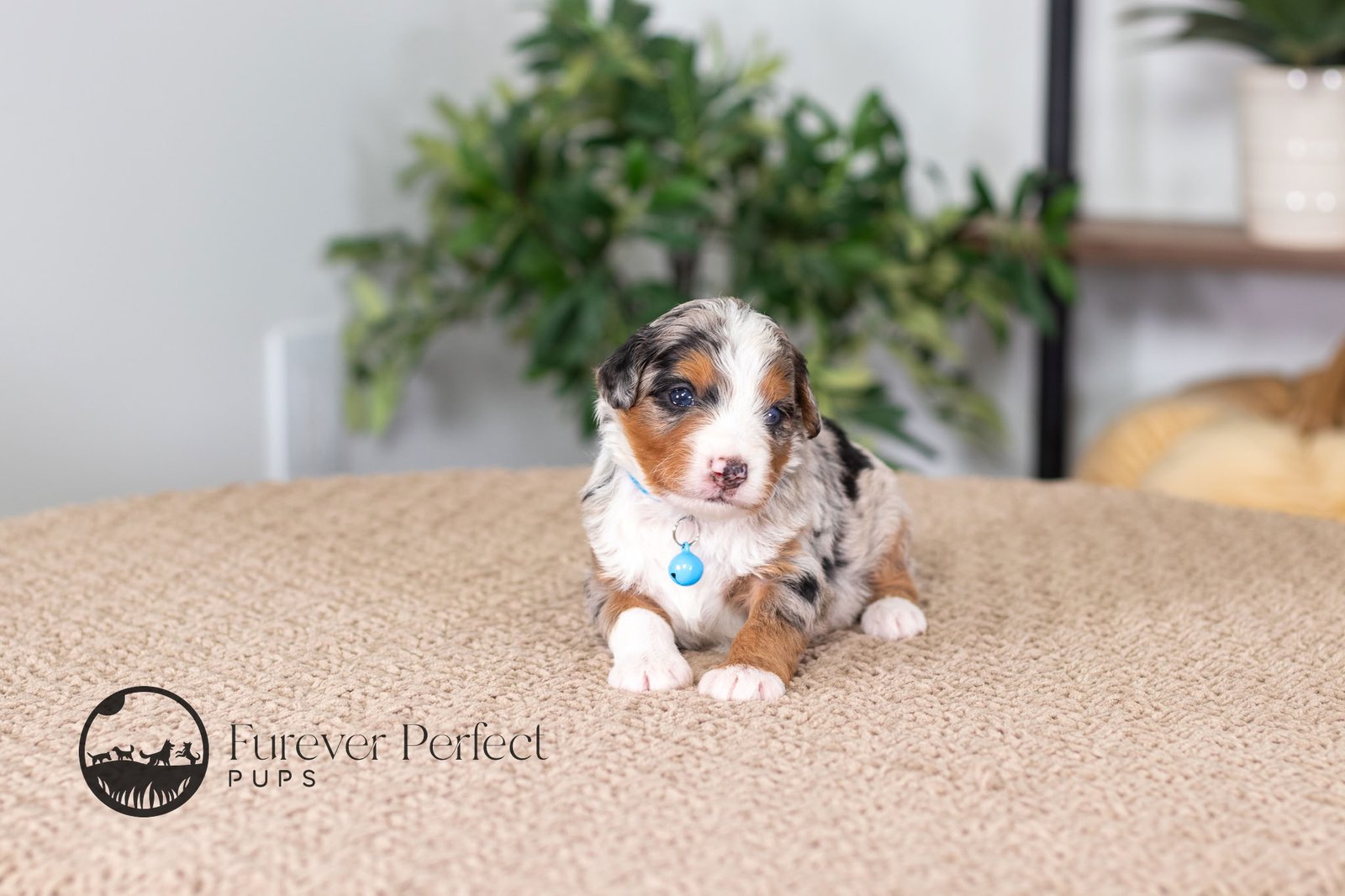
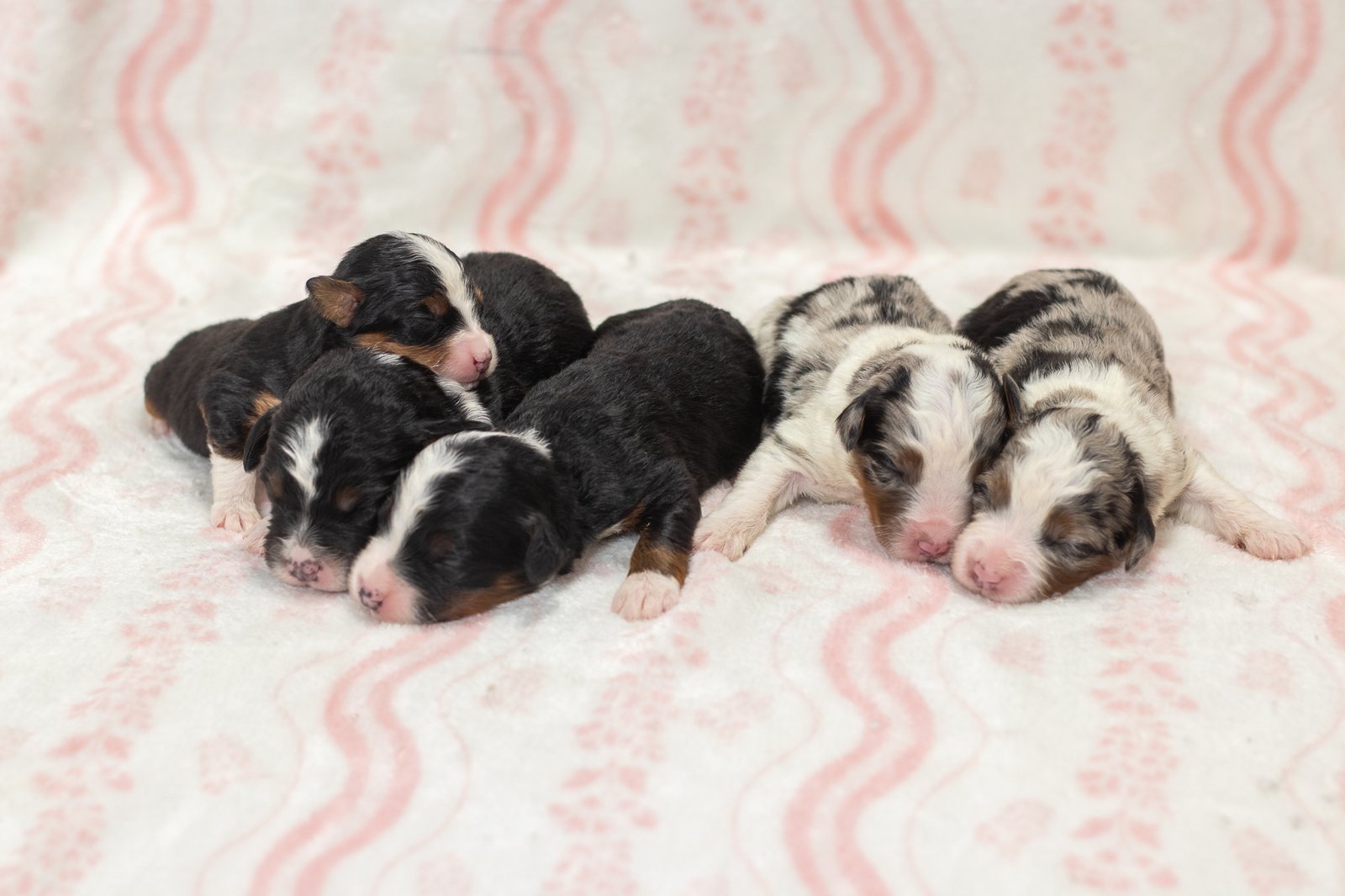
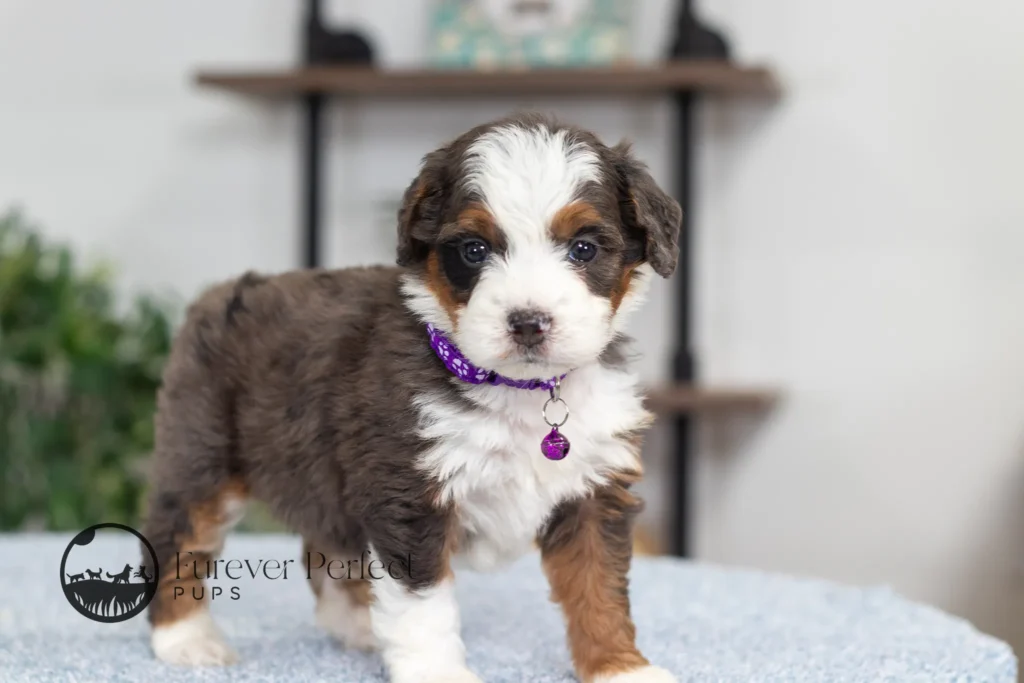
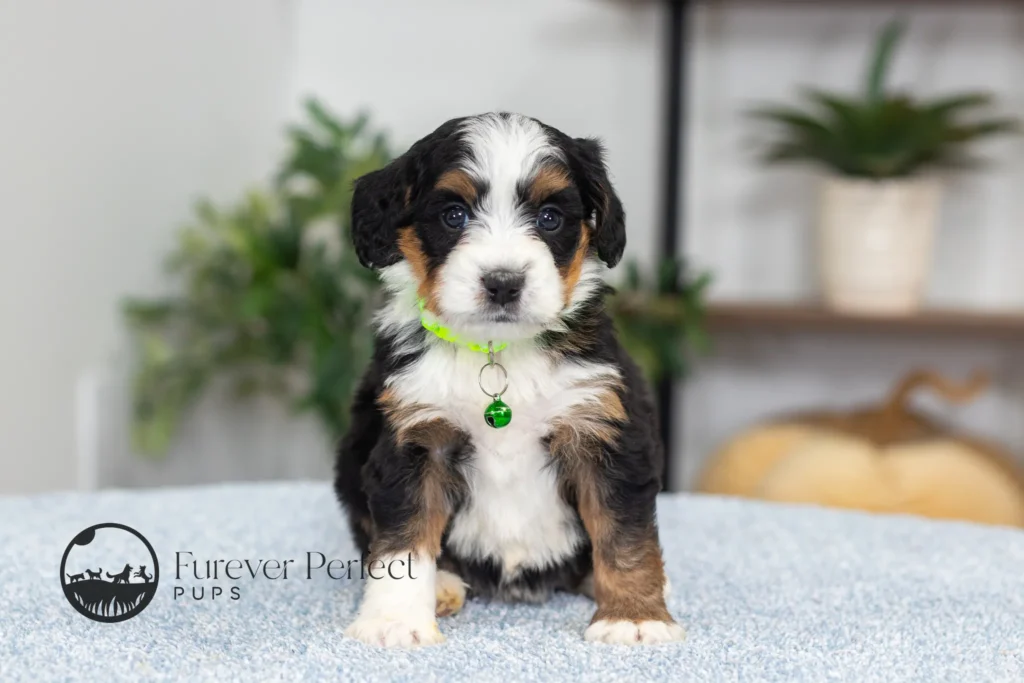
Bernedoodle puppies showcase a beautiful variety of coat colors and patterns, making each puppy unique. Common colors include black, white, red, tan, chocolate, and merle, often appearing in striking combinations.

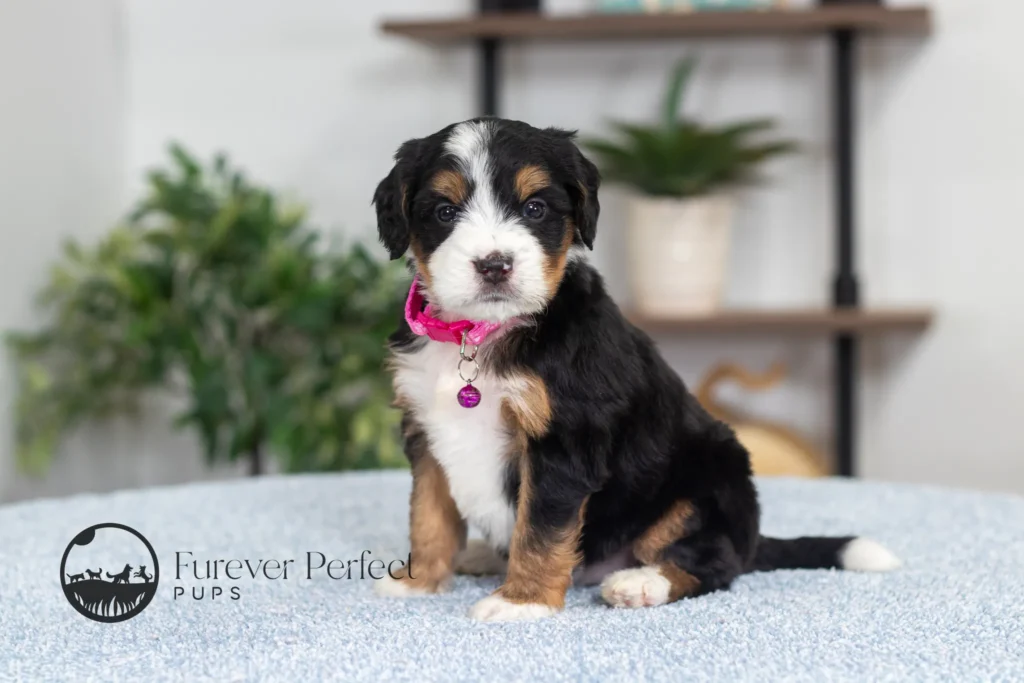
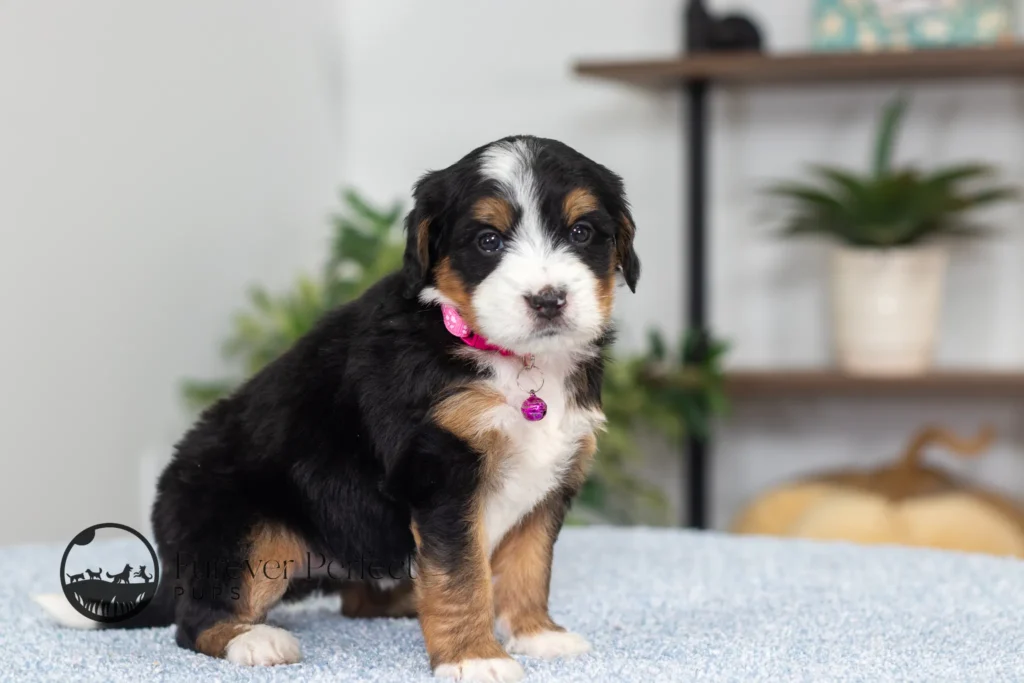
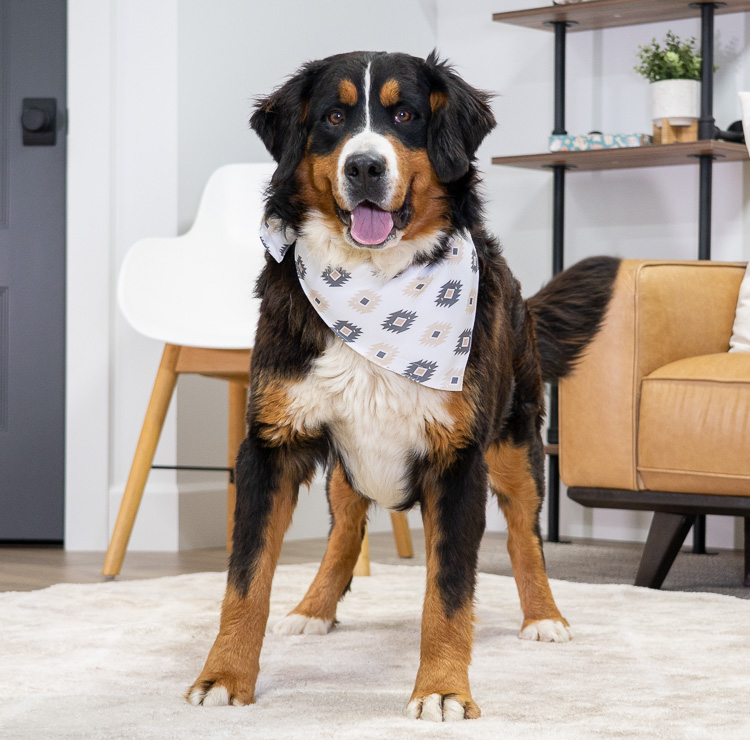
The most iconic and sought-after pattern is the **classic tricolor**, which features black as the base color with white markings on the chest, face, legs, and sometimes the back, accented with tan or brown points. This coloring closely resembles the traditional Bernese Mountain Dog appearance.

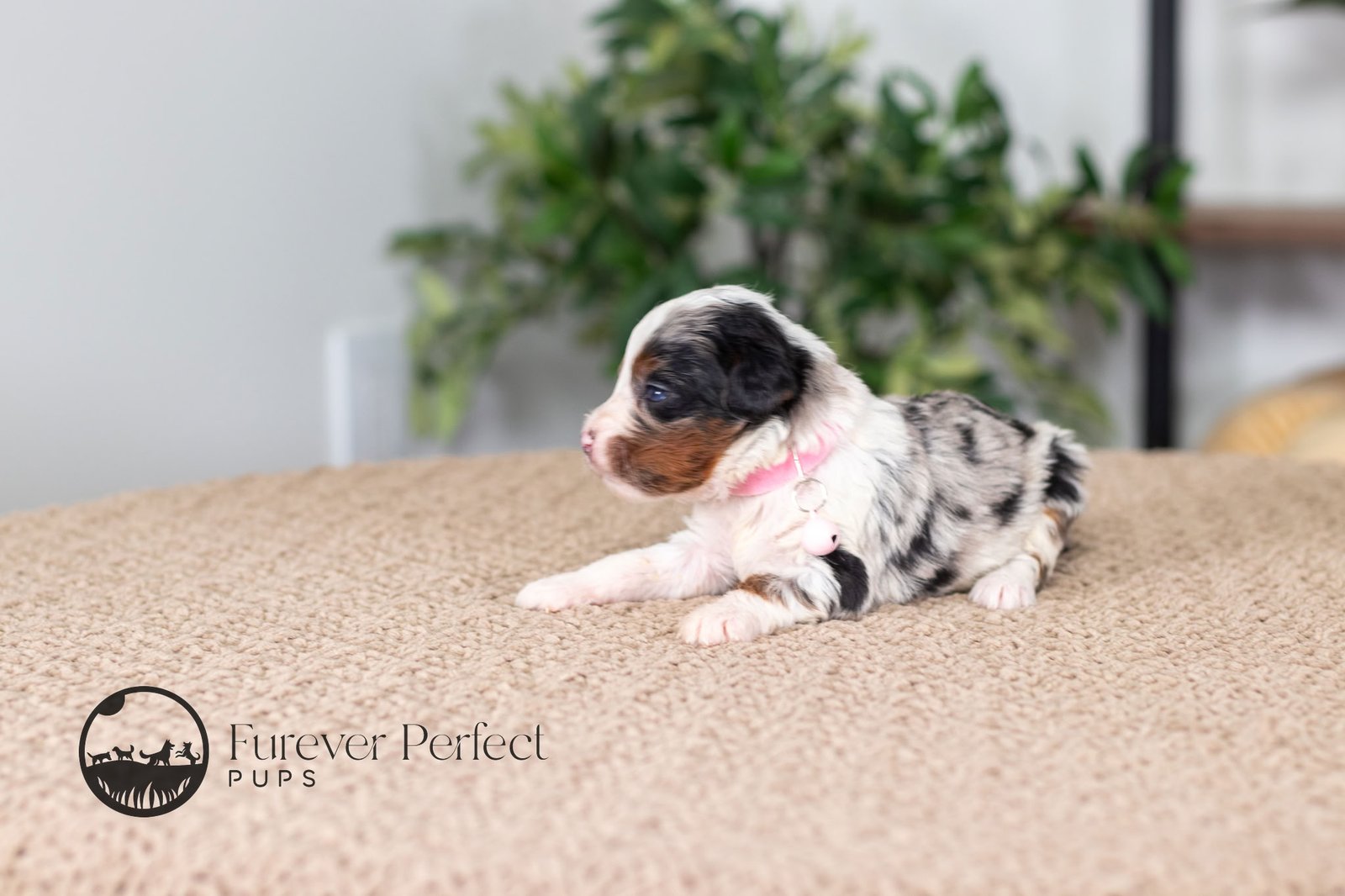
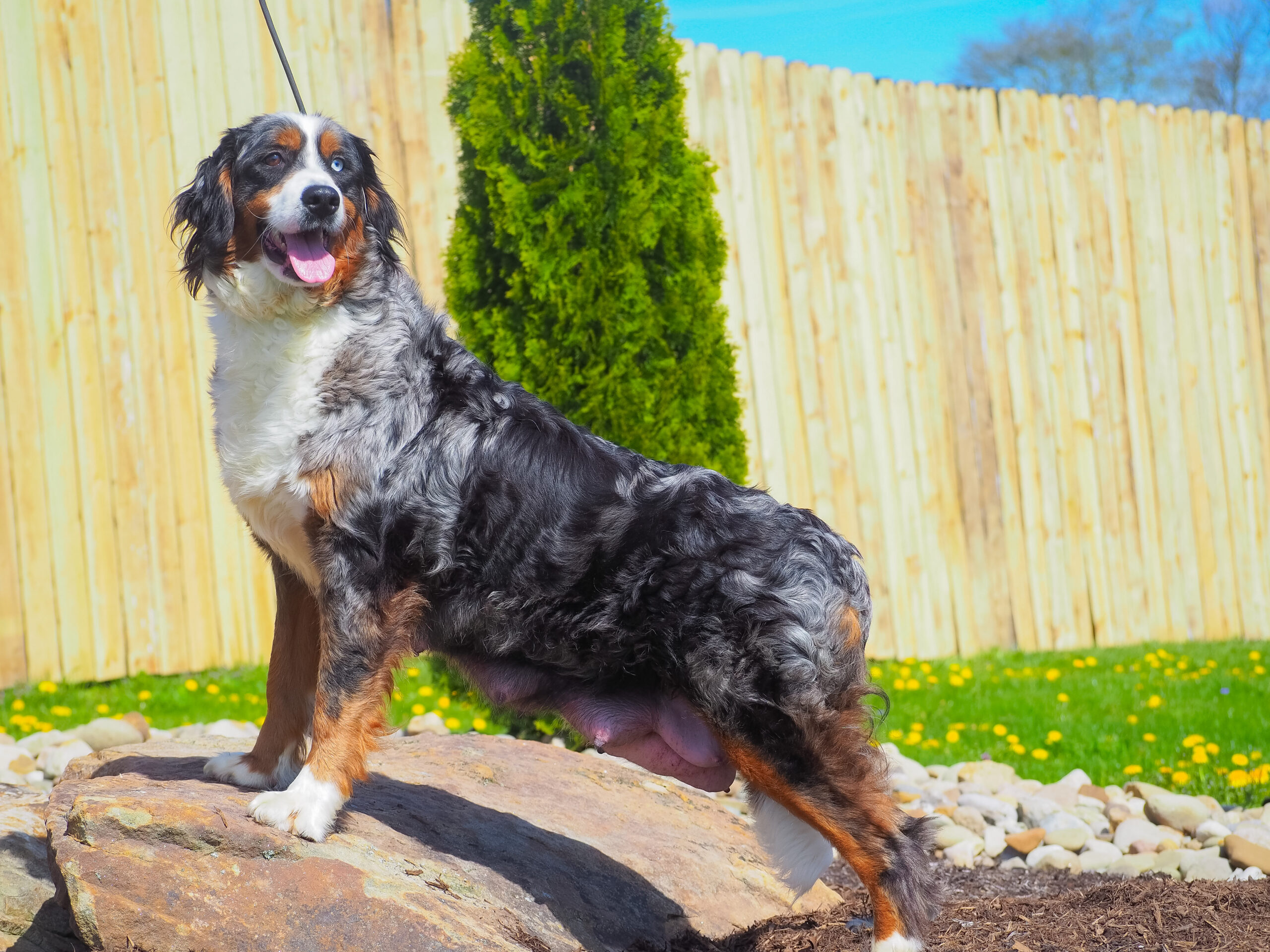
The merle pattern creates a stunning mottled effect, typically combining merle coloring with white and tan markings. Some Bernedoodle puppies also display beautiful red and white combinations or solid colors.

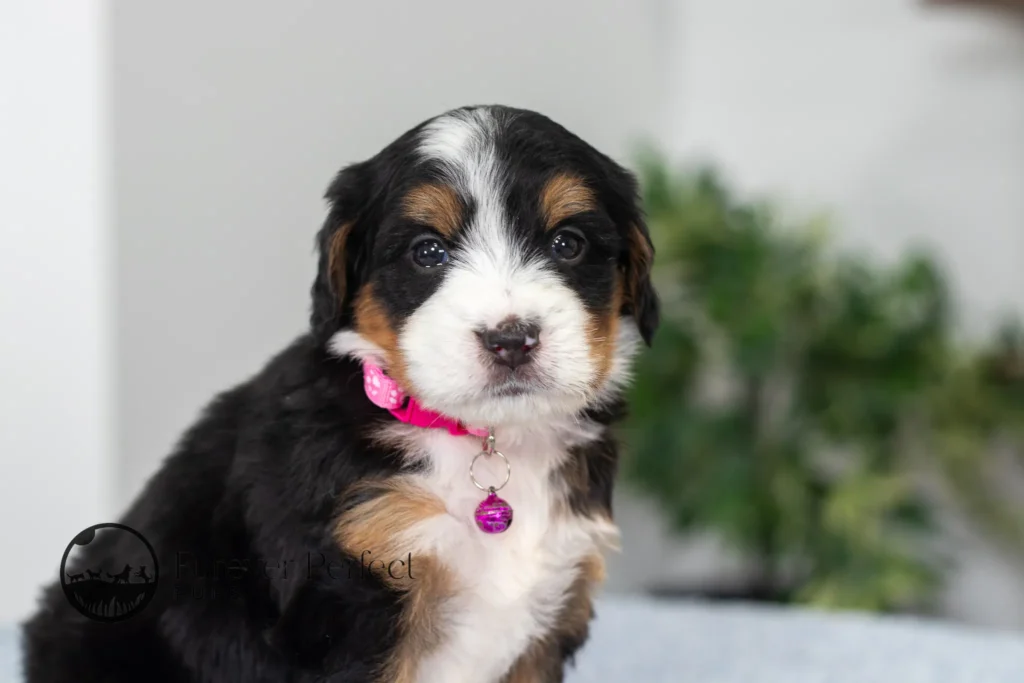
Most Bernedoodle puppies are predominantly black with white markings on strategic areas like the chest, face, and paws, often with charming tan eyebrows and cheek patches that give them an expressive, endearing appearance.

Coat Types

The coat of a Bernedoodle puppy can vary significantly, even within the same litter. Generally, Bernedoodles have thick coats that may be curly, wavy, or straight, depending on which parent breed’s genes are more dominant.

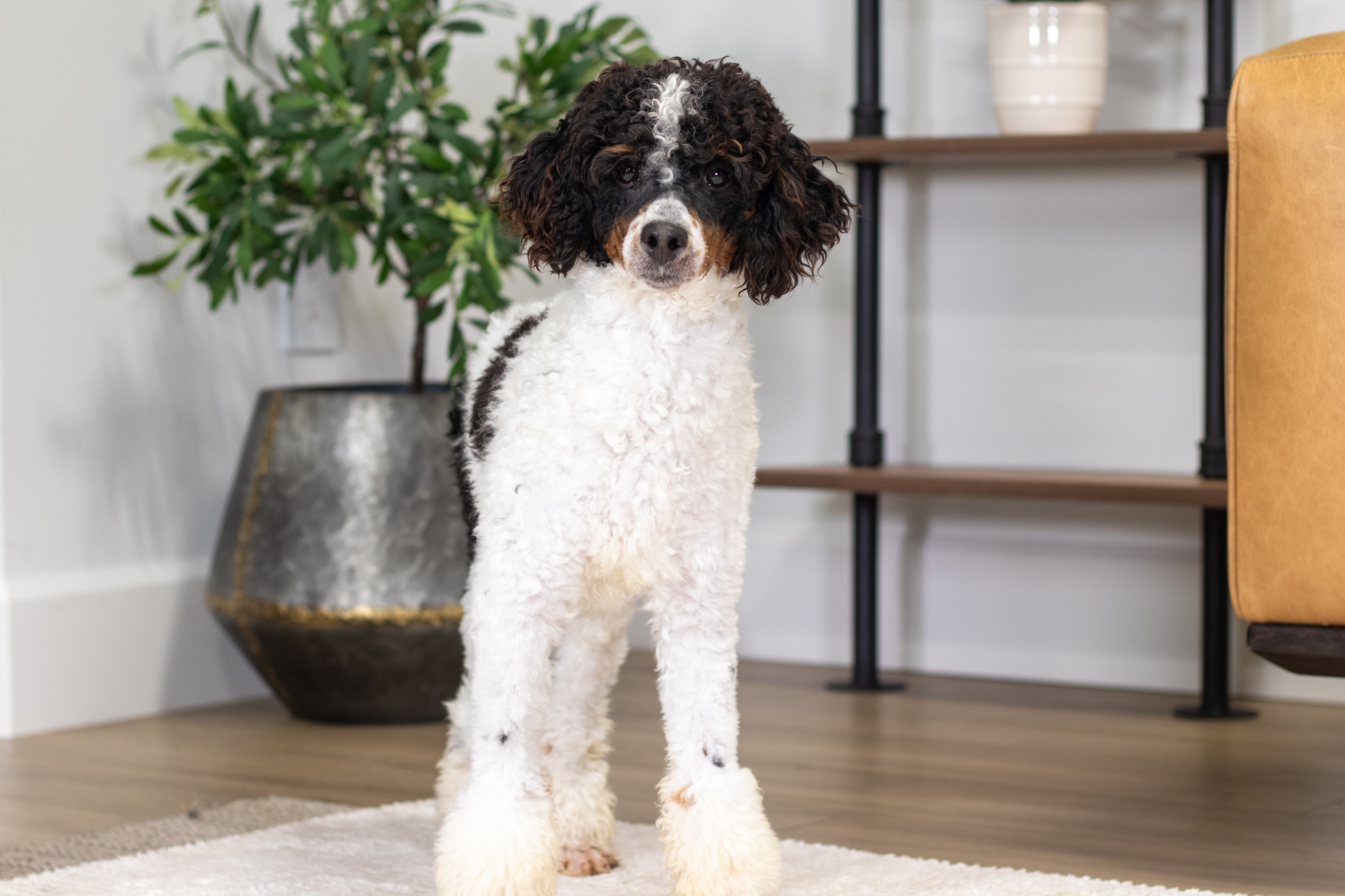
Curly coats most closely resemble the Poodle parent and typically shed the least, making them the best choice for allergy sufferers. These coats require the most maintenance to prevent matting.

Wavy coats represent a middle ground between the Poodle’s tight curls and the Bernese Mountain Dog’s straighter fur. These coats still shed minimally and are often easier to maintain than very curly coats.

Straight coats take after the Bernese Mountain Dog parent and may shed slightly more than their curlier counterparts, though still considerably less than purebred Bernese Mountain Dogs.

The Importance of ENS and ESI in Bernedoodle Puppies

When researching Bernedoodle breeders, you may encounter the terms ENS (Early Neurological Stimulation) and ESI (Early Scent Introduction). These early puppy development protocols are crucial indicators of a breeder’s commitment to raising well-adjusted, confident puppies.

What is Early Neurological Stimulation (ENS)?

Early Neurological Stimulation, also known as the “Super Dog” program, is a protocol developed by the U.S. military’s canine program. ENS involves performing five specific exercises with puppies during their critical development period from day 3 to day 16 of life.
The five ENS exercises include:

Tactile stimulation (gently stimulating between the toes with a cotton swab)
Head held erect (holding the puppy perpendicular to the ground)
Head pointed down (holding the puppy with head pointing toward the ground)
Supine position (holding the puppy on its back)
Thermal stimulation (placing the puppy on a cool, damp towel)

Each exercise is performed for just 3-5 seconds daily, providing mild neurological stress that triggers beneficial developmental responses.

Benefits of ENS for Bernedoodle Puppies

Research has shown that puppies exposed to ENS demonstrate numerous advantages throughout their lives:
Improved stress tolerance – ENS puppies handle stressful situations more calmly and recover more quickly
Stronger cardiovascular performance – Enhanced heart rate and stronger heartbeats
Stronger immune systems – Greater resistance to disease and better overall health
Increased problem-solving abilities – Enhanced cognitive function and learning capacity
Better adaptability – More confident when facing new environments and situations
Improved emotional resilience – Better equipped to handle changes and challenges
For Bernedoodle puppies specifically, these benefits complement their naturally intelligent and adaptable temperament, creating exceptionally well-rounded dogs.

What is Early Scent Introduction (ESI)?

Early Scent Introduction is a complementary protocol that exposes puppies to various scents during the same critical period (days 3-16). Each day, breeders introduce a different scent to the puppy and observe their reaction, recording whether they show attraction, aversion, or neutrality. Common scents used in ESI include:

Various herbs (mint, rosemary, lavender)
Essential oils (eucalyptus, coconut)
Natural items (grass, wood, leather)
Food items (cheese, fish, fruits)
Animal scents (sheep’s wool, bird feathers)
Household items (tennis ball, plastic)

Benefits of ESI for Bernedoodle Puppies

Early Scent Introduction provides significant developmental advantages:
Enhanced scenting abilities – Puppies develop superior nose awareness and scent discrimination
Increased confidence – Regular exposure to novel stimuli builds confidence in new situations
Better focus – Improved ability to concentrate despite distractions
Reduced fear responses – Less likely to react fearfully to unfamiliar scents and environments
Improved trainability – Enhanced learning capacity that makes training easier
For Bernedoodles, who are already highly intelligent and trainable, ESI amplifies these natural abilities, making them even more responsive to training and environmental adaptation.

Why ENS and ESI Matter When Choosing Your Bernedoodle Puppy

Breeders who implement ENS and ESI protocols demonstrate several important qualities:
Commitment to excellence – These programs require daily dedication and attention to each puppy during the critical early weeks. Breeders who invest this time genuinely care about producing the best possible puppies.
Knowledge of canine development – Understanding and implementing these protocols shows the breeder stays current with research and best practices in puppy development.
Investment in long-term success – ENS and ESI benefits last a lifetime. Breeders who use these methods prioritize the puppy’s future success, not just quick sales.
Attention to individual puppies – Both protocols require individual handling of each puppy daily, ensuring each one receives personal attention from the start.
The Long-term Impact on Your Bernedoodle
Bernedoodle puppies raised with ENS and ESI typically demonstrate noticeable differences throughout their lives. Owners often report:

  • Easier house training and basic obedience
  • Less anxiety during veterinary visits and grooming
  • Better behavior in new environments (visiting friends, hotels, new parks)
  • Increased confidence in social situations
  • Quicker recovery from startling events
  • Enhanced problem-solving during training
  • Stronger bonds with family members
  • Better adaptation to lifestyle changes

These advantages are particularly valuable for Bernedoodles, who already possess wonderful temperaments. ENS and ESI enhance their natural qualities, helping ensure your puppy develops into the confident, well-adjusted companion you envision.

Understanding Bernedoodle Generations

When researching Bernedoodle puppies, you’ll encounter terminology referring to different generations. Understanding these distinctions helps you choose a puppy that best matches your needs, particularly regarding hypoallergenic qualities and appearance.

F1 Bernedoodle Puppies

F1 (first generation) Bernedoodle puppies have one purebred Poodle parent and one purebred Bernese Mountain Dog parent, making them exactly 50% Poodle and 50% Bernese Mountain Dog. This generation typically displays the most hybrid vigor and genetic diversity.

F1 Bernedoodles offer a balanced combination of traits from both parent breeds. However, coat type and shedding can vary more widely in F1 puppies since the genetic contribution from each parent breed is equal.

F1B Bernedoodle Puppies

F1B (first generation backcross) Bernedoodle puppies result from breeding an F1 Bernedoodle back to a purebred Poodle. This creates puppies that are approximately 75% Poodle and 25% Bernese Mountain Dog.

F1B Bernedoodle puppies typically have curlier, more hypoallergenic coats due to the increased Poodle genetics. Families with moderate to severe allergies often prefer F1B puppies for this reason.

Other Generations

As Bernedoodle breeding programs have matured, additional generations have emerged, including F2 (F1 x F1), F2B, and multi-generational Bernedoodles. Each generation offers slightly different characteristics, and reputable breeders can guide you toward the generation that best suits your preferences and needs.

Are Bernedoodle Puppies Hypoallergenic?

This is one of the most common questions prospective owners ask about Bernedoodle puppies. While Bernedoodles are often marketed as hypoallergenic, it’s important to understand what this term truly means.

No dog breed is completely 100% hypoallergenic. All dogs produce proteins in their saliva, urine, and dander that can trigger allergic reactions in sensitive individuals. However, Bernedoodle puppies are considered low-shedding dogs, which means they release fewer allergens into the environment compared to heavy-shedding breeds.

The hypoallergenic quality of individual Bernedoodle puppies varies based on their generation and coat type. Puppies with curlier, Poodle-like coats typically shed less and produce fewer airborne allergens than those with straighter coats.

If someone in your household has dog allergies, it’s wise to spend time with Bernedoodle puppies before making a commitment. Many breeders welcome visits that allow potential owners to gauge their allergic response. This practical approach helps ensure your family can comfortably live with a Bernedoodle long-term.

Grooming Requirements for Bernedoodle Puppies

Bernedoodle puppies require regular grooming to keep their coats healthy, comfortable, and looking their best. The specific grooming needs vary depending on coat type, but all Bernedoodles benefit from consistent care.

Brushing

Regular brushing is essential for preventing mats and tangles in your Bernedoodle’s coat. Puppies with wavy or curly coats should be brushed at least three to four times per week, while those with very curly coats may require daily brushing sessions.

Starting a brushing routine when your puppy is young helps them become comfortable with grooming, making it a pleasant bonding experience rather than a stressful chore. Use appropriate grooming tools like slicker brushes and metal combs designed for doodle coats.

Professional Grooming

Most Bernedoodle owners schedule professional grooming appointments every six to eight weeks. Professional groomers can trim the coat to a manageable length, clean the ears, trim nails, and ensure your Bernedoodle looks and feels their best.

Many owners choose to keep their Bernedoodles in a shorter “puppy cut” that’s easier to maintain between grooming appointments. Others prefer longer coats that showcase the breed’s beautiful coloring and texture.

Additional Grooming Tasks

Beyond brushing and professional grooming, Bernedoodle puppies need regular nail trims, ear cleaning, and dental care. Establishing these routines early in puppyhood makes them easier to maintain throughout your dog’s life.

Exercise Needs of Bernedoodle Puppies

Bernedoodle puppies have moderate exercise requirements that are manageable for most families. They need daily physical activity to stay healthy, happy, and well-behaved, but they’re not as demanding as some high-energy working breeds.

Daily Exercise Recommendations

Plan for 30 to 60 minutes of exercise daily for your Bernedoodle. This can include walks, playtime in the yard, fetch sessions, or other activities your dog enjoys. Mini Bernedoodles often adapt well to suburban or urban living when their exercise needs are consistently met.

Mental Stimulation

Remember that Bernedoodle puppies need mental exercise as much as physical activity. Their intelligent minds thrive on challenges like puzzle toys, training sessions, hide-and-seek games, and learning new tricks. Mental stimulation helps prevent boredom and the destructive behaviors that can result from an under-stimulated dog.

Activities Bernedoodles Enjoy

Bernedoodles enthusiastically participate in various activities. They typically love swimming, hiking, playing fetch, going for car rides, visiting dog parks, and simply accompanying their families on daily adventures. Their versatile nature means they’re up for almost anything their owners enjoy.

Training Your Bernedoodle Puppy

Training a Bernedoodle puppy is typically a rewarding experience thanks to their intelligence and eagerness to please. Starting training early sets the foundation for a well-behaved, confident adult dog.

Positive Reinforcement Methods

Bernedoodle puppies respond exceptionally well to positive reinforcement training techniques. Use treats, praise, and play as rewards for desired behaviors. These dogs are sensitive to their owner’s emotions and respond much better to encouragement than harsh corrections.

Socialization

Early socialization is crucial for Bernedoodle puppies. Expose your puppy to various people, animals, environments, sounds, and experiences during their critical socialization window (typically before 16 weeks of age). Well-socialized Bernedoodles grow into confident, friendly adults who handle new situations with ease.

House Training

Most Bernedoodle puppies pick up house training relatively quickly when owners maintain consistency. Establish a regular schedule for feeding, bathroom breaks, and sleep. Crate training can be an effective tool for house training while also providing your puppy with a safe, comfortable space.

Basic Commands and Beyond

Start with basic commands like sit, stay, come, down, and leave it. Once your Bernedoodle puppy masters these fundamentals, you can progress to more advanced training. Many Bernedoodles excel at trick training, agility, therapy dog work, and other activities that challenge their minds.

Health and Lifespan of Bernedoodle Puppies

Expected Lifespan

Bernedoodle puppies typically enjoy relatively long lifespans for medium to large dogs. Most Bernedoodles live between 12 and 15 years, with Mini Bernedoodles often reaching 15 to 18 years with proper care. This longevity is one of the benefits of hybrid vigor and responsible breeding practices.

Common Health Considerations

When bred responsibly, Bernedoodles are generally healthy dogs. However, they can potentially inherit health conditions from either parent breed. Reputable breeders conduct extensive health testing on parent dogs to minimize the risk of genetic conditions.

Potential health concerns in Bernedoodles may include hip and elbow dysplasia, progressive retinal atrophy, Von Willebrand’s disease, and certain cardiac conditions. Responsible breeders screen for these conditions before breeding and provide health guarantees with their puppies.

Preventive Care

Ensuring your Bernedoodle puppy has a long, healthy life involves several key practices:

– Regular veterinary checkups, including annual wellness exams
– Staying current on all vaccinations and preventive medications
– Protecting against fleas, ticks, heartworm, and intestinal parasites
– Feeding high-quality, age-appropriate dog food
– Maintaining a healthy weight through proper diet and exercise
– Providing dental care to prevent periodontal disease
– Monitoring for any changes in behavior or physical condition

Nutrition for Bernedoodle Puppies

Proper nutrition is fundamental to raising a healthy Bernedoodle puppy. The right diet supports growth, development, energy levels, coat health, and overall wellbeing.

Choosing Quality Food

Feed your Bernedoodle puppy a high-quality dog food formulated for their size and life stage. Look for foods with real meat as the primary ingredient, appropriate protein levels for growth, and balanced nutrition from whole food sources.

Many Bernedoodle owners choose premium kibble, while others prefer fresh, gently cooked diets, or even raw food diets. Whatever you choose, consult with your veterinarian to ensure your puppy’s nutritional needs are being met.

Feeding Schedule

Bernedoodle puppies typically need three to four meals daily until around six months of age, then transition to two meals per day. Maintaining a consistent feeding schedule helps with house training and digestion.

Avoiding Overfeeding

While it’s tempting to indulge your adorable Bernedoodle puppy, maintaining a healthy weight is crucial, especially during the growth phase. Excess weight puts unnecessary strain on developing joints and can contribute to long-term health problems. Follow feeding guidelines based on your puppy’s age, current weight, and expected adult size.

Living with Bernedoodle Puppies

Apartment Living

Mini Bernedoodle puppies can thrive in apartments and condos as long as their exercise and mental stimulation needs are met. They’re generally not excessive barkers, making them relatively good neighbors. Daily walks, regular playtime, and mental enrichment activities help apartment-dwelling Bernedoodles stay happy and well-adjusted.

Family Life

Bernedoodle puppies are exceptional family dogs. They demonstrate patience with children, enjoy being involved in family activities, and adapt well to the organized chaos of family life. Their gentle nature combined with playful energy makes them ideal companions for families with kids of all ages.

Multi-Pet Households

Bernedoodles typically integrate well into homes with existing pets. Their friendly, non-aggressive temperament and social nature make them excellent companions for other dogs and even cats when properly introduced and socialized.

Separation Anxiety

Bernedoodle puppies strongly prefer companionship and may develop separation anxiety if left alone for extended periods regularly. If your lifestyle requires leaving your dog alone during workdays, gradually acclimate your puppy to alone time, provide engaging toys, consider doggy daycare, or arrange for a midday dog walker.

Why Bernedoodles Are So Popular

The surging popularity of Bernedoodles isn’t difficult to understand. These dogs successfully combine highly desirable traits that modern families seek in a companion animal.

They offer the gentle, loving, loyal nature of the iconic Bernese Mountain Dog with the intelligence, trainability, and low-shedding coat of the Poodle, all wrapped in a family-friendly size that works for various living situations. This combination is exceptionally rare to find in a single breed.

Additionally, Bernedoodles possess an undeniable charm with their teddy bear appearance, expressive faces, and affectionate personalities. They’re equally content cuddling on the couch as they are joining outdoor adventures, making them remarkably versatile companions.

Preparing for Your Bernedoodle Puppy

Before bringing your Bernedoodle puppy home, prepare your household to ensure a smooth transition.

Essential Supplies

Gather necessary supplies including appropriately sized food and water bowls, high-quality puppy food, a comfortable bed, a crate for house training, puppy-safe toys, grooming tools, a collar and leash, and identification tags.

Puppy-Proofing

Puppy-proof your home by removing hazards, securing electrical cords, moving toxic plants out of reach, storing cleaning supplies safely, and blocking access to dangerous areas.

Veterinary Care

Schedule a veterinary appointment within the first few days of bringing your puppy home to establish care, review vaccination schedules, discuss parasite prevention, and address any health questions.

The First Year with Your Bernedoodle Puppy

The first year with your Bernedoodle puppy is filled with growth, learning, and bonding. Your puppy will progress through several developmental stages, each bringing new joys and challenges.

Focus on building a strong foundation through consistent training, thorough socialization, establishing routines, providing appropriate exercise and mental stimulation, and nurturing the bond between you and your puppy.

Remember that puppyhood is temporary, but the habits and training you establish now will last a lifetime. Invest time and patience during this critical period to raise a well-adjusted, obedient, happy Bernedoodle.

Conclusion: Is a Bernedoodle Puppy Right for You?

Bernedoodle puppies are wonderful companions for many families, but they’re not the perfect fit for everyone. Consider whether you can commit to:

– Regular grooming and maintenance
– Daily exercise and mental stimulation
– Consistent training and socialization
– Being home enough to prevent separation anxiety
– The financial responsibility of quality food, veterinary care, and grooming
– 12-18 years of companionship and care

If you can enthusiastically embrace these commitments, a Bernedoodle puppy might be the perfect addition to your family. These intelligent, affectionate, adaptable dogs bring tremendous joy to households around the world.

Their combination of beauty, brains, and gentle temperament makes them outstanding companions for families with children, active individuals, and anyone seeking a loving, loyal friend. With proper care, training, and socialization, your Bernedoodle puppy will grow into a remarkable dog who enriches your life for many years to come.

The journey of raising a Bernedoodle puppy requires dedication, but the rewards—unconditional love, endless entertainment, loyal companionship, and countless precious memories—make every moment worthwhile. Welcome to the wonderful world of Bernedoodle ownership!

Bernedoodle FAQ – Everything You Need to Know

Are Bernedoodles friendly?

Yes, Bernedoodles are known for being exceptionally friendly, affectionate, and people-oriented. They often form strong bonds with their families and enjoy being involved in daily activities. With proper socialization, Bernedoodles are typically welcoming toward visitors and other pets.

Are Bernedoodles smart?

Bernedoodles are highly intelligent dogs, thanks to their Poodle lineage. They learn quickly, respond well to positive reinforcement training, and excel at basic obedience and advanced commands. Early training and consistency help them reach their full potential. 

Read More>>>Bernedoodle Intelligence

Can Bernedoodles be left alone?

Bernedoodles prefer companionship and do best in homes where they are not left alone for long periods. Extended alone time can lead to boredom or separation anxiety. Crate training, enrichment toys, and gradual independence training can help if short periods alone are necessary.

Are Bernedoodles hypoallergenic?

Bernedoodles are often considered low-shedding, but no dog is 100% hypoallergenic. Coat type matters:

  • Curly or wavy coats (more Poodle-like) tend to shed less

  • Straighter coats may shed more
    Mini Bernedoodles with curlier coats are often a better choice for allergy-sensitive families.

How much grooming do Bernedoodles need?

Bernedoodles require regular grooming:

  • Brushing: 3–4 times per week (daily for curlier coats)

  • Professional grooming: every 6–8 weeks
    Routine grooming helps prevent matting and keeps their coat healthy and comfortable.

How big do Bernedoodles get?

Bernedoodle size depends on generation and parent size:

  • Mini Bernedoodles: ~25–45 lbs, 18–22 inches tall

  • Standard Bernedoodles: 60–90+ lbs
    Mini Bernedoodles are especially popular for families wanting a medium-sized dog.

How much exercise do Bernedoodles need?

Bernedoodles have moderate exercise needs:

  • Daily walks (30–60 minutes)

  • Playtime and mental stimulation
    Mini Bernedoodles often adapt well to suburban or city living when exercised consistently.

What is the lifespan of a Bernedoodle?

Bernedoodles typically live 12–15 years, with Mini Bernedoodles often on the higher end of that range. Proper nutrition, regular vet care, and responsible breeding contribute to longevity.

What should I feed a Bernedoodle?

A Bernedoodle should be fed a high-quality, protein-rich dog food appropriate for their size and life stage. Many owners choose:

  • Premium kibble

  • Fresh or gently cooked diets (with vet guidance)
    Avoid overfeeding to prevent joint strain, especially during growth.

Are Bernedoodles good with kids?

Yes, Bernedoodles are generally excellent family dogs. They are patient, gentle, and playful, making them well-suited for homes with children. As with all dogs, supervision and teaching respectful interactions are important.

Are Bernedoodles good with cats and other pets?

With early socialization, Bernedoodles typically do very well with cats and other dogs. Their friendly, adaptable temperament makes them a great multi-pet household companion.

Do Mini Bernedoodles bark a lot?

Mini Bernedoodles are not excessive barkers, but they may alert bark. Proper training and mental stimulation help keep barking to a minimum.

Are Mini Bernedoodles good for first-time dog owners?

Yes, Mini Bernedoodles are often an excellent choice for first-time owners due to their intelligence, manageable size, and eagerness to please.

Do Mini Bernedoodles have health issues?

When responsibly bred, Mini Bernedoodles are generally healthy. Reputable breeders perform genetic health testing on parent dogs to reduce the risk of inherited conditions common to Bernese Mountain Dogs and Poodles.

Are Mini Bernedoodles good apartment dogs?

Mini Bernedoodles can do well in apartments as long as their exercise and mental needs are met. Daily walks and enrichment are key.

What makes Mini Bernedoodles so popular?

Mini Bernedoodles combine:

  • The gentle, loving nature of the Bernese Mountain Dog

  • The intelligence and low-shedding coat of the Poodle
    All in a family-friendly, medium size that fits many lifestyles.