

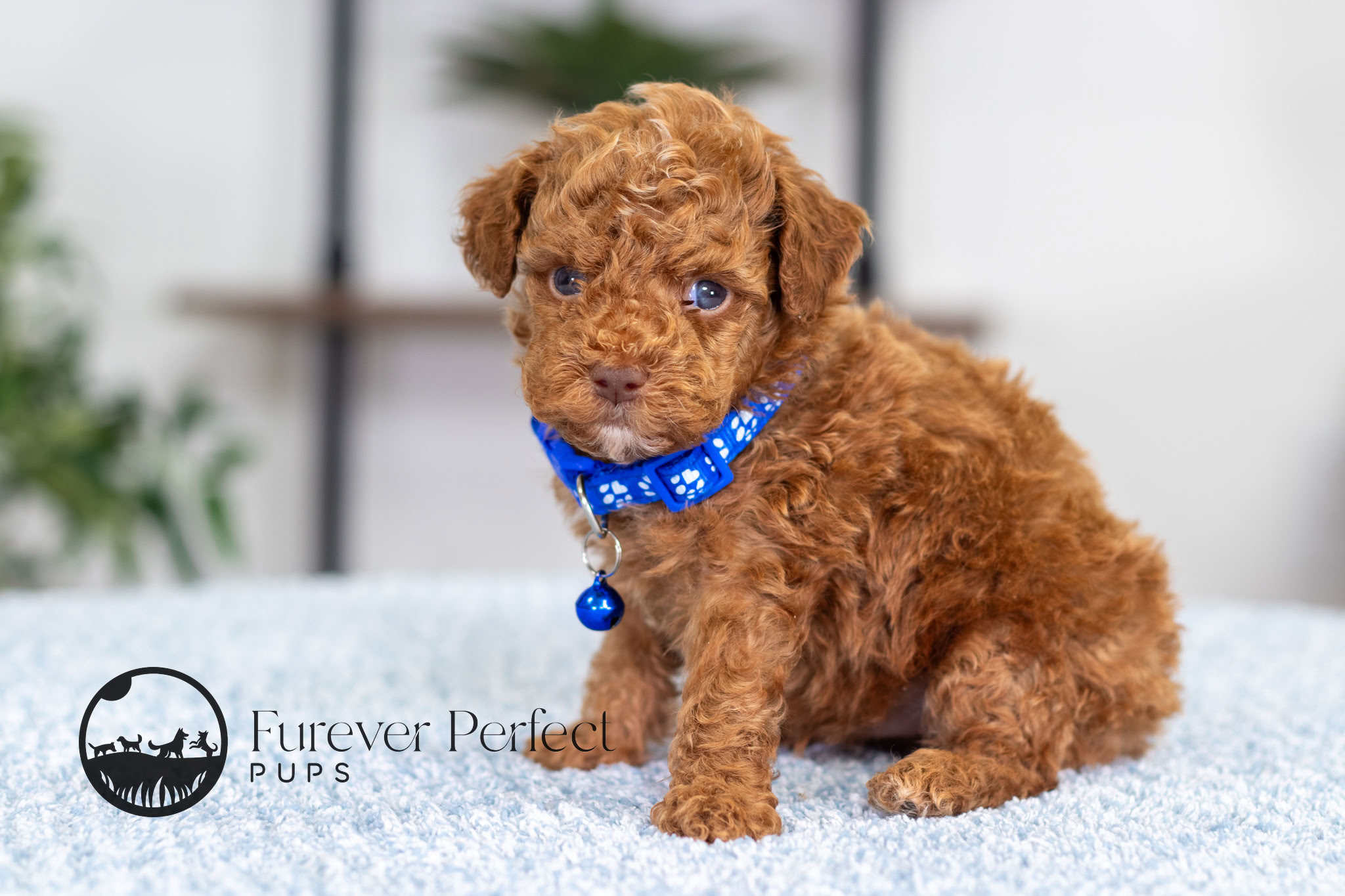
Housebreaking a Poodle: Potty Training Tips That Actually Work
Poodles are ranked second among all dog breeds for working and obedience intelligence in Stanley Coren’s research. That ranking has a direct and practical consequence for potty training: Poodles learn what the rules are faster than most dogs, and they apply that learning more reliably once it is established. The families that struggle to housetrain their Poodle are almost never dealing with a dog that cannot understand the system. They are almost always dealing with a breakdown in one of three foundational elements: schedule consistency, supervision completeness, or the clarity of what is being rewarded.
This guide addresses all three. It covers the physiological reality of a puppy bladder and why that determines the schedule, the mechanics of crate training as a housetraining tool rather than a general confinement strategy, the specific outdoor sequence that builds a reliable potty behavior, the mistakes that extend the process from weeks to months, and the size-specific considerations that apply differently across Toy, Miniature, and Standard Poodles. What it does not cover is the myth that Poodles are somehow harder to housetrain than other breeds because of some stubborn streak. In our experience breeding and placing Poodles, that reputation, when it exists at all, is almost always a symptom of inconsistent management rather than any property of the dog itself.
Working intelligence, as Coren defines it, is the capacity to learn from human instruction quickly and to retain and reliably apply what was learned. For housetraining, this means a Poodle exposed to a clear, consistent system is building an understanding of that system faster than most breeds. It connects the outdoor location, the specific cue word, the post-elimination reward, and the timing between all three into a behavioral rule more quickly than a dog with lower working intelligence does.
This speed advantage comes with one important implication: a Poodle also learns inconsistent rules faster than most dogs. A housetraining program that sometimes rewards outdoor elimination and sometimes does not, that sometimes enforces the schedule and sometimes abandons it, or that sometimes responds to indoor accidents with alarm and sometimes ignores them, teaches the Poodle an inconsistent rule with the same speed and thoroughness it would apply to a consistent one. The result is a dog whose housetraining appears unreliable, and whose owner may conclude that the dog is difficult or stubborn when the actual problem is that the system being learned is inconsistent.
The implication for the owner is straightforward: the effort investment in housetraining a Poodle should go into consistency and observation rather than into repetitive drilling. A Poodle that is taken outside on a reliable schedule, rewarded immediately and enthusiastically when it eliminates outdoors, and managed carefully enough that indoor accidents are prevented more often than they occur will typically housetrain faster than the owner expected. The system does the work; the owner’s job is to maintain the system.
Every successful housetraining program rests on three interdependent elements. Remove any one of them and the other two are significantly less effective. Understanding why they work together helps owners invest in all three simultaneously rather than trying to make one element carry the load for the others.
The Schedule
The AKC’s potty training guidance recommends a general rule of thumb that a puppy can control its bladder for about one hour per month of age. An eight-week-old puppy has a maximum bladder capacity of approximately two hours; a four-month-old has roughly five hours of capacity. These are upper limits in ideal conditions, not reliable baselines. Sleeping, excitement, play, eating, and drinking all reduce that capacity in the moment: the puppy that has just eaten needs to go within five to thirty minutes of finishing the meal. The puppy that just woke from a nap needs to go immediately, before it has taken three steps. The puppy that has been playing hard needs to go when play ends.
The Small Door Veterinary housetraining guide recommends taking the puppy to the chosen spot every two hours in the beginning, plus after every meal, after every nap, and after play sessions. The AKC’s potty training guidance adds the specific morning protocol that experienced owners consistently identify as the most important moment in the entire schedule: when the alarm goes off, do not stop to make coffee, check email, or brush your teeth. Get the puppy out of the crate and outside first. This single moment, the first morning elimination, is when the puppy has the most accumulated need and the highest risk of producing an indoor accident if the transition to outside is not executed immediately.
Supervision
The schedule tells you when to take the puppy outside. Supervision prevents accidents during the intervals between scheduled trips. A puppy left unsupervised inside the house will have accidents, and each indoor accident where the puppy is not caught in the act, redirected to outside, and rewarded for finishing there is an unmanaged training event. Indoor accidents that are not addressed do not simply stop happening; they build a location association. The Small Door guide makes this explicit: using the same outdoor spot builds up an odor that the puppy will detect and want to re-mark, and the converse is also true: indoor accidents that are not cleaned thoroughly with an enzymatic cleaner leave a scent signal that marks that location as a toilet spot in the puppy’s behavioral map.
Effective supervision during housetraining means one of three things: the puppy is in the same room as an attentive person who is watching for the pre-elimination signals described below, the puppy is in its crate, or the puppy is in a gated small area from which it cannot wander into other rooms. The Dr. Phillips Animal Hospital housetraining guide is direct on the management requirement: puppies can be kept within sight on leash indoors, carried, or managed with baby gates. The threshold for acceptable supervision during the active housetraining period is close monitoring that catches pre-elimination signals before they become elimination events, not simply being in the same general area of the house.
The Crate
The Poodle Mojo breeder resource states the principle clearly: crate training works on the principle that the puppy does not like to soil where it sleeps. If the crate gives the puppy just enough space to sleep comfortably, it will instinctively control itself when in the crate, as long as it is not left there longer than its bladder can handle. The crate is the management tool that makes reliable supervision possible during housetraining because it provides a location where the puppy will not eliminate voluntarily, which means every time the puppy comes out of the crate, the owner knows the puppy has not yet eliminated and should be taken outside immediately before anything else happens.
Crate size is specific: the AKC guidance specifies that the crate should be large enough for the puppy to stand up, turn around, and lie down, but not so large that the puppy can eliminate in one corner and sleep in another. For a breed like the Standard Poodle, which will grow to forty-plus pounds but starts the crate at eight weeks weighing under fifteen pounds, this means either purchasing a crate with a divider panel that adjusts as the puppy grows, or replacing the crate as size changes. A crate that is too large is not a more comfortable space for the puppy; it is a housetraining liability.
The outdoor trip is not simply a moment of taking the dog outside and waiting to see what happens. It is a brief, structured sequence that pairs the location, the cue, and the reward in a way that builds an explicit behavioral rule. Done consistently, this sequence produces a Poodle that understands going to a specific spot in response to a specific cue and is motivated to repeat the behavior because it reliably produces a positive outcome.
STEP 1 Take the puppy directly from the crate to outside without any detours or indoor stops. Carry a young puppy if necessary to prevent an accident between the crate and the door. The Small Door guide notes that taking the same path to the same spot every time builds familiarity and routine that helps the puppy understand what is expected. Use the same door every time during the training period.
STEP 2 Take the puppy on a leash to the designated spot, even in a fenced yard, during the training period. The AKC guidance is specific about the leash during training: it keeps the owner close enough to observe what happens and respond immediately, prevents the puppy from ranging to interesting distractions before eliminating, and ensures the owner does not miss the elimination and therefore misses the reward window. Stand still at the designated spot rather than walking. The Quora practical guide from an experienced trainer notes that the puppy can find a suitable spot anywhere within a six-foot radius; walking around and exploring undermines the location consistency the odor association requires.
STEP 3 Once the puppy is in position and beginning to sniff or circle, introduce the cue word. The AKC guidance notes that the time to introduce the cue is after the puppy understands what behavior is expected, and that saying the word when the puppy has no idea what it means is an exercise in futility. Timing matters: say the cue as the puppy begins to crouch or squat, not before, so the word is consistently paired with the actual elimination behavior rather than with the preliminary sniffing and circling that sometimes do not lead to elimination.
STEP 4 The moment elimination is complete, deliver enthusiastic verbal praise and a high-value treat reward within two to five seconds of the puppy finishing. PetMD’s guidance is explicit about timing: immediate reward is the key to successful potty training, because the puppy must connect the treat to the behavior of eliminating in that location rather than to the subsequent walk back inside, the greeting at the door, or any other event that follows. A reward delivered thirty seconds after elimination is a reward for something other than elimination from the dog’s perspective.
STEP 5 Remain outside for an additional minute or two after the puppy has eliminated, because many puppies go twice. A puppy brought back inside immediately after the first elimination that then needs to go again will have that second elimination indoors, and will do so without any apparent warning because it has already been out. Waiting briefly confirms the trip is complete before returning indoors.
The following schedule is organized around the events that reliably create elimination need rather than clock time alone. Both a fixed-time schedule and an event-based schedule work; combining them produces the most complete coverage during the early weeks.
| Event or Timing | 8 to 10 Weeks | 3 to 4 Months | 5 to 6 Months |
|---|---|---|---|
| First thing in morning | Immediately; carry to avoid accidents on the way | Immediately from crate | Immediately from crate or sleeping area |
| After meals | Within 5 to 10 minutes of finishing | Within 10 to 20 minutes of finishing | Within 20 to 30 minutes of finishing |
| After naps | Immediately upon waking | Immediately upon waking | Within a few minutes of waking |
| After play sessions | When play ends or every 30 to 45 minutes during play | When play ends or every 45 to 60 minutes | When play ends |
| Fixed interval during supervised time | Every 1 to 2 hours | Every 2 to 3 hours | Every 3 to 4 hours |
| Before crating | Always before any crate time over 30 minutes | Always before crating | Always before extended crating |
| Last trip at night | Immediately before the owner goes to sleep; may need a 1 to 2 AM trip | Immediately before bed; may need a midnight trip | Immediately before bed; most can hold through the night |
The Poodle Mojo breeder resource notes specifically: if you leave a puppy in a crate for more than a couple of hours at a time, you are setting it up for failure. The month-plus-one formula from the AKC schedule guide provides the maximum guideline: take the puppy’s age in months and add one to get the maximum hours between trips. A three-month-old Poodle can hold it for a maximum of four hours in ideal conditions. A full eight-hour workday is not within a three-month-old’s physiological capacity, which means households where everyone is away for that duration need a midday arrangement to prevent crate accidents during the training period.
Rewarding Return Rather Than Elimination
One of the most common timing errors is delivering the treat reward at the door upon return from the yard rather than at the moment of outdoor elimination. The dog learns that coming back inside produces a treat, not that eliminating in the designated spot does. The result is a dog that goes outside, performs no elimination, returns to the door, and receives a reward with perfect consistency. Treat delivery must happen within two to five seconds of the elimination finishing, at the elimination location, before the walk back to the door begins.
Treating Indoor Accidents as Learning Opportunities
If the accident is not caught in the act, it cannot be used as a training event. The Dr. Phillips Animal Hospital guide is explicit: if you did not catch them in the act, ignore the accident altogether, as this particular opportunity to correct their behavior has passed. Post-hoc expressions of disappointment, mild correction, or any interaction that follows an already-completed indoor accident teach the dog nothing useful about where to eliminate and add confusion and potential negative emotional associations with the owner’s presence. Clean the accident with enzymatic cleaner, assess what supervision gap allowed it to happen, and close that gap.
If the accident is caught in the act, a single calm interruption, not alarm or anger, followed by immediate transition to outside and enthusiastic reward if elimination resumes there, is the complete appropriate response. A Poodle interrupted from an indoor elimination and immediately taken outside to finish and rewarded is receiving clear information about what you wanted. A Poodle scolded at an indoor accident site is receiving information that confuses elimination behavior with emotional climate.
Expanding Freedom Too Early
The AKC schedule guide identifies this as one of the most common mistakes: owners see some early signs that the dog is getting the idea and declare victory too soon. Even when the puppy is consistently doing what is wanted, maintaining the schedule keeps good habits ingrained. A puppy that is doing well at four months in the kitchen is not automatically doing well unsupervised in the living room. Freedom in the house should be expanded in stages, with each new area treated as a new housetraining context requiring the same scheduled monitoring that the initial space required. A Poodle that is reliable in the kitchen may not yet have generalized that the living room carpet is also an inappropriate elimination site.
Inconsistent Cleaning of Indoor Accidents
Dog urine contains scent signals that identify a location as a toilet site. These signals are not fully removed by standard household cleaners; they require enzymatic cleaners that break down the odor molecules rather than simply masking them. The AKC’s training guidance, the Small Door veterinary guide, and PetMD’s housetraining resource all identify enzymatic cleaning of accidents as a non-negotiable element of the housetraining program. A spot that was cleaned with a standard cleaner may look and smell clean to the owner but retain enough residual scent to signal to the puppy that this is an acceptable elimination location. The GoGoStik puppy schedule guide notes that even areas that look clean may retain odor molecules that attract the puppy back to the same spot.
Punishing Accidents
Mary Burch, PhD, director of the AKC’s Canine Good Citizen program, is direct: avoid punishment, as this can create fear and confusion. A Poodle that associates indoor accidents with negative owner responses learns to eliminate out of the owner’s sight rather than to eliminate outside. The dog that is being sneaky about indoor accidents is almost always a dog that has been punished for them and has learned that hiding the behavior is safer than eliminating where it can be observed. The solution to punished-behavior hiding is to remove punishment from the protocol entirely and to return to tighter management and supervision that prevents the accidents rather than responding to them.
The three Poodle varieties share the same working intelligence and temperament, but their different sizes create meaningfully different housetraining logistics that owners should account for from the beginning.
Toy Poodles
Toy Poodles have proportionally smaller bladders than Standard Poodles, and their faster metabolisms mean they process food and water more quickly. The practical consequence is a schedule that requires more frequent trips than the month-plus-one formula alone would suggest, particularly in the first three months. A Toy Poodle at eight weeks may need to go out every forty-five to sixty minutes during active waking hours rather than the two-hour interval appropriate for larger puppies. The reward must also be appropriately sized: a full-size training treat is a significant calorie event for a three-pound puppy. Breaking treats into small pieces or using a single piece of the puppy’s regular kibble as the reward prevents calorie excess while maintaining the reinforcement value.
Toy Poodles are also more easily carried, which is an advantage in the early training period because the trip from crate to outside can be completed without any floor contact, eliminating the risk of mid-transit accidents that owners of larger breeds sometimes experience. The physical accessibility of the designated outdoor spot also matters more for a Toy: a Toy Poodle navigating icy steps in winter or a long, cold path to the yard is a Toy Poodle with a reason to eliminate before reaching the destination. Having the designated spot as close to the exit door as possible reduces this risk.
Miniature Poodles
Miniature Poodles sit in a practical middle ground between the Toy’s very small bladder capacity and the Standard’s larger one. The two-hour interval schedule is appropriate for most Miniatures at eight weeks, with extension as the puppy develops. The crate sizing issue is particularly important for Miniatures, as crates marketed as “small dog” sizes often provide more space than a Miniature puppy actually needs for housetraining purposes. A Miniature Poodle puppy at eight weeks may fit into a crate appropriate for a full-grown Miniature, but that crate may be large enough for the puppy to eliminate in one corner and sleep in another, undermining the natural den instinct that makes crate training work.
Standard Poodles
Standard Poodles have larger bladder capacity than the smaller varieties and develop physical control more gradually, consistent with their longer overall developmental timeline. The month-plus-one formula applies reliably for Standards, and most Standard Poodle owners find that the schedule intensity required in the first two months loosens noticeably by months three and four. The AKC Canine Good Citizen resources note that a six-month-old puppy with a consistent training program is usually dependable most of the time, and Standard Poodles typically hit this milestone at or before that point with consistent management.
The physical difference most relevant to Standard Poodle housetraining is the transition from a puppy that can be carried outside to one that cannot. A Standard Poodle at eight weeks may weigh twelve to fourteen pounds; by twelve weeks that puppy may be twenty-five or more pounds. The window for carrying the puppy over the trip from crate to door is short, and owners who rely on carrying as the accident-prevention strategy for the morning trip need to transition to a leash-led approach before the puppy outgrows being carried. Establishing the leash early in the training period rather than as a management pivot when the puppy becomes too heavy is the more reliable approach.
Frequently Asked Questions
My Poodle rings a bell to go outside reliably but then does not eliminate when we get there. What is happening?
This is a communication clarity issue that develops when bell ringing has been rewarded regardless of whether it is followed by outdoor elimination, and the dog has learned that bell ringing produces access to the yard for any reason, not specifically for elimination. The correction is to make the outdoor access conditional on elimination: go outside when the bell is rung, wait at the designated spot for one to two minutes, and if no elimination occurs, return directly inside without play or reward. The dog that rings the bell to initiate play or outdoor exploration discovers that bell ringing without elimination produces an unrewarding, very brief outdoor experience, and the bell gradually returns to its intended function as a communication tool specifically for elimination need. Some trainers recommend introducing a bell from the start of housetraining only after outdoor elimination is already reliable without it, to prevent the communication confusion that arises when bell ringing is introduced before the outdoor elimination behavior is firmly established.
My Poodle was completely housetrained and has now started having indoor accidents at eighteen months. What causes adult regression?
Adult onset accidents in a previously housetrained Poodle warrant a veterinary visit before any behavioral explanation is assumed. The most common medical causes are urinary tract infections, which are common in dogs and produce urgency that overrides trained elimination behavior, as well as bladder stones, hormonal conditions, and neurological changes in older dogs. If a veterinary examination finds no physical cause, adult regression is almost always associated with a change in household routine, a significant environmental stressor, or an underprescribed schedule that was adequate for the dog’s previous lifestyle but has become insufficient. A Poodle that was worked from home with consistent outdoor access and is now being left alone for eight-hour days is experiencing a schedule change significant enough to produce regression even in a dog that was solidly housetrained. The response is to return to a more structured schedule rather than to assume any retraining from the beginning is required.
Is it harder to housetrain a male or female Poodle?
Neither sex is reliably easier or harder to housetrain in terms of the basic elimination-outside behavior. The distinction most commonly discussed is that intact males develop marking behavior around sexual maturity, typically between six and twelve months, which is a distinct behavior from general elimination and requires its own management approach. Marking is not a failure of housetraining; it is a motivated scent-communication behavior that is reduced but not always eliminated by the basic housetraining program. Neutering reduces marking behavior in many male dogs, and additional training specifically addressing marking can address it in intact males. Female Poodles do not typically develop marking behavior, but this advantage does not extend to basic housetraining timeline or reliability, which is similar across sexes.
How long should an outdoor potty trip take?
Three to five minutes is the appropriate duration for a scheduled potty trip during housetraining. The puppy is brought to the designated spot, given two to three minutes to eliminate, and if elimination occurs it is rewarded and the trip extends for another minute to confirm the trip is complete. If no elimination occurs within the time window, the puppy returns inside to supervision or the crate and is tried again in fifteen to twenty minutes. Extended outdoor time that allows the puppy to range, play, and explore before eliminating teaches the puppy that trips outside are primarily exploration opportunities that sometimes coincidentally include elimination. The Quora practical housetraining guide notes that standing still with the puppy on a six-foot leash rather than walking around prevents the distraction and location inconsistency that makes some outdoor trips significantly less productive than others.
Can I use puppy pads alongside outdoor training without confusing my Poodle?
Mary Burch, PhD, of the AKC notes that the use of puppy pads and paper training can be tricky: you are reinforcing two different options for the puppy. In an ideal situation, puppies learn to hold it indoors and only eliminate at specific spots outdoors. Pads are sometimes necessary for working households where the puppy cannot access outside every two hours, or for extremely cold climates where outdoor conditions are hazardous for a very small Toy Poodle. When pads are used alongside outdoor training, the most reliable approach is to treat the pad as a temporary management tool rather than an equal-status option, placing pads near the exit door rather than in a central living area to associate the pad with the direction of outside, and systematically moving the pad progressively closer to the door and then outside over several weeks as outdoor access becomes the primary context. A Poodle that has equally reinforced indoor pad use and outdoor elimination is a Poodle with two acceptable options, and the indoor option tends to remain available for years if not deliberately faded.
Final Thoughts
A Poodle that is housetrained reliably is one of the most pleasant dogs to live with, and the path to that outcome is considerably shorter for this breed than for most because the learning capacity is genuinely exceptional. What the intelligence advantage requires is that the system being learned be worth learning: consistent schedule, immediate reward for the right behavior, complete supervision that prevents the accidents that undermine the pattern, and a crate program that makes management practical between outdoor trips.
The owners who struggle with Poodle housetraining are almost never dealing with a dog that cannot understand the system. They are dealing with a system that is not consistent enough to be learned, a reward timing that is not immediate enough to be informative, or a supervision approach that allows accidents faster than training can counterbalance them. Fix those three things and the Poodle’s intelligence does the rest. The breed that ranks second in the world for working and obedience intelligence is more than capable of learning where you want it to go. The question is whether the system you have built is clear enough to be learned, and whether you have maintained it consistently enough for the dog to trust it.