

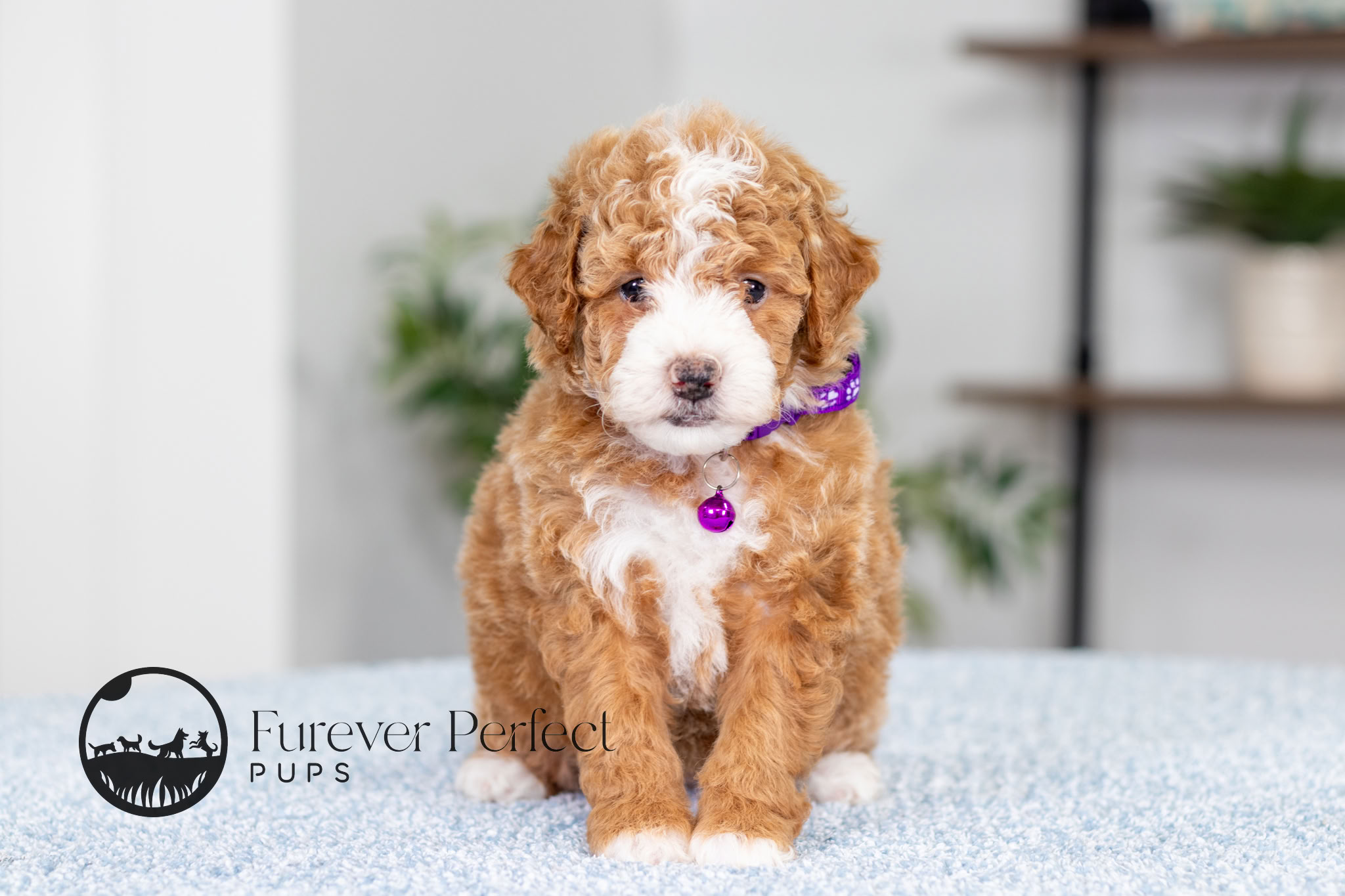
How to Puppy-Proof Your Home for a Poodle
Every puppy needs a safe home. But puppy-proofing for a Poodle involves one consideration that does not apply to most other breeds: you are preparing for one of the most intelligent dogs in existence, and that intelligence will be applied directly to the problem of circumventing every barrier you install. The same capacity that makes Poodles exceptional at learning trained behaviors makes them exceptional at learning where the interesting things are kept and how to access them. A cabinet latch that a Labrador puppy ignores is a puzzle that some Toy Poodles have solved by the time they are six months old. A baby gate that a Golden Retriever puppy respects as a boundary is an obstacle a Standard Poodle will study, test, and potentially defeat.
This does not make Poodles dangerous dogs to own. It makes the puppy-proofing conversation worth having with appropriate specificity. The hazards are the same ones that exist for any puppy: toxic substances, electrical cords, small objects, unsecured trash, and access to areas where injury is possible. The Poodle-specific difference is that your containment measures need to be one step more robust than you might initially assume, and that the window of time during which they are most actively tested runs longer than it does for less intellectually engaged breeds.
Stanley Coren’s research ranks the Poodle second among all breeds for working and obedience intelligence. In the context of puppy-proofing, this ranking has two practical implications. First, a Poodle puppy that finds something interesting behind a barrier will return to that barrier repeatedly and methodically rather than losing interest after one or two attempts. Second, a Poodle puppy that watches you use a latch, open a door, or bypass any mechanism will absorb and remember that information and may apply it later. The Hill’s Pet guidance on puppy-proofing notes that you should expect your new puppy to want to chew and eat everything in sight, but with a Poodle the scope is slightly broader than chewing: a Poodle puppy will also push, paw, nose-bump, lever, and lean against anything it finds interesting.
The practical response to this is not elaborate: use latches rather than just closing cabinets, use baby gates with a latch mechanism rather than pressure-only gates that can be pushed aside, and extend the puppy-proofed zone to include areas you might not initially consider accessible. A Standard Poodle puppy that is twelve weeks old and appears safely below counter height will not be below counter height in four weeks. The DogLifeExpert puppy-proofing guide recommends getting down to puppy level, literally crawling around your floor, to identify hazards from the perspective of an animal that is low to the ground and motivated to explore everything within reach. For a Poodle, extend that mental model to include everything the dog will be able to reach at its adult height, particularly for Standards whose nose will reach kitchen counter height.
The Pawlicy Advisor veterinary resource draws on ASPCA Animal Poison Control Center data to identify the ten categories that generate the most toxicity calls for dogs. Understanding which categories are most dangerous, and where they live in a typical home, is the most targeted starting point for toxic substance management.
| Category | Common Examples in a Typical Home | Where to Secure Them |
|---|---|---|
| Over-the-counter medications | Ibuprofen, acetaminophen, naproxen, vitamins, supplements, cold medicine, antihistamines | Locked medicine cabinet or high shelf; never leave on nightstands or bathroom counters |
| Prescription medications | Antidepressants, anticonvulsants, cardiac medications, ADHD medications | Locked cabinet; Poodles have been known to extract medications from purses, bags, and low nightstand drawers |
| Toxic foods | Grapes, raisins, xylitol (in gum, peanut butter, baked goods), onions, garlic, macadamia nuts, alcohol, raw bread dough | Secure pantry or latched cabinet; be especially vigilant with children’s backpacks and lunch bags, which often contain xylitol-containing items |
| Chocolate | All chocolate; darker chocolate and baking chocolate are more dangerous per ounce than milk chocolate | High cabinet or locked pantry; 76 chocolate toxicity calls daily at the ASPCA APCC |
| Plants and bouquets | Lilies, sago palm, tulip and hyacinth bulbs, oleander, autumn crocus, pothos, philodendron, azalea | Remove from dog-accessible areas entirely; see the ASPCA toxic plant list at aspca.org/pet-care/animal-poison-control/toxic-and-non-toxic-plants |
| Household chemicals | Cleaning products, laundry pods, dishwasher pods, drain cleaners, bleach, floor cleaners | Latched lower cabinets; laundry pods are particularly dangerous because of their concentrated chemistry and appealing texture to a puppy |
| Rodenticides | Rat and mouse poison in any form, including bait stations under sinks or in garages | Remove from accessible areas entirely during puppyhood; these are among the most dangerous ingestions |
| Insecticides | Flea and tick treatments designed for other animals, ant and roach bait, yard sprays | Store in locked garage cabinet; never use feline flea treatments on or around dogs |
| Batteries | Disc batteries in watches and small electronics are the highest risk; any battery can cause internal burns if swallowed | Keep devices containing batteries out of reach; secure remote controls, key fobs, and children’s toys |
| Gardening products | Fertilizer, pesticides, herbicides, weed killer, fungicides, cocoa mulch | Locked garage storage; never allow access to freshly treated lawn or garden areas |
Kitchen
The kitchen combines food, chemicals, sharp objects, and trash in a small, high-traffic space. The SpectrumCare puppy-proofing guide recommends childproof latches on lower cabinets containing cleaners, dishwasher pods, plastic wrap, foil, knives, or pantry items. Dishwasher pods are among the most concentrated and dangerous household chemical exposures for a puppy; a cabinet latch is the only reliable protection. Keep trash in a covered can with a latch mechanism or inside a latched cabinet. Standard Poodle puppies will be at trash-can height by four to five months; Toy and Miniature Poodles will find ways to knock lighter cans over. The SpectrumCare guide specifically notes that spoiled food, bones, corn cobs, skewers, and packaging can all cause stomach upset or dangerous blockages alongside the more obvious toxic food concerns.
The stove is an often-overlooked hazard for Poodles specifically: a Standard Poodle at adult height can place its nose at counter height, and an adult Standard Poodle left unsupervised in a kitchen with food on the counter has both the access and the intelligence to investigate. Installing baby locks on oven doors and never leaving cooking food unattended with an unsupervised dog are practices worth establishing from the beginning.
Bathroom
The bathroom concentrates most of the medication risk in the typical home. Medications on counters or in unlocked medicine cabinets are accessible to a puppy that is motivated to investigate. The DogLifeExpert guide specifically identifies all medications as requiring locked cabinet storage, not just high shelves, because Poodles can learn to knock items off shelves over time. Toilet lids should be kept closed: the HappyOodles guide notes that a puppy could fall in and drown, which sounds alarming but is a genuine risk for a small puppy in a standard toilet with steep smooth sides. Cleaning products under the sink require a latch, not just a closed door, for the same reason as kitchen chemicals.
Living Room and Bedrooms
Electrical cords are the primary hazard in these spaces. The Hill’s Pet guidance describes the injury profile specifically: chewing on electrical cords can result in burns to the mouth and electrocution, which can be fatal; signs of a systemic electrical cord injury include vomiting, seizures, muscle spasms, coughing, and fast breathing. Cord management is not optional: run cords through PVC pipe, use commercial cord concealers or spiral wrap, tuck cords behind furniture, or use cord clips to keep them elevated and out of reach. Phone charger cords are among the most dangerous because they are thin, flexible, frequently left on floors, and carry live current when plugged in.
Small objects that are normal parts of household life become choking or obstruction hazards in a puppy’s mouth: hair ties, rubber bands, coins, batteries, sewing supplies, children’s toy parts, socks, and jewelry. The Hill’s Pet guide notes that these materials can become stuck in the intestinal tract and require emergency surgery to remove. Establishing the habit of keeping these items off floors and low surfaces before the puppy arrives is significantly easier than changing habits after a household with a puppy has settled into its new normal.
Houseplants require specific attention. The ASPCA toxic plant database is the authoritative reference; every plant in the home should be checked against it before the puppy arrives. The SpectrumCare guide identifies sago palm as among the most serious examples, capable of causing severe poisoning in dogs. Tulips and hyacinths store their highest toxin concentration in the bulbs. Oleander is severely toxic at any dose. Lilies, pothos, philodendron, azalea, and cyclamen are other common household plants that cause significant toxicity. Any plant that cannot be confirmed as non-toxic should be moved to a room the puppy cannot access or removed entirely.
Garage, Laundry, and Storage Areas
These spaces hold some of the most dangerous substances in the home, and they are often the least puppy-proofed because they are not thought of as living spaces. Antifreeze is among the most dangerous: it is sweet-tasting, so dogs are attracted to it, and it is lethal in small quantities. Any antifreeze in the garage should be in a sealed container on a high shelf, and the floor should be checked for leaks or spills before a puppy is ever allowed access. Rodenticides, pesticides, fertilizers, and fuel for lawn equipment are similarly dangerous and should be in locked storage inaccessible to the dog.
The laundry area holds its own hazards: detergent pods are among the most concentrated chemical exposures possible for a small dog. Dryer sheets contain chemicals that can cause ulcers in the mouth and esophagus if chewed. Keeping the laundry room door closed or latched is the simplest solution, but any product stored at floor level is a hazard the first time the puppy finds the door ajar.
The outdoor space presents its own category of hazards, and for a breed that tends to enjoy outdoor time and investigation, getting it right before the puppy’s first outside experience matters.
Fence Integrity and Escape Risk
The Guide Dogs for the Blind puppy-raising resource recommends checking the yard for unsecure gate latches or gaps in fencing where a puppy could easily escape. This inspection should happen before the puppy arrives, not after the first yard session reveals gaps. Standard Poodle puppies grow quickly and can squeeze through spaces that seem too small; check every point in the fence perimeter, including the area under gates where gaps are often wider than the gate appears. Latch mechanisms on gates should require deliberate human manipulation to open; simple push latches can often be nudged by a nose or a paw.
For Standard Poodles specifically: adult Standard Poodles are athletic dogs that can clear fences that their height would suggest are adequate barriers. A fence that is appropriate for a Miniature Poodle may not be appropriate for a full-grown Standard. Knowing the expected adult height of your specific dog before investing in fencing, or before trusting existing fencing to contain an adult dog, is the responsible approach.
Outdoor Toxic Plants
The ASPCA toxic plant database covers outdoor and garden plants as well as houseplants. Sago palms, oleander, and rhododendron are among the most dangerous and are common landscaping plants in many parts of the United States. Autumn crocus bulbs are highly toxic. Mushrooms growing in the yard present a specific challenge because a single yard may contain both harmless and highly toxic species that are visually indistinguishable to a non-expert. The Guide Dogs resource recommends a separate blog post on avoiding toxic mushrooms as worth reviewing. When in doubt about any yard plant, consulting with your veterinarian before the puppy has yard access is worthwhile.
Water Hazards
The Guide Dogs guidance and the Hill’s Pet resource both specifically identify pools, ponds, and other water bodies as drowning hazards for puppies, even water-oriented puppies whose breed includes a retrieving heritage. The Poodle’s history as a water retriever does not mean a Poodle puppy can safely navigate a swimming pool; the steep, smooth sides of residential pools do not provide exit points for a young puppy that has fallen in. Pool gates or direct supervision during any outdoor time near water are the appropriate management until the puppy is old enough and strong enough to exit the pool reliably and has been shown where the exit point is.
The SpectrumCare guide and the AKC both recommend establishing a dedicated puppy-safe area as a core safety strategy rather than trying to puppy-proof an entire home to allow unrestricted access. This area, which may be a gated kitchen, an exercise pen, or a small room with washable flooring, serves as the puppy’s primary environment when direct supervision is not possible. It is not a permanent solution; it is the contained space where the puppy spends time while the rest of the household is being gradually introduced under supervision.
The Preventive Vet guide recommends establishing household rules with all family members and roommates before the puppy arrives: whether the dog will be allowed on furniture, where it will sleep, which rooms are off-limits, and how gates and crates will be used. The Poodle’s intelligence makes consistent rule enforcement from all adults more important than it is for some other breeds, because a Poodle that learns it can access the bedroom when one family member is home but not another has not learned that the bedroom is off-limits; it has learned the bedroom rule is person-dependent, which is a different and more complex rule that produces inconsistent behavior.
What the Safe Zone Should Contain
- A crate with positive association established before the puppy is ever confined in it under pressure (see our crate training post for the full introduction protocol)
- A water bowl that cannot be tipped; heavy ceramic or anchored bowls prevent the spill that creates a slip hazard on hard floors
- At least two to three appropriate chew toys appropriate to the puppy’s current teething stage, rotated regularly to maintain novelty
- A comfortable bed or mat positioned away from drafts and heat sources
- No cords, no toxic plants, no small objects, no access to household chemicals
- Baby gate access to the space with a secure latch mechanism, not a pressure gate that a persistent Poodle puppy can dislodge
Graduated Access
The DogLifeExpert guide notes that puppy-proofing is not a one-time task and requires daily vigilance and adjustment as the puppy grows and can reach new areas. Graduated access means introducing the puppy to one additional room or area at a time, under direct supervision, once the safe zone is thoroughly established and the basic behavioral framework of “leave it” and “stay” is in progress. A Poodle puppy that has been introduced to the living room under supervision twenty times before being allowed there unsupervised has a very different relationship with the space than one brought home and given immediate run of the house.
The three Poodle varieties face the same hazard categories but interact with them differently based on size, and some of the containment measures that work reliably for one variety require adjustment for another.
Toy Poodles
Toy Poodles present the smallest physical profile and the highest vulnerability to small-space entrapment. A Toy Poodle puppy can squeeze into spaces that neither a human nor a larger dog would identify as accessible: the gap behind large appliances, the space under a low dresser, the inside of a recliner mechanism. The Lancaster Puppies guide recommends crawling around the floor to find tight spots where a puppy might get trapped or hurt, and this advice applies with particular force to Toy Poodle owners. Any gap large enough to admit the puppy’s head is a gap that warrants either blocking or monitoring.
Toy Poodles are also the variety most at risk from accidental stepping or sitting. In busy households with children, making the family aware that the puppy’s small size means it can be underfoot and difficult to see at floor level is a safety conversation worth having explicitly before the puppy comes home.
Miniature Poodles
Miniature Poodles combine enough size to navigate most household spaces comfortably with enough agility to reach surfaces that larger dogs might not easily access. A Miniature Poodle’s jumping ability relative to its size is significant: a twelve-pound Miniature can clear a surprising height relative to its dimensions, and pressure baby gates that a heavier dog would not attempt to scale are worth reinforcing for a small, athletic dog that has identified what is on the other side as interesting. The containment assessment should include not just “is this gate tall enough” but “is the latch mechanism reliable against a dog that has both the interest and the dexterity to work at it.”
Standard Poodles
Standard Poodles grow into their full adult height more gradually than smaller varieties but can be surprisingly large by twelve to sixteen weeks. The counter-height hazard is most relevant for this variety: a Standard Poodle at four months may already have its nose at the level of low coffee tables and end tables, and by six months may be investigating kitchen counter heights. Any hazard on a surface below thirty-six inches is a hazard for an adult Standard Poodle regardless of what height it was at when you made your safety assessment. Plan for adult height from the beginning rather than adjusting upward as the dog grows.
Standard Poodles also have longer, more powerful tails that at adult size are capable of sweeping surfaces clear of items at table height. This is not a safety hazard in itself, but items stored at tail height can be knocked to the floor where they become floor-level hazards for a puppy or a less careful adult dog. Adjusting storage so that items at tail height are either secured or genuinely harmless if knocked down is a simple modification with ongoing practical benefit.
Frequently Asked Questions
Do I need to puppy-proof my home differently for a Poodle than for other breeds?
The hazard categories are the same as for any puppy. What differs is the robustness of the containment measures warranted. Poodles interact with environmental barriers more persistently and more intelligently than most breeds, which means latched rather than just closed cabinets, secure rather than pressure-only baby gates, and consistent monitoring of what the puppy can reach as it grows. The DogLifeExpert guide notes that puppy-proofing is not a one-time task; this is especially true for a breed that will methodically investigate and test every new area it is introduced to. The core principle from the SpectrumCare guide applies universally: think in layers. Supervision is one layer. Confinement when you cannot supervise is another. Physical barriers and secured storage are a third. No single layer is sufficient on its own, and for a Poodle, each layer needs to be somewhat more robust than you might initially estimate.
How long does puppy-proofing need to stay in place?
The DogLifeExpert guide’s answer is practical and accurate: the safest hazards to maintain indefinitely, including locked medication storage and secured chemicals, should stay in place for the life of the pet. The more access-restriction measures, including baby gates, exercise pens, and restricted room access, can typically be relaxed as the dog completes its training and moves reliably into the adult behavioral phase, which for Standard Poodles is approximately eighteen to twenty-four months. The general guidance is that a dog whose training is complete, whose trained behaviors hold reliably under supervision, and who has proven trustworthy in graduated unsupervised time in a given space can be granted access to that space. A Poodle that still chews inappropriate items when bored, still investigates cabinets when unsupervised, or has not completed its basic training is still a puppy in behavioral terms regardless of its physical age, and should still be managed with the same containment approach.
What should I do if my Poodle puppy gets into something toxic?
The Hill’s Pet guide provides the correct protocol: if you know or suspect your puppy has ingested something toxic, call your veterinarian, the local emergency clinic, or the Pet Poison Helpline at (855) 764-7661 immediately. If the puppy is already showing symptoms including vomiting, diarrhea, loss of appetite, drooling, seizures, weakness, or incoordination, go to the nearest emergency clinic immediately rather than waiting for a phone consultation. Do not attempt to induce vomiting at home without professional guidance, as for some ingested substances induction of vomiting causes additional harm. Having these numbers posted in the kitchen before the puppy arrives, rather than needing to find them in a moment of alarm, is the preparation that makes this response possible without the delay that panic and search can produce.
Can I use baby-proofing products for puppy-proofing?
Yes, with reasonable discernment about which products are appropriate. Cabinet latches, outlet covers, door knob covers, baby gates with latch mechanisms, and drawer locks all serve their intended function well for puppies. The DogLifeExpert guide confirms that many products designed for human babies are appropriate for puppy-proofing. The one category where puppy and baby requirements differ meaningfully is chewing: a baby-proofing product needs to withstand a baby’s hands and curiosity, while a puppy-proofing product also needs to withstand chewing. Soft plastic outlet covers that a puppy can chew off do not serve their safety function. Cord concealers that a teething puppy can bite through are not safer than exposed cords. When selecting products specifically to protect against chewing, choose materials rated for chewing resistance or position them in ways that do not invite contact rather than relying on their hardness alone.
My Poodle is already escaping the baby gate I bought. What should I replace it with?
For a Poodle that is already defeating a pressure gate, a hardware-mounted gate with a latch mechanism that requires deliberate manipulation is the appropriate replacement. Pressure gates that work by tension against door frames or walls can be dislodged by a persistent dog that leans into them; hardware-mounted gates are screwed into the wall and hold against sustained physical pressure. The latch mechanism matters as much as the mounting: a swing gate with a simple lever latch that can be operated by a nose or paw provides less security than one requiring a two-step release. For a Standard Poodle that has identified jumping as the solution, a taller gate of at least forty-eight inches is more appropriate than standard thirty-six inch models. A Poodle that is solving barriers at this stage is demonstrating exactly the intelligence the breed is known for; the appropriate response is to increase the complexity of the barrier rather than to abandon the management strategy.
Final Thoughts
Puppy-proofing a home for a Poodle is fundamentally the same task as puppy-proofing for any breed: remove or secure toxic substances, manage electrical hazards, prevent access to spaces where injury is possible, and establish a safe contained space for the times when supervision is not possible. What makes it specifically worth doing carefully for this breed is the intelligence that will be applied to finding the gaps in whatever system you have installed.
The families that do this well invest a single afternoon before the puppy comes home walking through each room at puppy level, latching what needs to be latched, moving what needs to be moved, and having the emergency numbers posted before they are needed. That afternoon of preparation prevents the majority of the incidents that bring Poodle puppies to emergency veterinary clinics in their first year, and it starts the puppy’s life in its new home on the right foot rather than requiring a recovery from an entirely preventable first crisis. Do it once, do it thoroughly, and adjust as the puppy grows. That is the whole of it.