

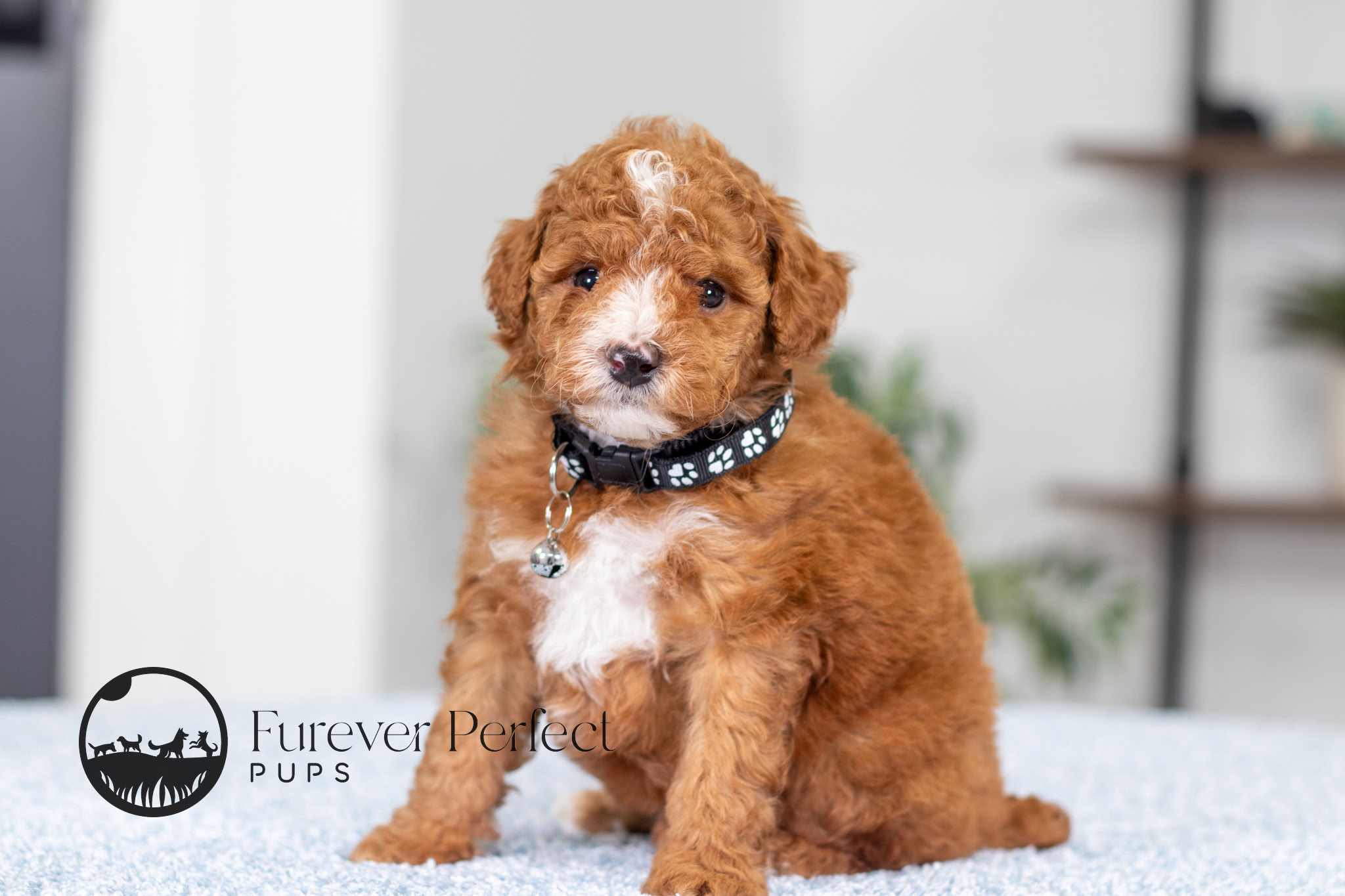
Crate Training Poodles Using a Positive Method
Poodles are among the most intelligent dogs in the world, and that intelligence cuts both ways when it comes to crate training. A Poodle that is introduced to the crate correctly — gradually, positively, and at its own pace — learns the association between the crate and safety with remarkable speed. A Poodle that is rushed, forced, or frightened into the crate applies that same intelligence to the problem of getting out of it, and to the task of making its displeasure known as loudly and persistently as possible. The breed’s sensitivity to tone, context, and human emotion means that the owner’s approach to crate training shapes the outcome at least as much as any specific technique.
The fear-free approach to crate training is not simply a philosophical preference for kindness, though it is that too. It is the method that produces the best practical outcomes with Poodles across all three sizes — Toy, Miniature, and Standard — because it works with the breed’s temperament rather than against it. The AVSAB’s 2021 position statement on humane dog training is explicit: the organization recommends that only reward-based training methods be used for all dog training, based on the current body of scientific evidence. The Vieira de Castro et al. (2020) study published in PMC confirmed that dogs trained with aversive methods showed more stress behaviors during and after training sessions, and displayed a pessimistic cognitive bias compared to dogs trained with rewards. For a breed as emotionally attuned as the Poodle, those findings have particular weight.
This guide covers the full crate training process from initial setup through overnight use and common problem-solving, with specific attention to the ways Poodle temperament and size variation affect each stage of the process.
Every dog benefits from crate training for the same core reasons: the crate supports housetraining by leveraging the dog’s natural instinct to keep its sleeping space clean, it provides a reliable and portable safe space that travels with the dog throughout its life, and it builds the capacity for independent settling that prevents separation anxiety from developing. These benefits apply to Poodles as fully as to any other breed. But there are several reasons the crate is especially useful for Poodles specifically.
The first is the breed’s strong human attachment. Poodles form close bonds with their people and can be prone to separation anxiety if that attachment is never balanced with the experience of being comfortably alone. A Poodle that has been positively crate trained from early puppyhood has a predictable, comfortable space that it has learned to associate with rest and safety independent of human presence. That association, built gradually and positively, becomes the foundation of the dog’s ability to be alone without distress. A Poodle raised to expect constant human company, and never given the opportunity to practice comfortable solitude, is at significant risk of developing the persistent vocalization, destructive behavior, and genuine distress that characterize separation anxiety.
The second reason is the Poodle’s intelligence and boredom threshold. A Standard Poodle with high exercise needs, left unsupervised in a house without a crate, finds ways to manage its own boredom that are rarely compatible with the owner’s preferences. The crate is not a solution to inadequate exercise, but it is an appropriate management tool during the early months when the puppy cannot yet be trusted unsupervised and is simultaneously at peak destructive capacity.
The third reason applies specifically to Toy and Miniature Poodles: their small size makes them both difficult to monitor and easy to inadvertently injure in a household with children, other dogs, or simple domestic hazards. A crate provides a secure location that protects a small dog when direct supervision is not possible, which for most households is a daily occurrence.
Sizing: Different for Every Poodle Variety
The crate must be just large enough for the dog to stand up comfortably, turn around fully, and lie down stretched out — and no larger. This sizing rule is not arbitrary. A crate with excess space allows the puppy to sleep at one end and eliminate at the other, which removes the discomfort that motivates holding and defeats the housetraining mechanism entirely. Because the Poodle’s three size varieties differ dramatically in adult dimensions, the appropriate crate size differs substantially across them.
A Toy Poodle adult, typically under ten pounds, is comfortable in a 24-inch crate. A Miniature Poodle adult, typically between ten and fifteen pounds, fits well in a 30-inch crate. A Standard Poodle adult, which may reach 40 to 70 pounds depending on breeding, typically requires a 42-inch crate. For all three sizes, puppies should begin in a crate space reduced to puppy dimensions using a divider panel, regardless of the crate’s full adult-sized capacity. A Toy Poodle puppy in a 24-inch crate should have that space divided to roughly half until the puppy’s hold time and housetraining reliability indicate it can safely use more room.
Crate Type
Wire crates with removable divider panels are the most practical choice for most Poodle owners because they allow the interior space to expand progressively as the puppy grows, they provide good airflow, and they allow the dog to see into the room without being fully exposed on all sides. Covering three sides with a blanket or crate cover creates the den-like enclosure that typically produces faster settling. Hard-sided plastic crates are well suited to travel and to dogs that prefer a more enclosed environment, though the fixed size requires purchasing multiple crates as the puppy grows. Soft-sided fabric crates are not appropriate during the training phase, when a puppy in distress may push through or chew the fabric; they are appropriate for fully trained adults.
For Toy Poodles specifically: ensure the wire gauge of any crate is appropriate for a small dog. Some wire crates designed for larger breeds have spacing between wires that allows a Toy puppy to push through or get a head or limb caught. A crate marketed specifically for small breeds or with closely spaced wire is safer for Toy Poodle puppies.
Placement
Place the crate in the bedroom for the first weeks, within earshot of the owner at night. A Poodle puppy that can hear a familiar human nearby adjusts to the crate significantly faster than one isolated in another room from the first night. This placement also allows the owner to distinguish between normal first-night protest — which should not be responded to — and genuine distress signals that warrant a check-in. As crate comfort is established, the crate can move to whatever location fits the household’s daily routine best.
Interior Setup
- A worn piece of clothing from the primary owner placed inside the crate from day one. Poodles are scent-sensitive and people-bonded; familiar human scent inside the crate is a meaningful settling signal from the first session.
- Soft bedding appropriate to the individual puppy’s chewing behavior. Some Poodle puppies will shred bedding and risk ingesting it; a thin rubber mat or bare floor is safer than bedding that creates an ingestion hazard until chewing behavior is better understood.
- A clip-on water dish for longer confinement periods. A bowl left loose inside the crate will tip and wet the bedding. A dish that attaches to the crate door keeps water available without that risk.
- A frozen Kong or similar long-duration chew placed inside the crate at the moment of crating. The puppy stepping into the crate should reliably produce a high-value food reward. That sequence — entering the crate, food appears — is the core of the positive association being built.
- White noise or quiet background sound if the puppy is in a room that goes quiet at night. Ambient sound reduces the startle response to household noises during light sleep and helps many puppies settle more quickly.
The most important principle of fear-free crate introduction is also the simplest: never move to the next step before the puppy is genuinely comfortable at the current one. The sequence below is a progression, not a schedule. Some Poodle puppies — particularly those with confident temperaments or prior positive crate exposure — will move through the early steps in a day or two. Others, particularly Toy Poodles with more sensitive baselines, may spend several days at each stage. Both are normal. The dog’s behavior at each step is the only reliable indicator of readiness to proceed.
STEP 1 Open Door Exploration
Place the crate in a room where the puppy spends time with the owner, with the door open and secured so it cannot swing shut unexpectedly. Scatter a few pieces of kibble or small treats just inside the crate entrance without asking the puppy to enter. Allow the puppy to investigate at its own pace, take the treats, and move away freely. Do not encourage or pressure entry, and do not close the door at any point during this step. The goal is simply to establish the crate as a safe, treat-producing object in the environment that the puppy investigates voluntarily. A puppy that approaches the crate entrance without hesitation and retrieves treats from just inside without backing away quickly is ready to progress. This step may take anywhere from one session to several days.
STEP 2 Meals at and Inside the Crate
Begin feeding the puppy’s meals progressively closer to and then inside the crate. Start with the bowl just outside the entrance. Over successive meals, move it to the threshold, then just inside, then to the midpoint of the crate, then to the back wall. The puppy should be choosing to walk fully into the crate to reach the meal. The door remains open during this entire phase. Mealtimes are a reliably high-value daily event, and associating the crate interior with meals builds a strong positive association more efficiently than treats alone.
STEP 3 Door Closed Briefly During Meals
Once the puppy is entering the crate fully and eating from the back without hesitation, begin closing the door gently while the puppy eats. Open it again before the meal is finished. The duration of door closure at this stage is measured in seconds. Gradually extend the closed-door time across multiple meal sessions until the puppy finishes eating and waits calmly at the door rather than pressing against it or vocalizing. A puppy that finishes its meal and lies down in the crate before the door is opened is demonstrating a level of comfort that makes extending duration straightforward.
STEP 4 Short Closed-Door Sessions with a Kong
Introduce closed-door crate sessions outside of mealtimes using a frozen Kong or a long-duration chew. Place the Kong inside the crate, allow the puppy to enter voluntarily, and close the door calmly and without ceremony. Remain visible in the room during the first sessions of this step. Begin with two to three minutes and extend duration in small increments, using the puppy’s behavior as the guide. A puppy engaged with its Kong and showing no stress signals — no whining, no door-pressing, no frantic pacing — is ready to extend the session. A puppy that abandons the Kong and focuses on the door needs more repetitions at the current duration before extending.
STEP 5 Owner Out of Sight
Once the puppy is comfortable for five to ten minutes with the crate closed and the owner visible, begin stepping briefly out of the room while the puppy is in the crate with its Kong. Return before the Kong is finished, before any protest begins, and before the puppy has had an opportunity to practice distress. Extend the duration and distance of absences gradually, always returning while the puppy is still calm. The goal of each session is a successful, calm experience of solitude — not a test of how long the puppy can endure. A long history of short, successful, calm alone periods is what produces genuine crate comfort over time.
Two factors govern how long a puppy can reasonably be crated: its physical hold time capacity and its psychological readiness at the current duration level. The first sets a hard ceiling that no amount of training can extend — a ten-week-old puppy’s bladder simply cannot hold for four hours regardless of how reliable its crate training is. The second determines, within that ceiling, how much duration the individual puppy is comfortable with at its current stage of training.
The one-hour-per-month-of-age guideline — two hours maximum for an eight-week-old, three hours for a twelve-week-old, four for a four-month-old — is the standard veterinary reference for daytime hold time. These are maximums, not targets. A puppy that has been highly active, had a large meal, or is in a warm environment may need to go out sooner. Plan crate sessions accordingly, and always take the puppy outside immediately before and immediately after every crate session.
| Age | Maximum Daytime Duration | Practical Guidance |
|---|---|---|
| 8 to 10 weeks | 1 to 2 hours maximum | Short nap-length sessions only; crate is primarily for supervised naps and overnight sleep |
| 10 to 12 weeks | 2 to 3 hours maximum | Mid-morning and early afternoon crate naps appropriate; midday potty break essential if owner is away |
| 3 to 4 months | 3 to 4 hours maximum | Morning and afternoon sessions practical; a midday check-in or dog walker required for full workday absences |
| 4 to 6 months | 4 to 5 hours maximum | Most puppies can manage a half-day period; midday break still needed for full workday absences |
| 6 months and older | Up to 6 hours; up to 8 for fully house-trained adults | Adult Poodles can manage a full workday crate period with adequate morning exercise and a midday potty opportunity |
A Poodle that settles within a minute or two of crating, stays calm throughout the session, and exits without frantic rushing or over-arousal is demonstrating comfort at the current duration and readiness to extend it. A Poodle that vocalizes persistently through sessions, repeatedly presses against the door, or exits in a highly aroused or distressed state is telling you the current duration is beyond its comfort level and should be reduced before attempting to extend it further.
The overnight phase of crate training is where the most consequential mistakes happen, because the combination of a distressed-sounding puppy and an exhausted owner creates strong pressure toward the one response that makes the problem worse: taking the puppy out of the crate while it is crying.
Normal Nighttime Protest vs. Genuine Distress
Most Poodle puppies will vocalize on the first one to three nights in the crate. This is normal and does not indicate that crate training is harming the puppy. The puppy has moved from a familiar environment with littermates to a new home with unfamiliar sounds and smells, and some vocal adjustment to that transition is expected. Normal protest is intermittent, varies in pitch and intensity, and tends to diminish over ten to twenty minutes as the puppy self-soothes and settles. Genuine distress is sustained, escalating, and accompanied by frantic physical activity, attempts to force through the crate door, or self-injury.
The most consequential mistake in crate training — and the one that produces the most persistent nighttime problems — is removing the puppy from the crate while it is actively vocalizing. A puppy that is picked up or let out during a crying episode learns that crying is the mechanism that produces the desired outcome. That lesson is applied with increasing persistence on subsequent nights. If any intervention is genuinely necessary, wait for even a brief pause in vocalization before responding. The distinction between quiet producing attention and noise producing attention is one of the most important lessons the puppy learns in the first week.
Setting the Overnight Potty Alarm
Set an alarm for the overnight potty trip rather than waiting for the puppy to signal distress. An eight-week-old Poodle puppy’s maximum overnight hold time is roughly two to three hours. A puppy that has been held beyond its capacity begins eliminating in the crate from necessity, not failure of training. The overnight potty trip should be brief and businesslike: carry the puppy directly to the outdoor spot, wait for elimination, offer calm praise and a small treat, return the puppy to the crate, and return to bed. No play, no extended interaction, minimal light. A trip that takes under five minutes teaches the puppy that nighttime outings are uneventful interruptions rather than opportunities for extended human attention.
Toy Poodle-Specific Considerations
Toy Poodles have the smallest body mass of the three varieties and consequently both the smallest bladder and the lowest capacity to regulate body temperature. In cool climates or air-conditioned households, ensure the crate bedding provides adequate warmth, as a chilled Toy Poodle puppy is significantly less able to settle. Some Toy Poodle owners find that a warm (not hot) water bottle wrapped in a towel placed under the bedding supports settling in the first nights. Toy Poodle puppies may also need overnight potty trips more frequently than the one-hour-per-month guideline would suggest for the first few weeks, because individual variation in bladder capacity is more pronounced at very small sizes.
The Puppy Won’t Enter the Crate
This almost always reflects that the introduction moved past the point of genuine comfort. Return to Step 1: crate door open, treats placed just inside the entrance, no encouragement to enter, no door closing. Spend several sessions at this stage without any pressure to progress. A puppy that approaches the crate voluntarily and retrieves treats from inside the entrance without stress is showing you the foundation from which to build the next steps. The temptation to accelerate when the puppy “seems fine” is the most common way the introduction gets ahead of the puppy’s actual comfort level.
The Puppy Was Fine and Then Suddenly Wasn’t
Regressions in crate comfort between six and fourteen months typically coincide with the adolescent period and the secondary fear period that occurs during this developmental window. A Poodle that was crate-comfortable at four months and begins resisting or protesting the crate at ten months has not unlearned its training. It is experiencing neurological changes that temporarily affect its response to confinement and to separation. Reduce duration, actively reinforce positive associations with high-value food rewards and frozen Kongs, and maintain the crate routine consistently through the phase rather than abandoning it. This regression is temporary in dogs whose crate training was sound, and resolves with patient, consistent positive handling.
Elimination in the Crate
The three most common causes are a crate that is too large (allowing the puppy to use one end as a bathroom), confinement duration that exceeds the puppy’s hold time, and a medical condition that prevents reliable holding. Address the first by reducing the interior space with a divider. Address the second by shortening session length and adding more frequent outdoor trips. If both adjustments are made and the problem continues, discuss it with your veterinarian before proceeding — urinary tract infections, bladder abnormalities, and other physical conditions can produce apparent housetraining failure that has nothing to do with training.
The Poodle That Has Never Been Crate Trained
Adult Poodles can be successfully introduced to crates at any age. The process is identical to puppy introduction and typically moves more slowly because an adult dog has a longer and more established history of freedom to contrast with confinement. The fear-free principles apply without exception at any age: no forcing, no punishment, no closing the door before genuine comfort at each preceding step is demonstrated. Expect the introduction to take weeks rather than days, and measure progress in voluntary approach behavior and calm body language rather than in achieved duration. Many adult Poodles who come from homes where crates were never used become genuinely comfortable with them given sufficient time and a consistent positive approach.
Standard Poodle owner, Portland, OR
Crate Training at a Glance
| Phase | What It Involves | Success Marker | Common Mistake |
|---|---|---|---|
| Open door exploration | Treats placed just inside entrance; puppy investigates freely; no door closing | Puppy approaches and retrieves treats from inside the crate without hesitation | Guiding or luring the puppy inside before it approaches voluntarily |
| Meals at and inside the crate | Bowl moved progressively from entrance to back wall across multiple meals | Puppy walks fully into the crate without hesitation to reach its meal | Closing the door before the puppy is eating comfortably at the back of the crate |
| Door closed briefly during meals | Door closed for seconds while puppy eats; opened before meal is finished | Puppy finishes meal and waits calmly rather than pressing at the door | Moving to minutes before seconds have been demonstrated calmly |
| Kong sessions with door closed | Short closed-door sessions with frozen Kong; owner visible in the room | Puppy engages with Kong without door-pressing or vocalizing; settles after finishing | Leaving the room before the puppy is comfortable with the door closed and owner visible |
| Owner out of sight | Brief absences from the room during crate sessions; returning before protest begins | Puppy remains settled after owner leaves the room | Extending absences before returning before protest has a chance to start |
| Building duration | Gradual extension of crate duration within age-appropriate hold-time limits; pre-crate exercise routine established | Puppy settles within a minute or two and remains calm throughout the session duration | Extending duration beyond hold-time capacity; skipping pre-crate exercise |
| Overnight crate use | Crate in bedroom; frozen Kong; alarm set for overnight potty trip; normal protest allowed to resolve without intervention | Puppy sleeps through most of the night by nights three to five; potty trips are brief and calm | Removing the puppy from the crate while it is actively vocalizing |
Frequently Asked Questions
Do Poodles actually need crate training, or is it just for difficult dogs?
Crate training benefits every dog regardless of temperament, and Poodles are no exception. The crate supports housetraining during puppyhood, provides a safe management tool when direct supervision is not possible, creates a portable home base that the dog uses comfortably throughout its life, and builds the capacity for comfortable solitude that protects against separation anxiety. Poodles — particularly given their strong human attachment and sensitivity — benefit specifically from having an established, positive relationship with a space that they associate with rest and safety independent of human presence. A well-crate-trained Poodle is not a dog that has been forced into compliance. It is a dog that has learned a reliable, predictable pattern that makes its life more comfortable and its owner’s life more manageable.
How long does crate training take for a Poodle?
The range varies significantly depending on the individual dog’s temperament, the size variety, whether there was any prior crate exposure at the breeder, and the consistency of the owner’s approach. A confident Miniature or Standard Poodle puppy whose introduction was gradual and consistent from the beginning often reaches genuine crate comfort — voluntary entry, calm settling, no protest at the current duration — within two to four weeks. A Toy Poodle with a more sensitive baseline, or any puppy whose introduction was rushed and required resetting, may take considerably longer. The useful measure is not days elapsed but the dog’s actual comfort at each step of the process, because that is the only indicator that reliably predicts success at the next step.
My Poodle cries persistently in the crate. What do I do?
First, distinguish between protest and genuine distress. Normal protest is intermittent, varies in pitch, and typically diminishes within ten to twenty minutes as the puppy settles. Genuine distress is sustained, escalating, and accompanied by frantic physical behavior. If the vocalization looks like protest, allow it to resolve without intervention — responding teaches the puppy that crying is the mechanism to end confinement. If it looks like genuine distress, a calm, brief check-in without removing the puppy from the crate is appropriate. If protest is still significant after five to seven nights of consistent handling, return to more daytime positive association work before resuming overnight crating. If the puppy shows frantic distress the moment the crate door closes regardless of your presence, consult a certified professional before proceeding.
Are Toy Poodles crated differently than Standards?
The process is identical, but several practical details differ. Toy Poodles have smaller bladders and may need more frequent potty trips than the standard one-hour-per-month guideline, particularly in the first weeks. They are also more susceptible to cold, so crate bedding and ambient temperature matter more for overnight settling. Wire crate spacing should be verified as appropriate for a very small dog, as some large-dog crates have wire gaps that allow a Toy Poodle puppy to get a limb or head caught. And because Toy Poodles are more easily startled by sudden sounds, a crate location away from household noise sources and with white noise support tends to produce faster settling than a crate in a high-traffic area.
When can the crate door stay open permanently?
The crate as an active management tool for housetraining typically becomes unnecessary somewhere between six months and a year, when reliable housetraining is established and the dog has demonstrated that it can be trusted alone in the home. The ASPCA describes the crate as best suited to use as a short-term management tool rather than a permanent housing solution, and that framing is accurate. What tends to happen with well-crate-trained Poodles is that they continue choosing the crate as a resting spot long after it is no longer needed for management, because the positive association built during training has made it the dog’s preferred place to settle. Leaving the crate available with the door open is a reasonable permanent arrangement that serves this function well. Maintaining the crate as a travel tool throughout the dog’s life is a practical use that any dog with solid crate training can accommodate without distress.
Final Thoughts
A Poodle trained to the crate through a patient, positive, fear-free process ends up with something genuinely useful: a familiar, comfortable space it can settle in anywhere, and the emotional baseline that makes solitude manageable rather than alarming. That outcome is not achieved by rushing the introduction, using the crate punitively, or testing the puppy’s endurance on the first night. It is achieved through the step-by-step process in this guide, applied at the pace the dog’s actual behavior indicates rather than the pace that feels fastest to the owner.
The scientific evidence on training method is consistent and unambiguous. The Vieira de Castro et al. (2020) PMC study documented measurably worse outcomes — more behavioral stress, more pessimistic cognitive bias — in dogs trained with aversive methods compared to reward-trained dogs. The AVSAB has built its 2021 position statement on that body of evidence, recommending reward-based methods for all dog training. The fear-free approach to crate training is not a softer substitute for methods that work better. It is the method that works best, produces the most durable results, and leaves the relationship between dog and owner intact. A Poodle introduced to its crate with patience, positive reinforcement, and genuine attention to its comfort level will use that crate willingly for years — because the association was built correctly from the beginning.