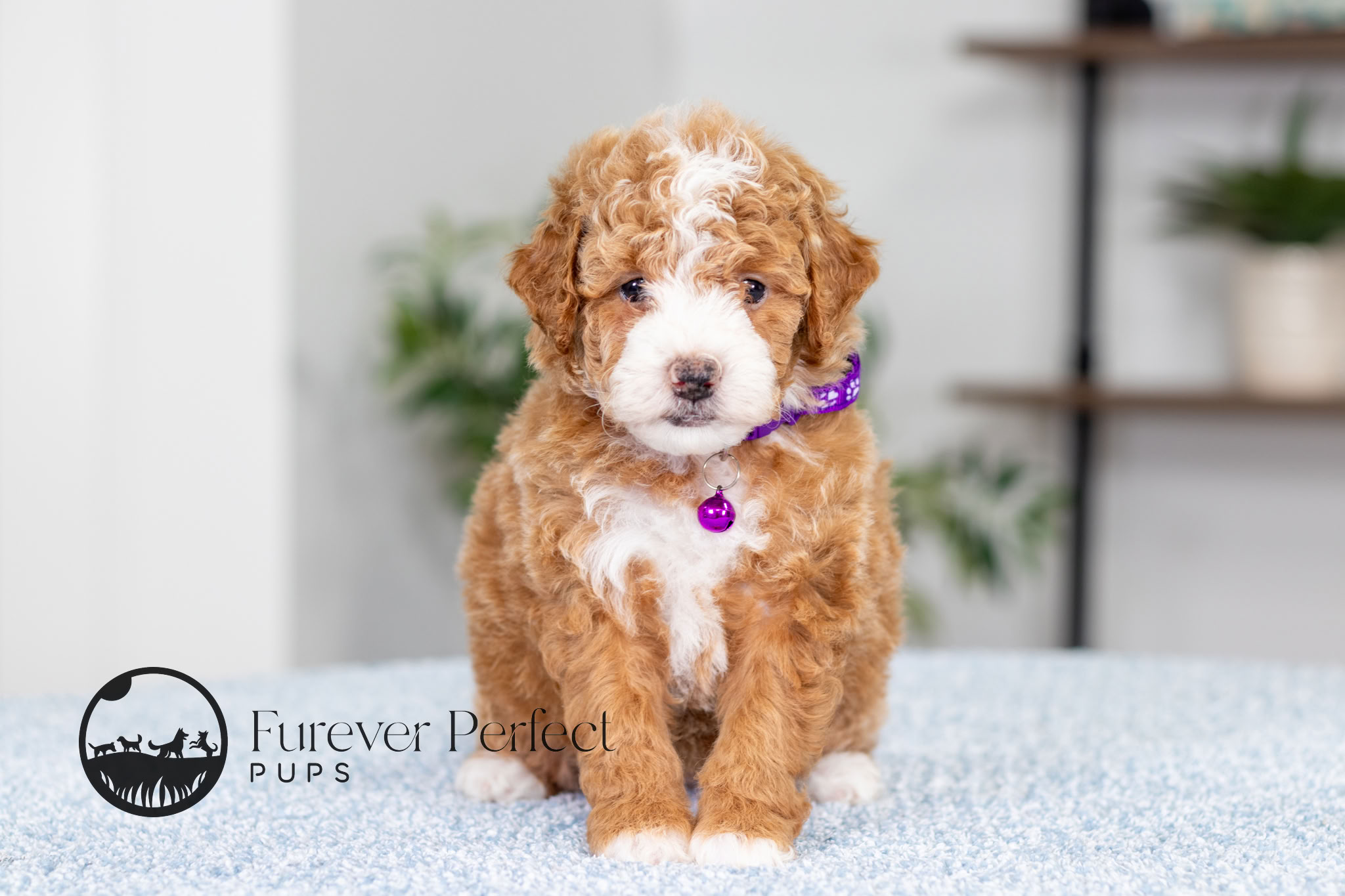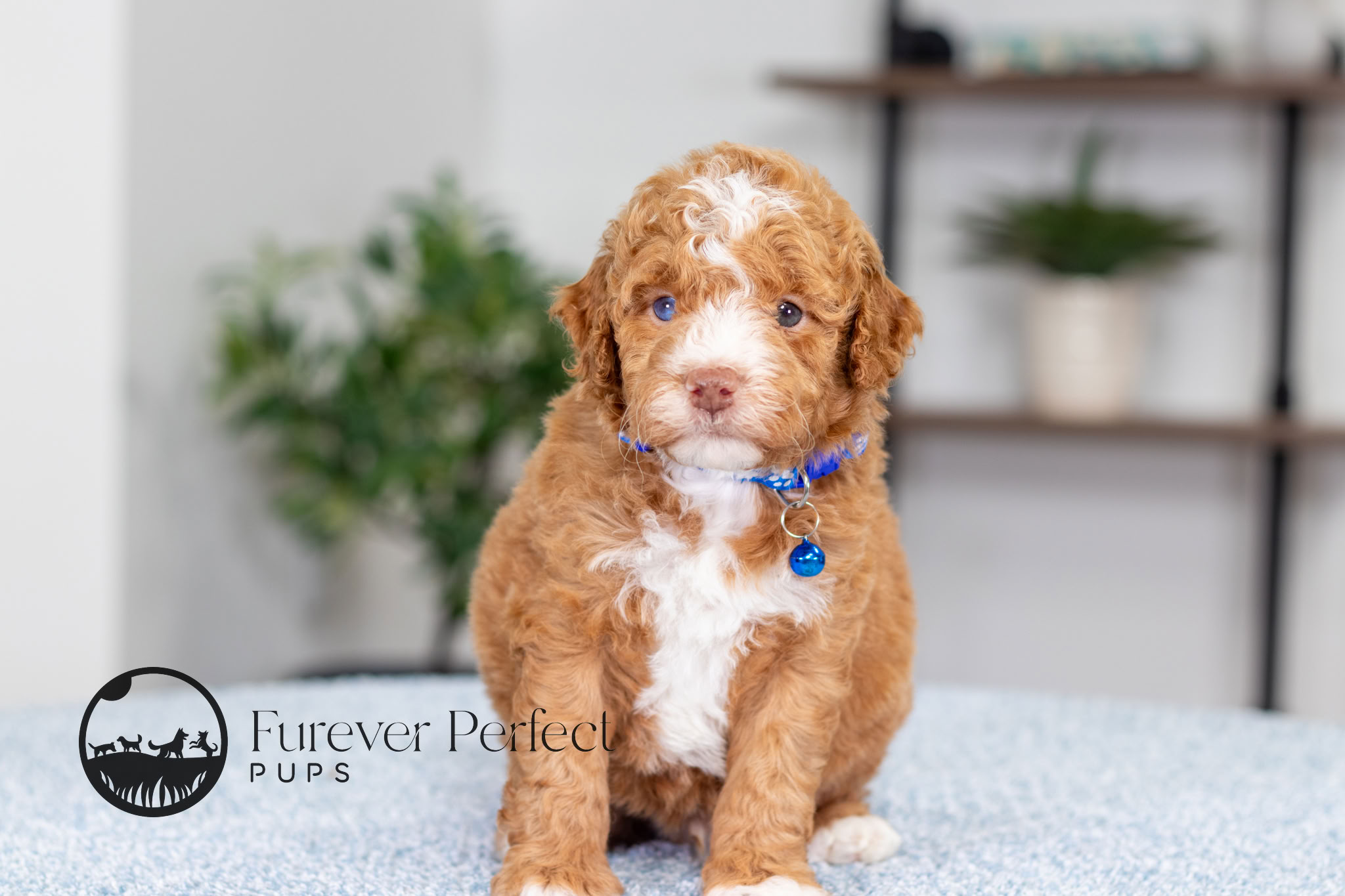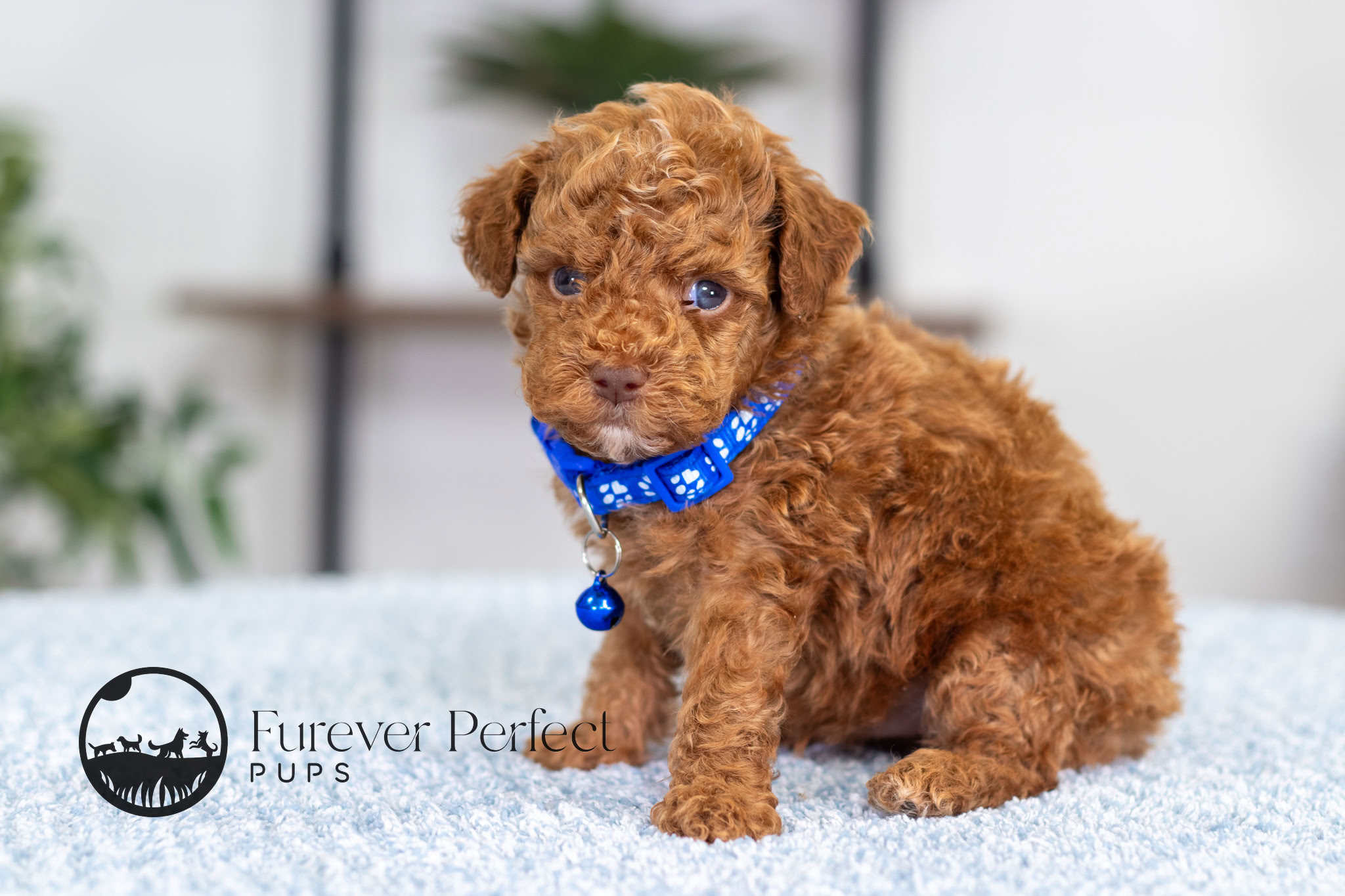

Living with Multiple Poodles: Pack Dynamics and Management
A Poodle’s intelligence, the same trait that placed the breed second in Stanley Coren’s research on working and obedience intelligence, does not switch off when a second Poodle arrives. It gets divided, redirected, and occasionally aimed at the other dog. Families who add a second or third Poodle usually expect the dogs to keep each other company, and very often they do. What surprises them is how much of the household’s daily rhythm the dogs start negotiating among themselves, and how quickly small frictions over a doorway, a chew, or a spot on the couch turn into habits when nobody is paying attention.
We live with multiple Poodles every day. Our breeding dogs share space, routines, and people, and running a program means managing relationships between dogs of different sizes, ages, sexes, and temperaments all year. Most of what we have learned came not from dramatic incidents but from noticing patterns: which dog waits at the gate, which one collects every toy in the house, which one goes still when an adolescent gets pushy, and what happens when those patterns are managed early versus left alone.
The popular vocabulary around this topic does families no favors. Terms like “pack leader,” “alpha,” and “dominant dog” suggest your Poodles are sorting themselves into a fixed rank order that you either need to enforce or stay out of. The veterinary behavior research tells a different and far more useful story. Relationships between dogs are learned, they are specific to each pair of dogs, and they are shaped heavily by how the people in the house handle food, space, and attention.
This post covers what the published research says about conflict between dogs who live together, how to choose and introduce another Poodle, what daily management looks like, and the warning signs that call for professional help. Two Poodles curled up together by the fire is achievable for most families. It is just rarely accidental.
The most cited modern challenge to the dominance model came from John Bradshaw, Emily Blackwell, and Rachel Casey at the University of Bristol, published in 2009 in the Journal of Veterinary Behavior. The team spent six months observing dogs interacting freely at a Dogs Trust rehoming center and reanalyzed earlier data on free-ranging dogs. Their conclusion was that the relationships between individual dogs are learned through experience rather than driven by a motivation to climb a pecking order. Where “dominance” describes anything useful at all, it describes the relationship between two particular dogs in a particular context, not a personality trait one dog carries into every interaction.
That distinction matters in a multi-Poodle home because it explains behavior the rank model cannot. Your Standard may yield the best bed to your Miniature every evening and then refuse to give up a tennis ball to the same dog the next morning. That is not confusion about who is in charge. It is two dogs who value different things differently, and who have learned through dozens of small encounters what the other will and will not contest. Your job is managing access to the things your dogs care about, not refereeing a leadership contest.
The Bristol researchers warned that training aimed at reducing a dog’s supposed dominance ranges from useless to dangerous, and that forceful techniques such as pinning a dog down tend to make dogs anxious, often about their owner, and can escalate aggression. AVSAB’s position statement lands in the same place: reinforce the behavior you want, avoid accidentally reinforcing what you do not want, and address the emotions and motivations behind a problem, including medical and genetic factors.
This carries extra weight with Poodles. The Poodle Club of America’s breed standard describes a very active, intelligent dog and lists shyness or sharpness as a major fault, so the breed is meant to sit in a stable, confident middle. In our experience, Poodles as a group read tone and tension quickly. A Poodle scolded for growling at a housemate rarely learns to feel better about that housemate; more often it learns to skip the growl, which is the opposite of what a multi-dog household needs.
Most of what we know about conflict between household dogs comes from veterinary behavior referral clinics. Two studies in the Journal of the American Veterinary Medical Association stand out, and their findings line up closely enough to use when planning a household, not just repairing one.
The first, by Kathryn Wrubel, Alice Moon-Fanelli, Louise Maranda, and Nicholas Dodman at Tufts University’s Cummings School of Veterinary Medicine (2011), examined 38 pairs of dogs referred for aggression toward a housemate. Most cases, 30 of 38, involved same-sex pairs, and 26 of 38 involved at least one female or a pair of females. In the cases where a clear instigator could be identified, that dog was usually the younger of the pair (20 of 27) or the newer arrival in the household (19 of 27). The triggers owners reported were remarkably ordinary: owner attention, food, excitement, and found items. The encouraging part is that fighting became significantly less frequent and less severe after the families received a behavior consultation.
The second and larger study, by Elizabeth Feltes, Jason Stull, Meghan Herron, and Lore Haug (2020), reviewed 305 pairs of dogs seen at a referral behavior clinic over nine years. Seventy percent of the pairs included at least one female, and about 62 percent were same-sex pairs. Resource guarding was the single most common fight trigger, present in nearly 73 percent of pairs, and in about 59 percent of cases the aggressor had joined the household after the dog it targeted. The researchers also looked at which pairs ended badly, meaning permanent separation, rehoming, or euthanasia. Same-sex pairs, a history of bites that broke the skin, and aggression triggered simply by seeing the other dog were all associated with a poor outcome, and the authors urged that those cases get professional intervention quickly.
Across both studies, the same handful of situations keep showing up. We think of them as the three pressure points of a multi-dog home.
Resources
The leading trigger in the Feltes study, and present in the Tufts data as food and found items. In our experience, Poodles often care more about a dropped sock or a stray chew under the couch than anything you hand them, so found items deserve as much attention as mealtime.
Owner Attention
The Tufts team listed owner attention first among fight triggers. Poodles are strongly people-oriented, and one Poodle in your lap while another approaches is among the most common flashpoints families describe to us. It usually starts small: a stiffening, a hard look, a lip lift.
Excitement and Arousal
High arousal shortens a dog’s patience. Several Poodles piling up at the door when the bell rings, or bursting through a gate together, create exactly the crowded, excited moment where a bump becomes a scuffle. In our kennel, the doorway is where most minor disagreements start.
The best time to prevent a difficult pairing is before you commit to one, and that starts with the dog you already have. Brad Phifer, a certified professional dog trainer quoted in a veterinarian-reviewed WebMD feature, says your current dog’s personality, play style, energy, and history with other dogs should drive the decision, and he cautions against rules like “opposite sexes always get along.” Rules of thumb shift the odds; they do not replace knowing your dog.
Sex
With that caveat in place, the research is consistent enough that we generally steer families toward an opposite-sex pairing, particularly when the resident Poodle is a female who has not lived with other dogs as an adult. Same-sex pairs, and female pairs in particular, are overrepresented in both JAVMA studies, and same-sex pairing was one of the factors linked to a poor outcome in the Feltes data. Many same-sex Poodle pairs do beautifully. We simply want families choosing that combination to do it knowingly, with a resident dog whose social history supports it.
Size Variety
Mixing varieties is common in multi-Poodle homes. The Poodle Club of America describes the Miniature as 10 to 15 inches at the shoulder, with the Toy smaller and the Standard larger, so a Standard can outweigh a Toy several times over. Temperament is usually not the problem in these homes; physics is. A Standard’s pounce lands with a force a Toy’s frame was not built for, and patellar evaluation is part of the PCA’s recommended CHIC testing for both Toys and Miniatures. In our experience, Toys and Standards share homes happily, but their play needs supervision and the Toy needs a retreat the Standard cannot reach.
Age Gap
In the Tufts study, instigators were most often the younger dog or the newer arrival, so think about what the incoming dog will be like at eighteen months, not just at ten weeks. We like to see the resident Poodle through adolescence and reliably trained before a puppy arrives; a dog who still rushes the door and ignores a recall is more likely to teach those habits than to model good ones. At the other end of life, a senior may have far less tolerance for a puppy than it once did, and some of that can be pain, covered below.
Two Puppies at Once
Families ask about this often, usually after falling for two littermates. Veterinary Partner, the Veterinary Information Network’s client resource, notes that “littermate syndrome” is not recognized by veterinary behaviorists, and Penn State Extension points out that scientific literature on it is essentially nonexistent. Both are equally clear that the underlying problems are real: raising two puppies at once makes it easy to miss training opportunities, reinforce the wrong behaviors, and end up with dogs more oriented to each other than to their people. Penn State notes the pattern can appear in unrelated puppies of similar age and recommends one puppy at a time.
We rarely place two puppies in the same home at once. When a family is set on it, we ask for separate crates, training, walks, and socialization from day one, which in our experience is closer to triple the work of one puppy than double.
Temperament Matching
Poodles as a group tend to be social, sensitive, and people-focused, and the AKC notes that Poodles socialized early are more likely to do well with other dogs. But individual variation is wide, early socialization and breeder practices shape adult temperament, and the best predictor of a puppy’s adult personality is the personality of its parents. Every puppy description on our site is now written by an independent professional trainer, which gives families an unbiased read on temperament when fitting a new dog into an existing household.
The goal of the first weeks is not to get the dogs playing together as fast as possible. It is to make sure every early interaction goes well, so that each dog’s learned expectation of the other is positive. The steps below draw on the AKC’s guidance for introducing a new dog and puppy, adjusted for what we see in Poodle households specifically.
STEP 1 Set up separate stations before the new dog arrives. Each Poodle needs its own crate, bed, bowl, and toys. Put away the highest-value items, and anything your resident dog has ever guarded, before the newcomer walks in.
STEP 2 Hold the first meeting on neutral ground. The AKC recommends introductions away from the resident dog’s home, on loose leashes, with a separate adult handling each dog. A parallel walk on an unfamiliar route, gradually closing the distance, lets the dogs take each other in without the pressure of a face-to-face greeting.
STEP 3 Travel home in separate crates. The AKC suggests bringing the resident dog along to pick up a puppy, each crated separately in the car: close together, with no physical contact.
STEP 4 Introduce one resident dog at a time. A newcomer swarmed by several excited adults learns that the other dogs are overwhelming, and that first impression can take weeks to undo.
STEP 5 Use gates, pens, and crates to control access. The AKC describes alternating one dog confined and one loose, which lets the resident dog visit the newcomer and, just as importantly, walk away when it has had enough. Supervise every interaction in the early weeks.
STEP 6 Protect the resident dog’s routine. The AKC recommends regular breaks from a new puppy and continued one-on-one attention for the older dog. Keep its walks, training time, and favorite rituals intact.
STEP 7 Reward tolerance generously. The AKC suggests a “yes” and a treat when the older dog stays relaxed as the puppy lies down beside it. Our puppies arrive already understanding the marker concept from pre-training, so both dogs can be rewarded for calm behavior around each other.
Once the introduction period is over, the work shifts from close supervision to good household design. The peaceful multi-Poodle homes we know are rarely run by people with exceptional training skills. They are run by people whose routines quietly remove friction, so the dogs seldom find anything worth arguing about.
Mealtime is the clearest example. Given that resource guarding led the Feltes findings, we feed every dog in its own crate or room and pick up bowls as soon as the meal is done, which is also the AKC’s advice. Chews come out only when the dogs are separated. This does not mean your dogs have a problem; it keeps them from developing one.
Training should also happen one dog at a time. The AKC notes that even well-behaved dogs struggle to focus when another animal is competing for attention. Poodles learn the wrong lesson as quickly as the right one, so a session where one dog pesters the other teaches both something you did not intend.
Grooming is a Poodle-specific pressure. Multiple Poodles means multiple brushing schedules and more handling overall, and in our experience a Poodle who has just been worked through a painful mat has noticeably less patience with housemates for the rest of the day. Groom one dog at a time, away from the others, and give a freshly groomed dog quiet time before it rejoins the group.
Barking is the other one. The AKC notes that Poodles are more likely to bark than many breeds, and in a multi-Poodle home one dog’s alert rarely stays solo. Managing window access is one of the simplest ways to lower the overall tension in the house.
- Feed separately, every meal: Each Poodle eats in its own crate or room, and bowls are picked up as soon as they are empty.
- Separate the high-value items: Chews, bones, and long-lasting treats are given only when the dogs are apart and are put away before they are together again.
- Manage doorways and gates: Teach each dog a sit or wait at thresholds individually, then release them one at a time rather than letting them surge through together.
- Give each dog individual time daily: A solo walk, a training session, or a quiet game gives each Poodle its own relationship with you, which the AKC highlights as a key part of multi-pet harmony.
- Watch the couch and lap: If one dog stiffens when another approaches while it is next to you, calmly stand up and end the moment rather than letting the dogs settle it.
Serious household fights rarely come out of nowhere. In our experience they are usually preceded by weeks of smaller signals: one dog blocking a hallway, a hard stare across the room, a dog who stops entering the kitchen when the other is there, or a Poodle who used to seek out its housemate now resting alone. None of these is a crisis on its own. Together, and especially when they are becoming more frequent, they signal a relationship under strain.
Before looking for a behavioral explanation, look for a medical one. A 2020 paper in the journal Animals, led by Professor Daniel Mills of the University of Lincoln with an international group of veterinary behaviorists, reported that among the authors’ own referral caseloads, the share of behavior cases involving pain ranged from 28 to 82 percent. The authors argued that pain is underreported as a cause of problem behavior and that veterinarians should generally treat suspected pain first rather than considering it only after behavior therapy fails.
For Poodles, that point is specific. The Poodle Club of America’s health screening guidance includes hip evaluation for Standards and Miniatures, patellar evaluation for Toys and Miniatures, and thyroid evaluation among recommended electives for Standards. Hip or knee pain and the irritability that can accompany thyroid disease are exactly the conditions that make a tolerant dog snap at a housemate who bumps it. OFA-tested parents reduce the risk of these inherited conditions but do not eliminate it, and they do nothing about ordinary aging. A senior Poodle who has turned short-tempered with the young dog deserves a thorough veterinary exam before anyone calls it a behavior problem.
It is also worth being honest about the outcome no one wants. Some pairs of dogs are not suited to living together, and no amount of management changes that. Clinically, rehoming counts as a “poor outcome,” but for the dogs, two peaceful homes can be far kinder than one tense one. If a qualified professional reaches that conclusion, it is a responsible welfare decision, not a failure.
At a Glance: Common Multi-Poodle Pairings
| Pairing | What Tends to Go Well | What to Watch | Our General Guidance |
|---|---|---|---|
| Opposite-sex adults | Underrepresented in the referral research; many pairs settle easily. | Resource guarding and attention competition can still occur. | Our default recommendation for most families adding a second Poodle. |
| Two females | Many pairs live together peacefully for life. | Female pairs were overrepresented in both JAVMA studies. | Choose knowingly, with a resident female who has a good history with other dogs. |
| Two males | Often playful and compatible, especially with a clear age gap. | Same-sex pairs were linked to poorer outcomes when fighting did develop. | Reasonable with careful matching and early resource management. |
| Standard with a Toy or Miniature | Temperaments usually mesh well within the breed. | Size disparity and injury risk during play, particularly to smaller dogs’ knees. | Supervise play and provide separate play time with similarly sized partners. |
| Adult resident plus a puppy | A trained adult can model good household routines. | The puppy becomes a pushy adolescent; newer and younger dogs are the most common instigators. | Wait until the resident dog is through adolescence and reliably trained. |
| Senior resident plus a puppy | Some seniors enjoy a younger companion. | Lower tolerance and possible undiagnosed pain in the older dog. | Get a veterinary check on the senior first and guarantee it a puppy-free retreat. |
| Two puppies at once | Can work with intense, separate individual training. | Missed training, dogs bonding to each other over their people. | We rarely recommend it; one puppy at a time is the easier path. |
Frequently Asked Questions
Should my second Poodle be the opposite sex of my first?
In most cases, we recommend it. Both major veterinary studies on household dog aggression found same-sex pairs, and pairs involving females, overrepresented among dogs referred for fighting, and the 2020 study linked same-sex pairing to poorer outcomes. Those studies describe households where something had already gone wrong, and plenty of same-sex Poodle pairs live happily together. A resident dog’s long, positive history with same-sex dogs counts for more than a statistic, but if your resident female has little experience living with other dogs, an opposite-sex companion is the safer choice.
Is it a bad idea to bring home two Poodle puppies from the same litter?
It is harder than most families expect, though not for the reasons often repeated online. “Littermate syndrome” is not a diagnosis recognized by veterinary behaviorists, but the practical challenges of raising two puppies at once are real: slower training, easy reinforcement of unwanted habits, and two puppies more focused on each other than on their family. Penn State Extension recommends one puppy at a time, and so do we. If you do raise two together, plan on separate crates, training sessions, walks, and socialization outings from the first week.
My older Poodle growls at our new puppy. Should I correct him?
No. A growl is communication, and the AKC notes that an older dog occasionally correcting a puppy is normal. Punishing the growl does not change how your older dog feels about the puppy; it teaches him that warning is not allowed. Instead, keep the puppy from pestering him, give him puppy-free rest, and reward him when he is relaxed with the puppy nearby. If the growling is escalating or he cannot get away, separate them and consider whether pain or stress is involved.
How long does it take for a new Poodle to settle in with our other dogs?
Longer than most families hope, and it varies by dog. In our experience, the first weeks are about routine and supervision, the first months are when the real relationship forms, and adolescence can test the arrangement again. Keep your management in place for months. Taking down the gates and feeding everyone together after one good week is one of the most common ways we see a peaceful household slide into a tense one.
What does Furever Perfect Pups do to prepare puppies before they go home?
Preparation starts long before a puppy meets its new household. Every litter goes through Early Neurological Stimulation from days 3 through 16, brief daily exercises intended to build the stress resilience that helps a puppy cope with new environments, including a home that already has dogs in it. We also run Early Scent Introduction, a new scent each day during the neonatal period, which lays groundwork for the nose-based enrichment that keeps a busy Poodle mind occupied. All of our breeding dogs are health tested through the Orthopedic Foundation for Animals, with results publicly searchable in the OFA database. Before placement, each puppy begins our pre-training program: a marker word, leash comfort, an early sit, and calm handling, giving families a shared vocabulary from the first introduction with their resident dog. After placement, our post-placement support continues through each developmental stage, because the questions about two dogs sharing a home at twelve weeks are very different from the ones at nine months.
Final Thoughts
Living with more than one Poodle can be one of the real joys of the breed. But the harmonious households we know did not get there by leaving the dogs to sort out a hierarchy. They got there because someone paid attention to ordinary things, food, chews, doorways, and who sits next to whom, and managed them before they became sources of conflict.
The research is consistent on what matters most. Relationships between dogs are learned, not ranked. Resources, owner attention, and excitement drive most household conflict. Newer and younger dogs are the most common instigators, serious fighting is far easier to prevent than repair, and pain belongs near the top of the list whenever an easygoing Poodle changes its behavior toward a housemate.
If you are considering a second Poodle, look honestly at the dog you already have and choose a companion that fits that dog. If something has started to feel off between the Poodles you already live with, trust that instinct, rule out pain, and get help early.