Seasonal Care: Heat, Cold, and Outdoor Safety for Bernedoodles
Most seasonal care advice for dogs is written as though every dog has the same coat, the same body, and the same relationship to temperature. For a Bernedoodle, that assumption is the first thing to throw out. The cross sits between two breeds with very different climate histories. The Bernese Mountain Dog was built in the Swiss Alps to work outdoors through hard winters, carrying a heavy double coat designed to insulate against cold and snow. The Poodle, by contrast, carries a single, continuously growing coat with no dense undercoat at all. A Bernedoodle inherits some blend of those two systems, and which blend your particular dog landed on changes nearly everything about how you should manage heat, cold, and time outdoors.
This matters more than it first appears. A wavy or curly Bernedoodle that took more after the Poodle side has a coat that behaves very differently in July and January than a straighter-coated dog that took more after the Bernese side. Two littermates can have meaningfully different cold tolerance and heat tolerance, which means the right answer to “can my dog handle this weather” is not a breed-wide rule but a question about the dog standing in front of you. The families who understand this early adjust their seasonal routines to the actual animal. The families who assume “doodles run cool” or “doodles are basically Bernese and love the cold” are the ones who get caught off guard.
The other reason seasonal care deserves a careful, breed-specific treatment is that the Bernese contribution brings real heat sensitivity into the picture. Large body mass, a tendency toward darker coats, and any inherited undercoat all push a Bernedoodle toward struggling in heat more than a smaller, single-coated dog would. At the same time, the Poodle contribution can produce a leaner, less insulated dog that feels winter more sharply than people expect from a “fluffy” breed. You can end up with a dog that is simultaneously not as heat-hardy as a Lab and not as cold-hardy as a Husky, which is to say a dog whose comfort window is narrower than its appearance suggests.
What follows is built around that reality. We cover how to read your own dog’s coat, how to manage genuine heat risk including heatstroke and pavement burns, how to handle cold weather and winter hazards, and how to think about year-round outdoor safety. Throughout, the guidance leans on current veterinary and kennel-club sources rather than seasonal folklore, because the stakes here, heatstroke and frostbite among them, are too high for guesswork.
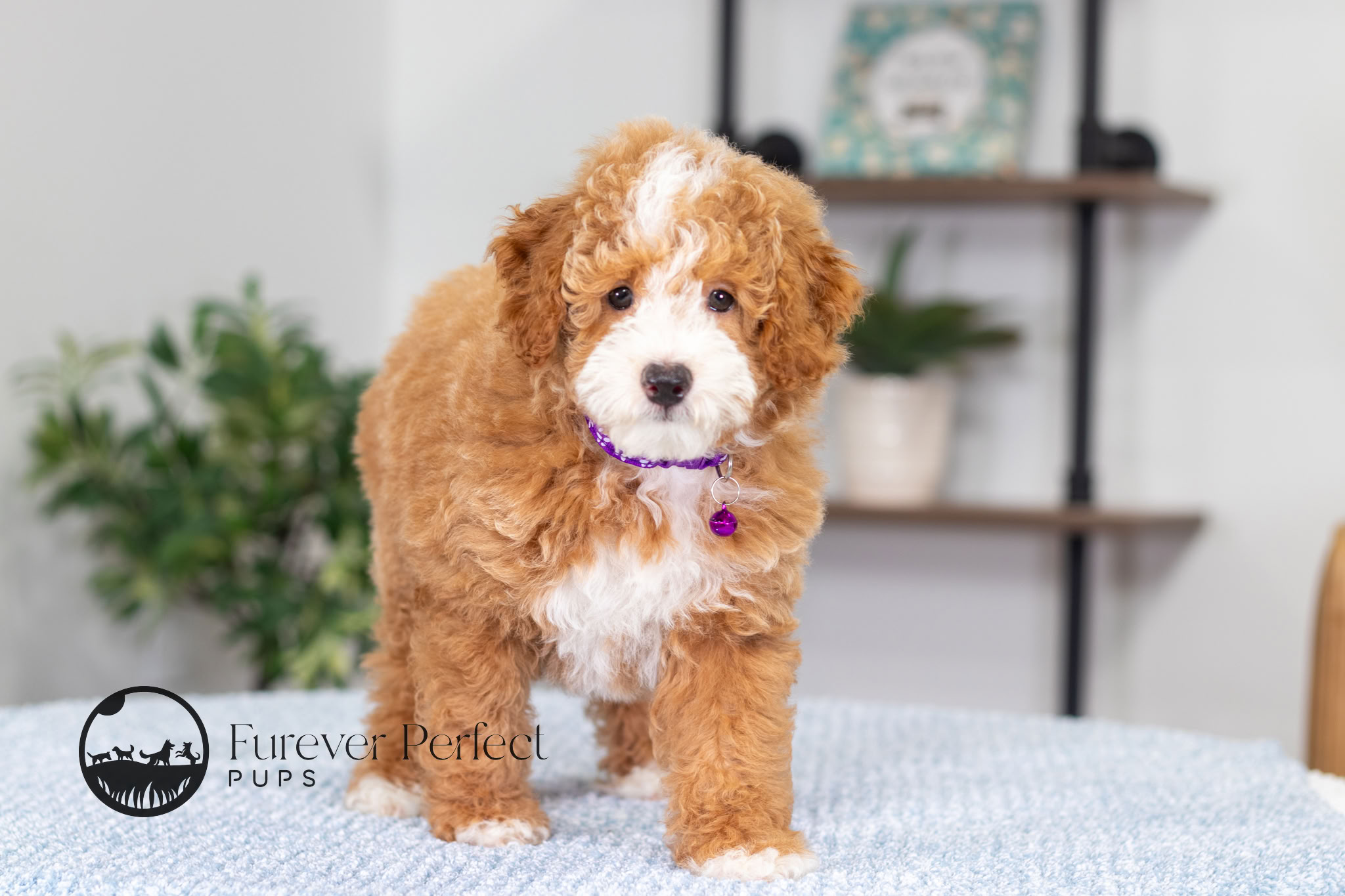
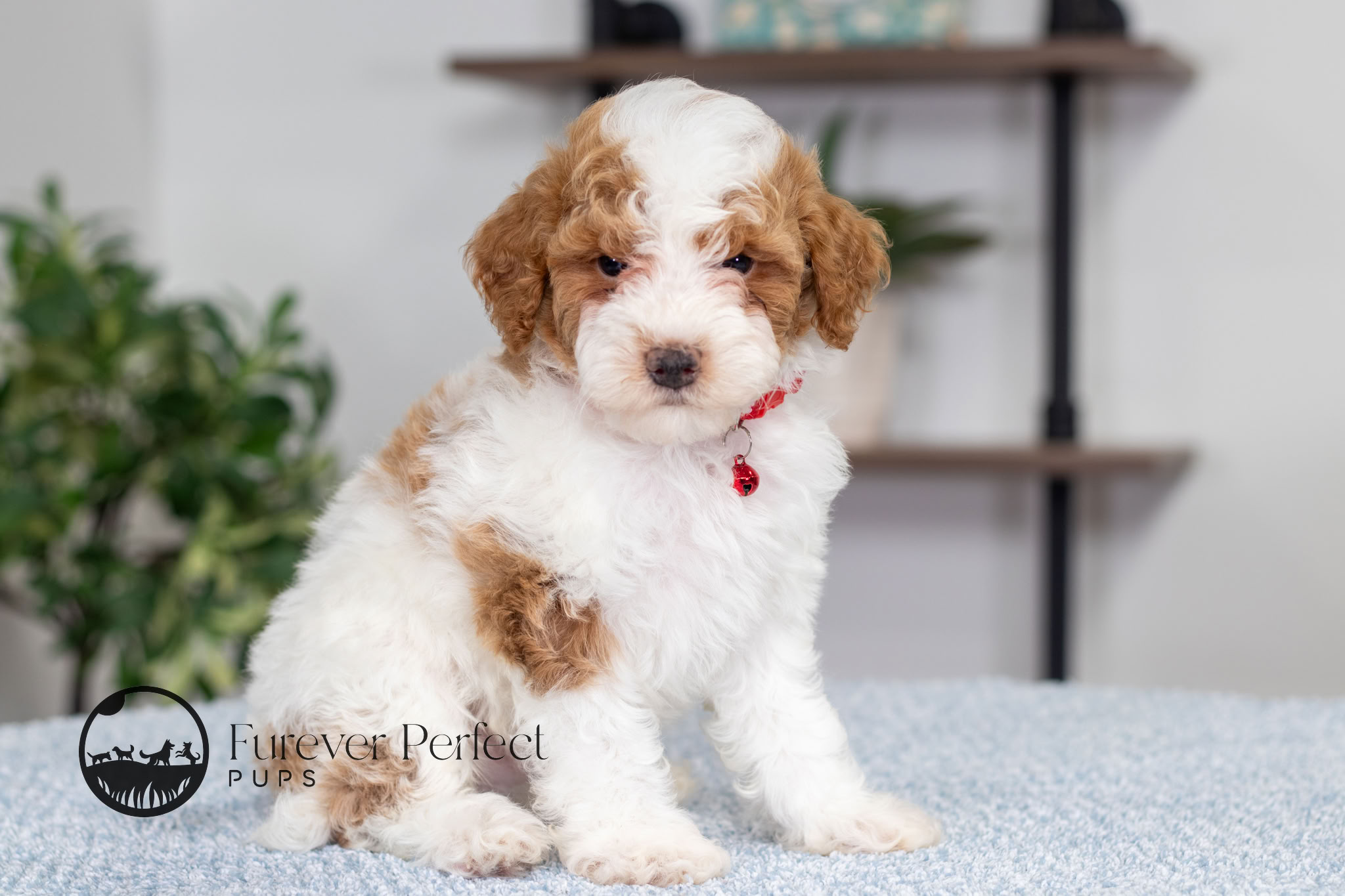
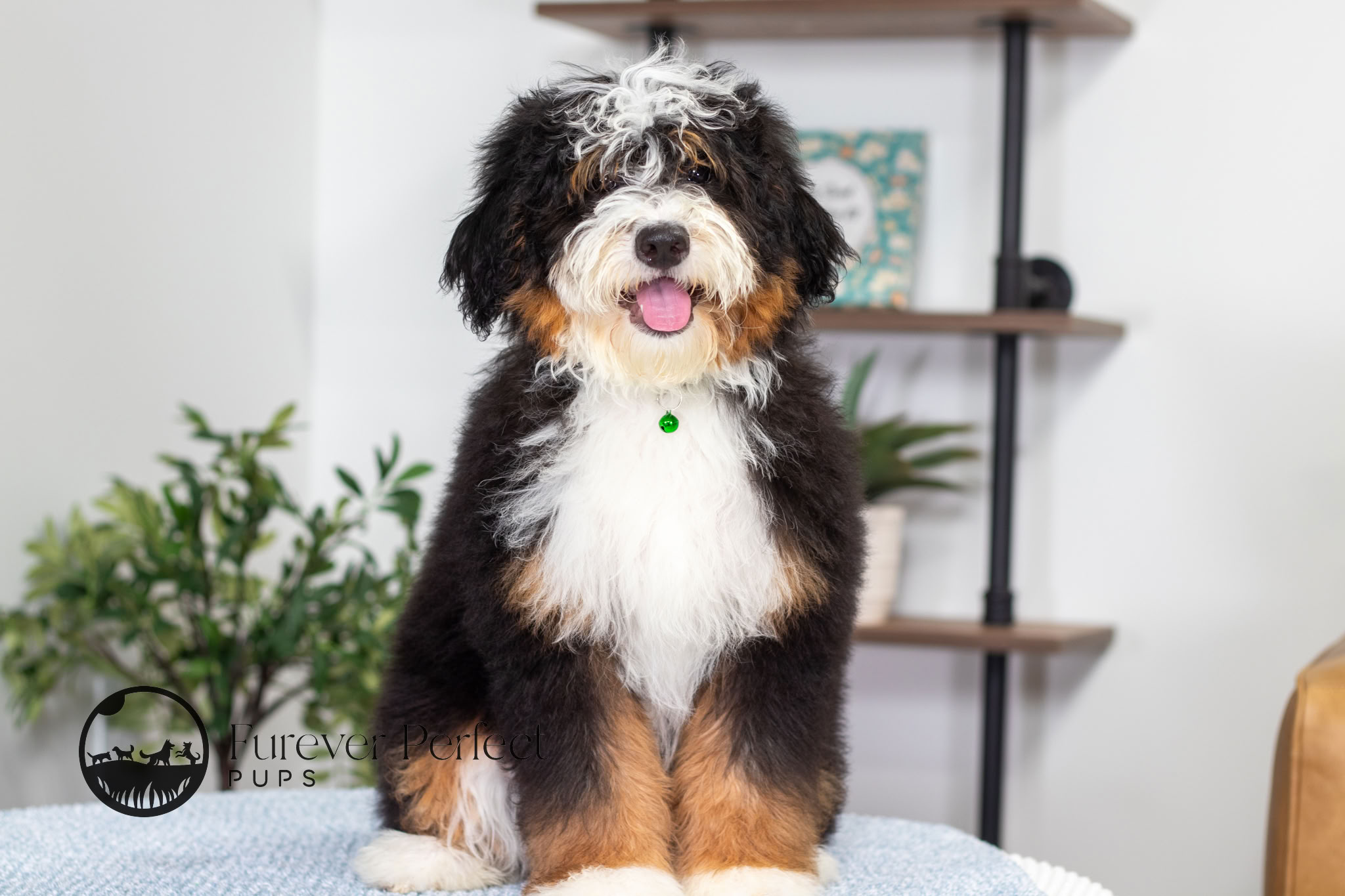
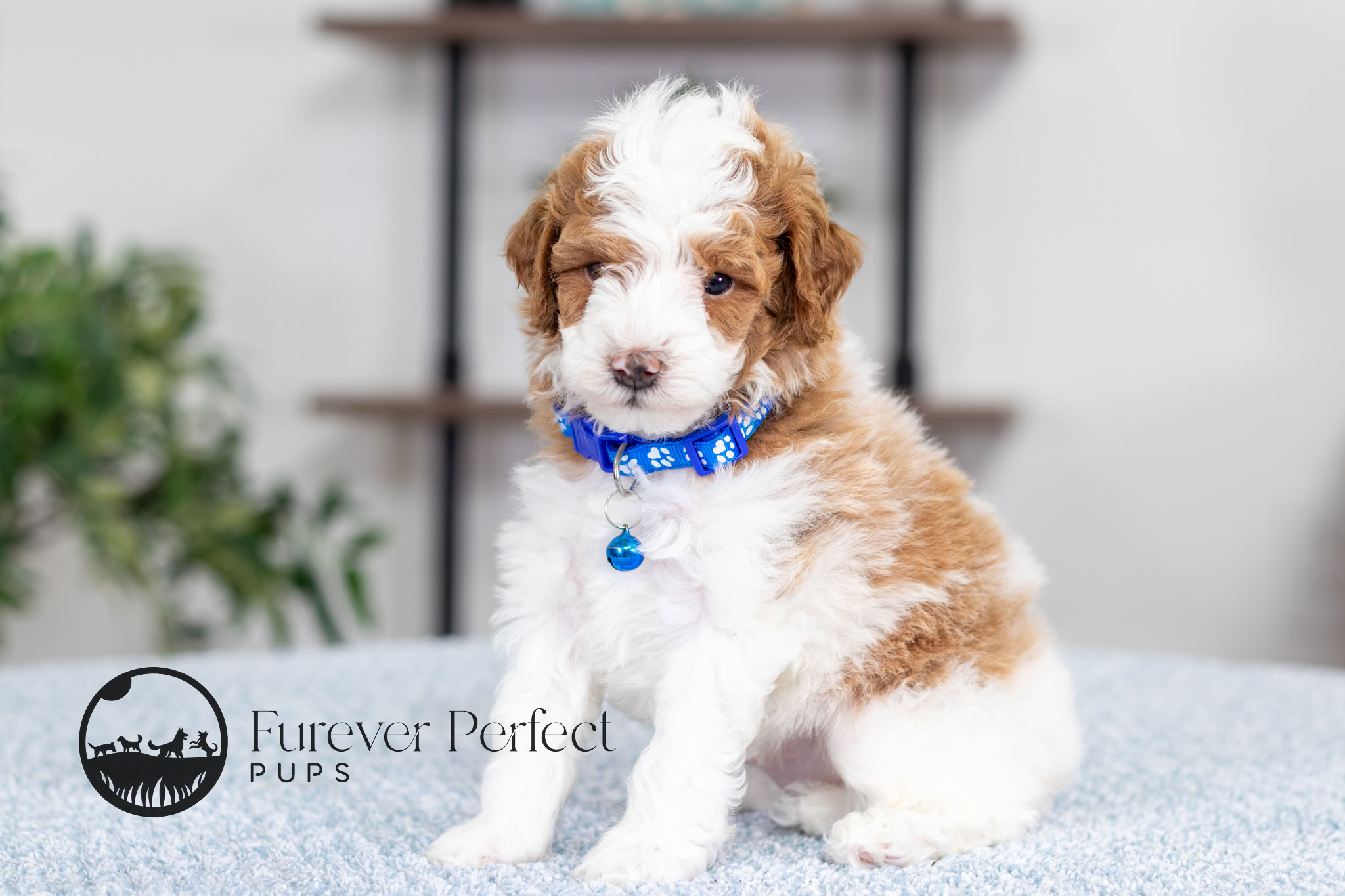
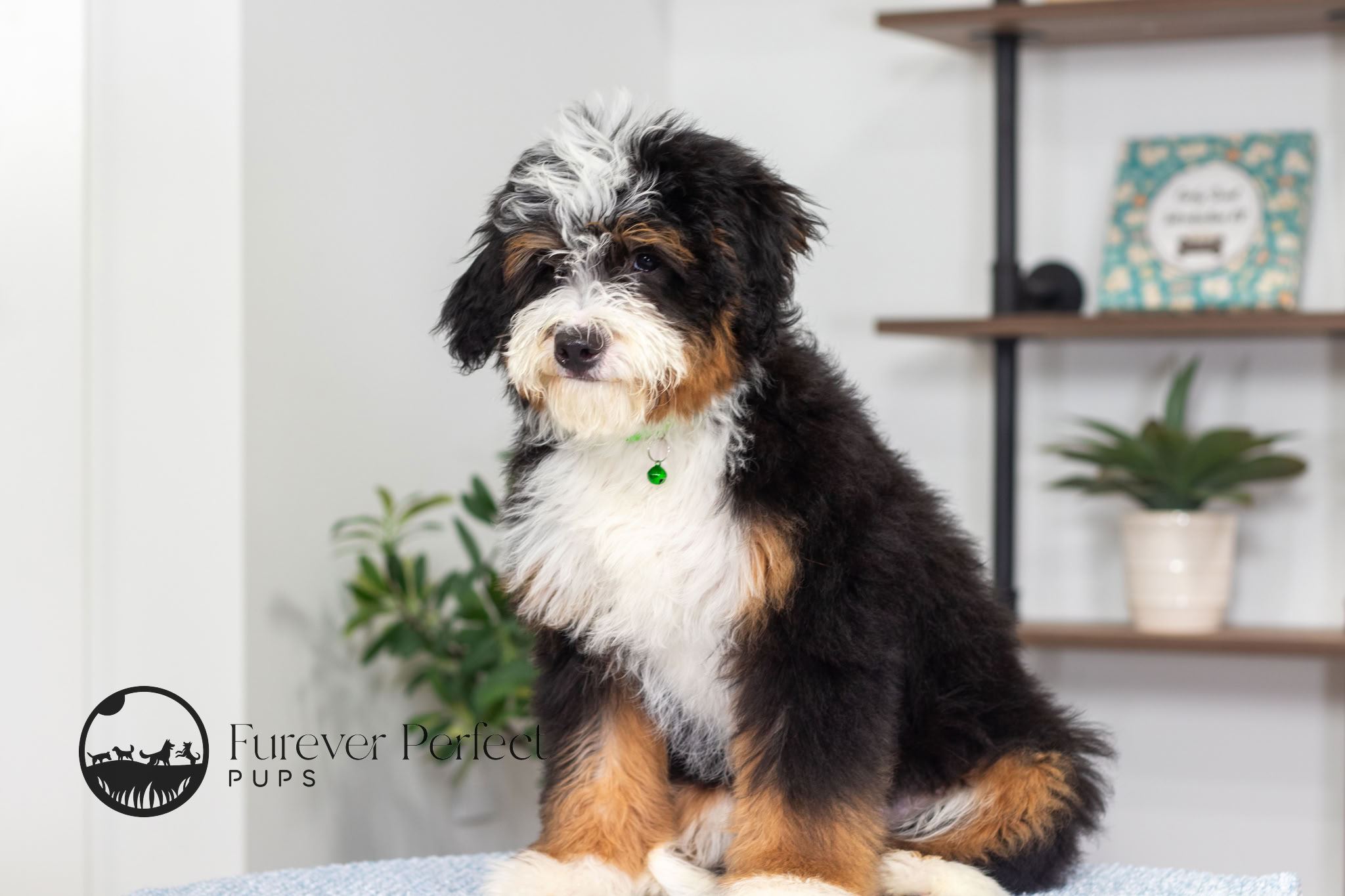
Bernedoodle coats generally fall into three categories: curly, wavy (often called fleece), and straighter coats that more closely resemble the Bernese parent. Which one a puppy ends up with comes down to genetics, specifically how the curl and furnishing genes combine from each parent. First-generation (F1) Bernedoodles, a direct fifty-fifty cross, most often land in the wavy range, while F1b dogs bred back to a Poodle skew curlier, and multi-generation litters can produce all three types. The practical point for seasonal care is that these coats trap, release, and insulate against heat very differently from one another.
The Bernese Mountain Dog’s coat is a true double coat: a long, slightly wavy outer layer over a dense, wooly undercoat. That undercoat is not just extra fluff. It traps a layer of air against the skin that insulates in both directions, holding warmth in winter and, when properly maintained and not matted, helping to slow heat gain in summer. A Bernedoodle that inherited a heavier, more Bernese-like coat carries some version of that system. A curlier, more Poodle-influenced Bernedoodle carries far less undercoat, which usually means easier heat management but less built-in protection against genuine cold.
This is also where the word people most want to hear needs honest handling. Bernedoodles are frequently marketed as hypoallergenic, particularly the curlier coats. No dog is genuinely hypoallergenic. Every dog produces the Can f 1 protein, found in saliva and dander, and that is what most allergic people react to. Poodle-influenced coats with furnishings tend to shed less and therefore distribute less hair and dander around a home, which can help mildly sensitive individuals, but this does not eliminate allergens and does not make a Bernedoodle safe for someone with severe dog allergies. The coat genetics that reduce shedding are the same genetics that reduce undercoat, which is why the lowest-shedding Bernedoodles are often also the ones that feel winter most sharply.
One rule cuts across all three coat types: matting changes the math. A matted coat cannot insulate or breathe properly. The American Kennel Club notes that double-coated breeds “blow” undercoat seasonally, and loose undercoat tangled into the outer coat is exactly what creates mats that trap moisture and heat against the skin. A neglected coat does not keep a dog cooler in summer or warmer in winter; it does the opposite while also setting up hot spots and skin irritation. Whatever coat your Bernedoodle has, consistent brushing is the foundation that makes every other piece of seasonal care work.
Heat is where the Bernese heritage shows up as a genuine liability, and it deserves to be taken seriously. Dogs do not cool themselves the way people do. They have sweat glands only in their paws, so their primary cooling mechanism is panting, which is far less efficient than human sweating. Layer onto that a large body, a tendency toward dark coloring that absorbs heat, and any inherited undercoat, and you have a dog that can move from comfortable to overheated faster than its owner expects. Cornell University’s veterinary college is blunt that all dogs are susceptible to heatstroke, with thick or dark-coated dogs, overweight dogs, and very young or old dogs at elevated risk.
Heatstroke is not a discomfort; it is a life-threatening emergency. It generally sets in when a dog’s body temperature climbs above roughly 104 to 105 degrees Fahrenheit and the dog can no longer shed heat fast enough, after which prolonged high temperature can damage essentially every organ system. Veterinary sources put the mortality rate for affected dogs disturbingly high, which is why prevention rather than treatment is the entire game. The Bernese Mountain Dog’s quiet, stoic temperament adds a subtle danger here: a sensitive, people-pleasing dog may keep working or keep walking to stay near its family well past the point of comfort, masking trouble until it is advanced.
Earlier, milder warning signs are your real safety margin, because they appear before a crisis. Reluctance to keep playing, seeking out shade, whining, lying down on cool surfaces, and panting that starts early and does not settle are all a dog telling you it is too warm. The most useful habit you can build is reading these signals as instructions rather than inconveniences, especially with a Bernedoodle that may not dramatize its discomfort.
Now the practical management. The strategies below come straight from veterinary and kennel-club guidance, adapted for a dog with potential Bernese heat sensitivity.
- Shift activity to the cool hours: Walk and play in the early morning or after sunset, and avoid the stretch from late morning through late afternoon when both air and ground temperatures peak. The hottest part of the day is often around 3 to 5 p.m., not noon, because surfaces keep absorbing heat through the afternoon.
- Provide unlimited water and real shade: Fresh water should always be available, and shade should come from trees or a tarp that allows airflow rather than a closed doghouse, which traps heat rather than relieving it. Adding ice to the water bowl on hot days is a small, effective touch.
- Use airflow and cooling surfaces: Double-coated and partially double-coated dogs respond well to moving air. A fan, an elevated cooling cot that lets air pass underneath, or a damp towel to lie on can make a real difference. Air conditioning remains the single most effective tool for a heat-sensitive dog left at home.
- Never leave your dog in a parked car: On an 85-degree day, a car interior can reach over 100 degrees within ten minutes and well past 120 degrees in half an hour, even with windows cracked and even in shade. This is a leading cause of canine heatstroke and is entirely preventable.
- Watch humidity, not just temperature: Panting cools through evaporation, and high humidity sharply reduces how well that works. A humid 80-degree day can be more dangerous than a dry 90-degree day, particularly early in the season before a dog has acclimated to warmer weather.
The single most common summer mistake owners of fluffy dogs make is reaching for the clippers, and for a Bernedoodle with meaningful undercoat it is worth stating plainly: do not shave a double-coated or partially double-coated dog to “help” it stay cool. The reasoning is counterintuitive but well established among veterinarians and groomers. The coat is not simply trapping heat; the outer guard hairs block direct sun and ultraviolet rays, and the maintained undercoat helps regulate temperature in both directions. Shave it off and you expose the skin directly to the sun, raising the risk of overheating, sunburn, and even long-term skin damage. Worse, shaved double coats frequently grow back patchy and coarse, with the undercoat returning faster than the slower-growing guard hairs, sometimes never fully recovering their function.
Paw burns are worth their own section because they affect every Bernedoodle equally, regardless of coat, and because the danger is routinely underestimated. The air temperature on a walk can feel pleasant while the pavement beneath your dog’s feet is hot enough to cause real injury. Dark surfaces like asphalt absorb and hold solar heat, climbing far above the surrounding air temperature, and they stay hot for hours after peak sun.
The numbers are stark. According to data reported by the Journal of the American Medical Association and cited by the AKC’s chief veterinarian Dr. Jerry Klein, when the air temperature is 86 degrees, asphalt can reach roughly 135 degrees. A landmark study in the Annals of Emergency Medicine on pavement temperatures found surfaces hot enough to cause skin burns within seconds, and veterinary guidance holds that pads can burn in about sixty seconds on pavement around 125 degrees. Because asphalt can hit that threshold when the air is only in the high 70s to mid 80s, the danger arrives earlier in the day and earlier in the season than most people assume.
Paw burns are also easy to miss in the moment, which is part of what makes them dangerous. A loyal Bernedoodle will often keep walking to stay with you even as the ground hurts, and the signs, limping, suddenly lifting paws, refusing to move, licking or chewing at the feet afterward, darkened or reddened pads, sometimes blistering, may not be obvious until the walk is over. If you suspect a burn, move your dog to a cool surface, rinse the paws with cool water, and contact your veterinarian if you see blisters, redness, or swelling.
Prevention is straightforward. Walk during the cool hours, route walks onto grass and shaded dirt paths rather than asphalt and concrete, and avoid parking lots and dark pavement during the hottest stretch of the day. Properly fitted dog boots can protect paws on unavoidable hot surfaces, though most dogs need a few sessions to adjust to wearing them, so introduce them before you need them rather than during a heat wave. On the worst days, the honest answer is to skip the walk entirely and burn off energy indoors with training games or puzzle feeders, which a Poodle-influenced brain tends to enjoy as much as a physical walk.
It is tempting to assume that a fluffy dog with Swiss mountain ancestry is built for winter, and a heavily double-coated Bernedoodle does carry real cold tolerance. But the American Veterinary Medical Association is direct on this point: the belief that dogs and cats are more resistant to cold than people because of their fur is simply untrue. Like people, dogs are susceptible to both frostbite and hypothermia, and the AVMA advises that no pet should be left outside for long periods in below-freezing weather, regardless of coat.
For a Bernedoodle, the coat lottery cuts the other way in winter. The same curlier, low-undercoat coats that make summer easier offer less insulation against genuine cold. A lean, single-coated, Poodle-influenced Bernedoodle can feel winter much the way a short-coated breed does, and may genuinely need a sweater or coat for time outdoors. Smaller Bernedoodles compound this, since smaller bodies lose heat faster and shorter-legged dogs sit closer to snow-covered ground where their bellies pick up cold and damp. Puppies and senior dogs in any coat type regulate temperature less effectively and need extra protection.
Hypothermia and frostbite are the two cold-weather emergencies to understand. Hypothermia sets in when body temperature drops below the normal canine range of roughly 101 to 102.5 degrees. The warning signs to act on are whining, shivering, anxiety, slowing down or stopping, weakness, and searching for warm places to burrow; if you see these, get your dog inside promptly. Frostbite is harder to catch because it may not become fully apparent until days after the damage is done, and it tends to strike the extremities first: ears, nose, tail, and paws. If you suspect either condition, warm your dog gradually with blankets or warm, never hot, towels and contact your veterinarian.
- Shorten the walks, keep the brain busy: In very cold weather, take shorter, more frequent outings rather than long ones, and make up the difference indoors. This protects both of you and is especially kind to any dog with early joint stiffness.
- Dress the dogs that need it: A curlier, low-undercoat or smaller Bernedoodle often benefits from a well-fitted coat or sweater outdoors. Keep several on hand so each outing starts with a dry one, because a wet sweater pulls heat away and makes a dog colder rather than warmer.
- Mind the paws in snow and ice: Check between the toes for ice balls after walks, which are uncomfortable and can cause the dog to favor a foot. Boots help dogs that tolerate them, particularly on salted surfaces, and good footwear lets a dog stay out a little longer without risking frostbitten pads.
- Provide warm, dry resting options: Give your dog choices of where to settle, and keep beds off cold floors and away from drafts. Dry indoor heating can also dry out skin and worsen winter flaking, so a humidifier and steady grooming help.
- Stay off frozen water entirely: Never let a Bernedoodle onto a frozen pond or lake. You cannot know whether the ice will hold, a dog chasing wildlife or a toy can break through, and a fall through ice is frequently fatal for both dog and the owner who tries to rescue it. Keep dogs leashed near any frozen water.
Some outdoor dangers are not really about temperature at all, and a few of the most serious are at their worst in the very seasons people associate with safety. The most important of these is antifreeze. Automotive antifreeze contains ethylene glycol, which is sweet-tasting and intensely attractive to dogs, and it is one of the most lethal common household poisons a dog can encounter. According to the Merck Veterinary Manual, the minimum lethal dose is alarmingly small, and veterinary sources describe just a few tablespoons of standard antifreeze as potentially fatal to a medium-sized dog. Poisonings cluster in fall, winter, and early spring, when cooling systems are flushed and antifreeze is added, and a small driveway leak is enough to draw a curious dog.
Winter brings a second, milder chemical concern in the form of de-icing salts and ice melts on sidewalks and roads. These can irritate and crack paw pads, and dogs ingest them by licking their feet afterward. Wiping or washing your dog’s feet, legs, and belly after winter walks removes these residues along with any antifreeze or other road chemicals, and pet-safer ice melts on your own property protect both your dog and the neighborhood’s.
Warm weather flips the hazard profile toward parasites and sun. Fleas, ticks, and the mosquitoes that transmit heartworm all become far more active in warm months, which makes year-round parasite prevention, prescribed by your veterinarian, a core part of seasonal care rather than an optional add-on. Sun is the other warm-season factor people forget: dogs can sunburn, and those with thin coats, light or pink-pigmented noses, or any shaved areas are most vulnerable. A maintained coat is a dog’s first line of sun protection, which is one more reason not to shave a coat that provides it.
At a Glance: Coat Type and Seasonal Care
| Coat Type | Undercoat | Summer Approach | Winter Approach |
|---|---|---|---|
| Curly (often F1b, multigen) | Minimal to none | Tolerates a sensible trim; easier to keep cool; still needs shade, water, and pavement caution | Lower insulation; often needs a coat or sweater; feels cold sooner than its fluff suggests |
| Wavy / fleece (most common F1) | Variable, light to moderate | Brush and thin rather than shave; manage heat actively; never clip to skin if undercoat is present | Moderate cold tolerance; assess the individual dog; coat helpful for shorter outings |
| Straighter / Bernese-influenced | Moderate to dense | Treat as double-coated: never shave; rely on shade, airflow, AC, and timing | Best cold tolerance of the three; still not unlimited; no long stretches below freezing |
Use this as a starting frame, not a verdict. Coat is a spectrum, body size and color shift the picture, and the safest approach always begins with reading the dog in front of you against the conditions of the day.
Frequently Asked Questions
Should I shave my Bernedoodle in the summer to keep it cool?
For most Bernedoodles, no, and for a heavily coated one it can make things worse. If your dog has any meaningful undercoat, the coat is doing double duty: the outer hairs block sun and ultraviolet rays while the maintained undercoat helps regulate temperature in both directions. Shaving exposes the skin to direct sun, raising the risk of overheating and sunburn, and double coats often grow back patchy and coarse, sometimes permanently. The exception is a purely single, Poodle-type curly coat with no real undercoat, which can take a shorter summer trim much as a Poodle can. The reliable summer move for any coat type is consistent brushing and a professional deshed to remove dead undercoat, which lets the coat breathe and function as intended.
How do I know whether my Bernedoodle is more heat-sensitive or cold-sensitive?
Read the coat and the body. Feel down to the skin: a soft, dense layer beneath the outer hair means meaningful undercoat, which leans the dog toward better cold tolerance and greater heat sensitivity. A single springy curly layer means a more Poodle-like coat, usually easier in summer and more vulnerable in winter. Darker coats absorb more heat, larger bodies hold more heat, and smaller bodies lose heat faster in cold. Most Bernedoodles end up with a narrower comfort window than their fluffy appearance suggests, neither as heat-hardy as a short-coated sporting breed nor as cold-hardy as a true northern breed, so the safest default is to watch your individual dog’s signals in both seasons rather than assuming the breed name settles the question.
What temperature is too hot or too cold for a Bernedoodle?
There is no single safe number, and any source that gives you one is oversimplifying. Heat risk depends on humidity, sun, coat, body size, age, and fitness, and many large or thick-coated dogs start to struggle once temperatures climb into the 70s and 80s, especially in humidity. Cold tolerance similarly varies with coat, body fat, age, and health, and conditions like arthritis worsen in cold. The practical rules that hold across the range: never leave a dog in a parked car in warm weather, never leave a dog outside for long periods below freezing, use the seven-second pavement test in summer, and shorten outings as conditions get extreme in either direction. When your dog’s behavior tells you it is uncomfortable, believe it.
My dog seems fine outside but pants a lot. Is that normal or a warning sign?
Panting is a dog’s main cooling tool, so some panting during and after activity in warm weather is normal. What you are watching for is panting that starts early and does not settle, becomes heavy or frantic, or pairs with other signs: heavy drooling, bright red gums or tongue, weakness, stumbling, or a reluctance to keep moving. Those indicate the dog is no longer cooling itself effectively and is heading toward heatstroke, which is an emergency. The Bernese side of the cross tends to be stoic and may push past comfort to stay near you, so do not wait for a dramatic signal. If panting seems excessive for the conditions and effort, move your dog to shade or air conditioning and offer water, and if the heavier signs appear, treat it as urgent and call your veterinarian.
Do Bernedoodles really need winter coats and boots, or is that just for show?
It depends on the dog, and dismissing it as decoration is a mistake for some Bernedoodles. A curlier, low-undercoat dog, a smaller dog, a puppy, or a senior can genuinely benefit from a well-fitted coat in cold weather, because they lose heat faster and have less natural insulation than their appearance implies. Keep several coats so each outing starts dry, since a wet one makes a dog colder. Boots are useful in two situations: protecting pads from frostbite and ice balls in winter, and from salt and de-icing chemicals on treated sidewalks. They also help in summer on unavoidable hot pavement. Most dogs need a few practice sessions to accept boots, so introduce them well before you need them rather than in the middle of a cold snap or heat wave.
What does Furever Perfect Pups do to prepare puppies before they go home?
Our preparation begins long before a puppy is old enough to think about its first summer or winter. From days three through sixteen, every litter goes through Early Neurological Stimulation, a brief daily protocol that builds the stress tolerance and resilience a puppy later draws on when it encounters new environments, including seasonal extremes. Alongside it, we run Early Scent Introduction, exposing puppies to a new scent each day to develop the confidence and engagement that make a Bernedoodle adaptable. Both parents are OFA health-tested, with hip, elbow, eye, cardiac, and breed-specific genetic screening submitted to the public database, because a dog’s ability to handle the physical demands of heat, cold, and activity starts with sound structure and health. Every puppy also leaves with the foundations of our pre-training program, including leash desensitization and marker-based basics, so that teaching a dog to tolerate boots, settle in air conditioning, or shorten a walk on a hot day builds on existing vocabulary rather than starting from zero. And our support does not end at pickup: as your dog grows into its first seasons and you learn which end of the coat spectrum it landed on, we remain available for the questions that come with each stage, because responsible placement means being there for the whole life of the dog, not just the day it goes home.
Final Thoughts
The thread running through all of this is that a Bernedoodle is two climate histories living in one dog, and good seasonal care means figuring out which history is dominant in yours. The Bernese side brings real heat sensitivity, large body mass, and the kind of stoic temperament that can hide discomfort. The Poodle side brings a coat that may be easier in summer but offers less protection against genuine cold. Where your particular dog falls on that spectrum determines whether you are managing primarily for heat, primarily for cold, or, as is often the case, for a narrower comfort window in both directions than the dog’s fluffy appearance suggests.
None of this is complicated once you stop treating “Bernedoodle” as a single set of instructions. Read the coat, watch the dog, respect the genuine emergencies, heatstroke, pavement burns, hypothermia, frostbite, and antifreeze, and build seasonal routines around the animal you actually have rather than the breed average. The seven-second pavement test, the refusal to shave a double coat, the parked-car rule, the leashed distance from frozen water: these are small, specific habits, and they prevent the outcomes that send dogs to emergency clinics.
We spend a great deal of time before placement building the health, resilience, and early training that give a Bernedoodle its best start, but the seasons are where day-to-day ownership lives, and that part belongs to you. Our experience is that the families who learn to read their own dog early, in its first summer and its first winter, are the ones whose Bernedoodles move through every season comfortable, safe, and well. That is the goal, and it is entirely within reach with attention and a little knowledge applied at the right moments.