

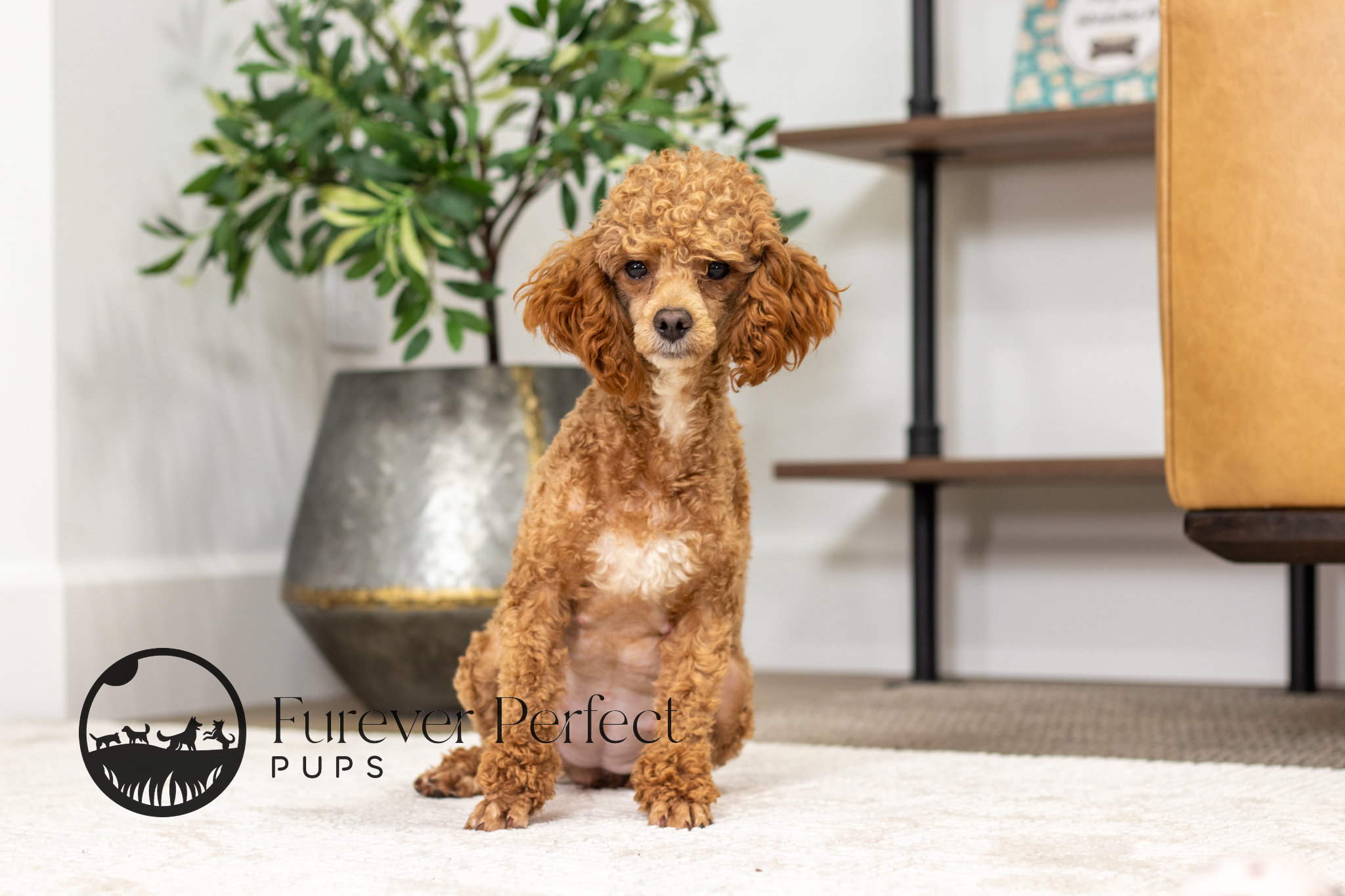
Are Poodles Good Family Dogs? Pros and Cons for Households with Kids
Poodles have ranked among the most popular family dogs in the United States for decades, and the reasons are substantive rather than merely fashionable. The AKC’s own breed guide describes Poodles as good with kids and easily adaptable to different environments, and BetterPet’s veterinarian-reviewed Standard Poodle profile notes that with children, Standard Poodles are patient, gentle, and love to play, making them great companions. That reputation is earned. The combination of working intelligence, genuine people-orientation, low-shedding coat, and physical capability to handle the active life of a family with children makes the Poodle a well-matched family dog across a wide range of household types.
At the same time, “good with kids” is a claim that deserves more precision than it usually gets. The AVMA’s community approach to dog bite prevention makes an important point that applies to every breed equally: almost half of all dog bite victims are children under twelve years old, and the most preventable incidents involve young children left unsupervised with a dog, including a family dog with no history of aggression. The 2013 Journal of the American Veterinary Medical Association study examining 256 dog bite fatalities found that absence of a supervising adult was a co-occurring factor in 87 percent of cases. These findings do not indict Poodles specifically; the AVMA explicitly notes that breed is not a reliable predictor of bite risk and opposes breed-specific legislation. But they establish the context that the phrase “good with kids” always operates within: good temperament, proper socialization, and adult supervision together produce safety. Any one of those alone is not sufficient.
This guide covers the genuine strengths Poodles bring to family life, the real challenges that honest evaluation requires acknowledging, the significant differences between the three varieties in family contexts, and what the fit actually looks like by family type and children’s ages. The aim is the same honest picture this series applies to every topic: not to sell you on Poodles, but to give you what you need to make the decision well.
The AKC breed standard’s temperament description for the Poodle is notably specific and worth quoting directly: “Carrying himself proudly, very active, intelligent, the Poodle has about him an air of distinction and dignity peculiar to himself.” The standard then identifies shyness or sharpness as major faults, which means the breed standard explicitly requires that Poodles be neither fearfully reactive nor sharply aggressive. A well-bred Poodle should be neither of those things as a matter of correct breed type, which is a meaningful distinction from breeds whose standards are silent on temperament fault conditions.
The Canadian Kennel Club’s standard adds further description that speaks directly to family life: the Poodle is “known for his intelligence, his lively, mischievous sense of humour, and his willingness to please. The Poodle is a people-oriented breed that refuses to be ignored.” That last phrase is candid in a way that is useful for families to understand from the start. A Poodle is not a dog that will quietly occupy a corner and ask nothing of the people around it. It is an engaged, attentive, socially motivated dog that requires inclusion in family life to be at its best and expresses its needs clearly when that inclusion is not provided.
Stanley Coren’s widely cited research on working and obedience intelligence ranks the Poodle second of all breeds, behind only the Border Collie. The BetterPet Standard Poodle review, citing Coren’s work, notes that Poodles can understand new commands in fewer than five repetitions. In a family context with children, this intelligence works in the breed’s favor in specific ways: a Poodle can learn the rules of the household, the behavior expected around different family members, and the signals that indicate a situation requires care rather than enthusiasm, with a speed and reliability that lower-intelligence breeds cannot match. That same intelligence means the dog learns inconsistency and exceptions just as quickly, which is relevant to how households with children need to manage training.
✓ Genuine Family Strengths
- Shyness and sharpness listed as major faults in the breed standard
- People-oriented temperament thrives with family inclusion
- Second-ranked intelligence enables fast learning of household rules
- Low-shedding coat reduces allergen load and household hair
- Three sizes available to match any household’s space and lifestyle
- Playful energy matches well with school-age and older children
- Long lifespan means the dog grows alongside children across many years
✗ Real Challenges to Acknowledge
- Mental understimulation produces destructive and anxious behavior
- Sensitivity to household emotional climate; does poorly in chaotic environments
- Intelligence means unintended behaviors are learned as fast as intended ones
- Grooming requirement is non-negotiable and ongoing throughout the dog’s life
- Alert barking triggered by household noise and activity
- Standard Poodles have physical size that requires management with very young children
- Adolescent phase produces temporary pushback that surprises unprepared families
The relationship between a Poodle and the children in its household is shaped more by the children’s age, the quality of the dog’s socialization, and the consistency of adult supervision than by any fixed breed characteristic. Poodles as a group tend to be patient and socially flexible, but “tends to be” describes a population, not a guarantee for any individual dog in any specific interaction. The AVMA’s dog bite prevention guidance applies here without exception: always supervise young children when around dogs, no matter how well-behaved either are.
Infants and Toddlers
With infants and toddlers, the relevant concern is less about Poodle temperament and more about the management that responsible ownership requires with any dog around any very young child. The 2013 JAVMA study on dog bite fatalities found that children cannot be expected to show good judgment in their interactions with dogs until at least six years of age, and that supervised interaction is essential for children under that threshold. A Standard Poodle’s physical size creates a practical consideration that temperament alone does not address: an enthusiastic 50-pound dog moving toward a standing toddler can knock a small child down without any aggressive intent. This is a size and physics issue rather than a Poodle-specific issue, and it is managed through training and supervision rather than by concluding the breed is inappropriate for households with young children.
Families with infants or toddlers and Poodles succeed when the dog has clear rules about greetings, when adult supervision is maintained during all dog-child interactions, and when the dog has its own safe space away from the child when it needs distance. These are management requirements that apply to every breed with every young child, and Poodles that receive them consistently handle the toddler household well.
School-Age Children
The school-age window, roughly six through twelve years old, tends to be the period where the Poodle-child relationship reaches its fullest expression. The AKC notes that Poodles are good with kids and easily adapt to different environments, and school-age children are the demographic best positioned to bring out those qualities. Children old enough to learn and follow consistent interaction rules, to participate in basic training, and to engage with a Poodle’s need for play and activity create exactly the environment the breed’s people-oriented temperament rewards. A Standard Poodle that runs with the family’s eleven-year-old, plays fetch in the backyard, and greets the children after school with genuine enthusiasm is fulfilling the role the breed was built for.
The mutually beneficial aspect of this relationship is worth naming specifically: Poodles that are engaged by the children in the household are better exercised, better socialized, and better behaved overall than those that spend their days with adults who are occupied with work and household management. Children’s natural energy, enthusiasm for play, and frequency of interaction addresses the mental and physical engagement needs that keep a Poodle behaviorally stable. The families where this relationship goes best are often the ones where both the dog and the children are getting something genuine from it.
Teenagers
Teenagers and Poodles tend to get along naturally. Teenagers large enough to handle the dog physically, interested enough in the dog to provide regular engagement, and capable of participating in training and care contribute meaningfully to the household’s management of the dog. The practical challenge, as noted in our Bernedoodle family dogs post, is that teenagers’ schedules change: sports seasons, social activities, homework, and eventually college create patterns of reduced availability that can affect the Poodle’s social and exercise routine if no one else adjusts to compensate. Families with teenagers should think through who maintains the dog’s routine when the teenager who was its primary companion is suddenly away or unavailable for weeks at a time.
The Poodle’s intelligence is one of the most frequently cited reasons families choose the breed, and it is a genuine asset that makes training more efficient and reliable than with most dogs. The AKC guide describes Poodles as easy to train, responding best to consistent, positive training routines, and this assessment is accurate. A Poodle that receives clear, consistent, positive training from early in its life can develop the household manners that make family life genuinely pleasant: greeting people calmly, settling when asked, waiting patiently for meals, and handling the unpredictable energy of children without becoming either reactive or over-aroused.
The training responsibility that comes with this intelligence is equally real. A Poodle learns what is reinforced, and in a household with multiple children and caregivers who may not be consistent about rules, the dog learns quickly which family member has which rules, which exceptions are available, and which behaviors produce desired outcomes from which people. A Poodle that has learned that jumping on the children is tolerated even though jumping on adults is not has not failed its training; it has succeeded at learning the precise rules as they were actually taught. Families with children that want a well-mannered Poodle need consistency across all family members, including the children, in applying the rules the dog has been trained to follow.
The AVSAB’s 2021 position statement on humane dog training is directly applicable here: based on current scientific evidence, the AVSAB recommends that only reward-based training methods are used for all dog training. This matters specifically in households with children because children are more likely than adults to interact with the dog in ways that are inadvertently aversive, and because the Poodle’s sensitivity means punishment-based interactions can affect the trust and responsiveness that make the training relationship productive. Teaching children to interact with the Poodle in positive, reward-based ways, to give the dog clear signals rather than unpredictable ones, and to recognize when the dog needs space rather than attention is part of the training work in any household where children and a Poodle share space.
The positive case for Poodles as family dogs is well-established and largely accurate. The challenges deserve the same honest treatment, because families who encounter them without warning are the ones most likely to make poor management decisions or, in the worst cases, to surrender a dog that was a poor fit because the fit was never honestly assessed.
The Mental Stimulation Requirement Is Non-Negotiable
The AKC’s Poodle breed guide is direct: all Poodle varieties are very active dogs who need a lot of stimulation. The restlessness that under-stimulated Poodles develop, including destructive chewing, persistent barking, and demand behaviors, is not a character flaw. It is a working dog expressing the cognitive and physical engagement needs that go unmet when the family’s attention is elsewhere. Families with young children, demanding work schedules, and full household calendars need to honestly assess whether adequate daily exercise and mental engagement can be consistently provided before committing to any Poodle, regardless of size.
Grooming Is a Lifetime Commitment
The low-shedding coat that makes Poodles appealing to allergy-sensitive families requires brushing three to four times per week and professional grooming every six to eight weeks, across the dog’s entire lifespan. For a Toy or Miniature Poodle this runs approximately $550 to $990 annually in professional grooming costs. For a Standard Poodle it runs $870 to $1,550 annually. These costs do not decrease as the dog ages, and neglecting them produces coat matting that leads to more expensive corrective grooming or a shave-down that is uncomfortable and disorienting for the dog. Families who are attracted to the low-shedding quality but have not specifically budgeted for the grooming requirement are setting themselves up for a gap between expectation and reality that creates ongoing friction.
Alert Barking in a Busy Household
The AKC’s Poodle guide notes explicitly that Poodles are vigilant and alert owners if they feel something is not right, and that they are more likely to bark, which is something to consider for those wanting a less vocal breed. In a busy household with children, visitors, deliveries, and the general ambient noise of active family life, this alertness can translate into frequent vocalization that is disruptive to the household and potentially problematic in shared living situations. This is a manageable characteristic through training, environmental management including frosted window film and white noise near the front door as described in our apartment living guide, and meeting the dog’s mental engagement needs consistently. It is not a reason to avoid the breed, but it is a realistic aspect of life with a Poodle that families with young children who nap, thin walls, or noise-sensitive neighbors should weigh honestly.
Emotional Sensitivity
Poodles are emotionally attuned dogs. The same attunement that makes them such responsive training partners and such warm family companions also means they are more affected by household emotional climate than more independently-minded breeds. A Poodle in a consistently chaotic, high-conflict, or emotionally dysregulated household environment tends to develop the anxiety and reactivity that reflects that environment. This is not unique to Poodles, but it is more pronounced in a sensitive breed than in one with a more stoic temperament. Families going through extended stressful periods, households with chronic high conflict, or caregiving situations that produce regular household dysregulation should factor this sensitivity into their assessment of fit.
The three Poodle varieties carry the same basic temperament and intelligence profile but differ in ways that matter significantly in a family context with children. Choosing the right size is not simply a preference decision; it affects physical management logistics, exercise requirements, noise profile, and the specific household types each variety fits most naturally.
| Variety | Weight | Best Family Match | Main Consideration | Exercise Need |
|---|---|---|---|---|
| Toy Poodle | 4 to 6 lbs | Families with older children, smaller spaces, less active lifestyles | Fragility around very young or rough-playing children; full Poodle brain needs mental engagement that size does not reduce | 30 to 45 min daily; mental enrichment essential |
| Miniature Poodle | 10 to 15 lbs | The most versatile family size; suitable for a wide range of household types and children’s ages | Moderate exercise requirement manageable for most families; less physically risky around young children than Standards | 45 to 60 min daily; consistent training and enrichment |
| Standard Poodle | 40 to 70 lbs | Active families with school-age children who have time and space for daily exercise; households looking for a larger companion | Physical size requires management with very young children; 60 to 90 min daily exercise is a real commitment | 60 to 90 min daily; varied activity types |
The Toy Poodle in a Family Context
The Toy Poodle is the variety most often underestimated in family discussions because small size is conflated with fragility and low needs. Both assumptions are wrong in the same direction. Toy Poodles are more fragile than larger varieties in the sense that a child’s rough handling or an accidental step or fall creates more risk for a 5-pound dog than for a 50-pound one. That fragility makes them a less natural fit for households with children under roughly six years old whose physical coordination and impulse control are still developing. At the same time, Toy Poodles carry the full Poodle intelligence and mental engagement requirement in a tiny package. A Toy Poodle that is carried everywhere, treated as a decorative accessory, and given no structured mental engagement will develop the anxiety, barking, and reactive behavior that is the direct expression of that intelligence going unmet. Small body, same brain.
The Miniature Poodle in a Family Context
In our experience, the Miniature Poodle is the most consistently successful family variety across the broadest range of household types. Large enough to be physically robust in a busy household without the size management considerations of a Standard, small enough to be comfortably managed in most living spaces, and with an energy level and exercise requirement that most active families can meet without heroic logistical effort. The Miniature Poodle’s tendency to be highly responsive to training, combined with its genuine affection for the children in its household, produces the family dog experience that many people have in mind when they think of Poodles. Its alert nature means it may bark more than some families prefer, and its intelligence means training consistency matters, but these are well within the manageable range for a family that approaches them honestly.
The Standard Poodle in a Family Context
The Standard Poodle is the variety that most directly inherits the working dog heritage from the breed’s water-retrieving past, and it shows in the energy level, the physical capability, and the depth of engagement that Standards bring to family life. A Standard Poodle that is well-exercised and mentally engaged is one of the most settled, confident, and genuinely impressive family companions available. Its 60 to 90 minute daily exercise requirement is real and not to be minimized, but for active families with school-age children whose lifestyle already includes outdoor activity, this is not a burden but an alignment. The physical size consideration around very young children is the one adjustment Standard Poodle families need to manage actively, through training and supervision, during the toddler years.
Families Where Poodles Tend to Thrive
- Active families who include the dog in daily life rather than managing it around it. Poodles are people-oriented dogs that are at their best when integrated into household activity rather than kept at the margins of it. Families whose lifestyle naturally includes the dog are consistently the happiest ones.
- Households with school-age children who can participate in training and play. The relationship between a school-age child and a well-trained Poodle is one of the most mutually enriching dog-child relationships available. Both parties benefit and both parties contribute.
- Families who have specifically budgeted for grooming and are prepared to maintain the brushing schedule between appointments. The coat is beautiful and practical. The maintenance is real and ongoing. Families who go in with that clarity navigate it successfully.
- Parents who are willing to maintain training consistency across all family members, including teaching children how to interact with the dog in ways that reinforce rather than undermine the training the dog has received.
- Households that can provide daily mental engagement alongside physical exercise. The AKC is explicit that Poodles need a lot of stimulation. Families whose daily routine can include training sessions, enrichment activities, and varied exercise as a normal feature of the day rather than an extra burden are well-positioned.
Where the Match Creates Ongoing Friction
- Households where the dog will be expected to manage itself with minimal engagement. Poodles that are acquired but not genuinely integrated into family life develop the destructive and anxious behaviors that make them difficult to live with. The breed’s intelligence means boredom expresses itself quickly and creatively.
- Families with very young children who are not committed to consistent adult supervision during all dog-child interactions. The AVMA’s supervision guidance applies to this breed as it applies to every breed. Temperament alone does not substitute for management.
- Households where grooming is treated as optional. A neglected Poodle coat produces a matted, uncomfortable dog and increasingly expensive corrective grooming. The commitment to the coat is as fundamental as the commitment to exercise.
- Families who chose the breed based primarily on aesthetics or allergen arguments without honestly assessing the mental stimulation and training consistency requirements. The coat’s practical advantages are real. They do not reduce the engagement and management requirements that come with the Poodle’s intelligence and working heritage.
Miniature Poodle owner, Nashville, TN
Frequently Asked Questions
Are Standard Poodles safe with toddlers?
Standard Poodles from well-bred, well-socialized backgrounds tend to be gentle and patient with children of all ages. The practical consideration for toddlers is physical rather than temperamental: a Standard Poodle at 50 to 70 pounds can knock a toddler down while simply moving enthusiastically, and that physical reality requires active management through training and supervision rather than through breed exclusion. The AVMA’s guidance applies here as it applies to every dog with every young child: never leave a baby or small child alone with a dog. A Standard Poodle that has been trained with clear rules about greetings and that is supervised during all interactions with young children is a safe companion for a family with toddlers. The management is the parent’s responsibility, not the dog’s.
Do Poodles get along with other family pets?
The AKC notes that Poodles are usually friendly with other dogs and, with proper socialization, are likely to be good with other animals. This is consistent with what we observe in our program: Poodles that are socialized with other dogs during the critical socialization window tend to be socially appropriate and easy to integrate with existing household pets. Individual variation exists, and a Poodle with an unusually high prey drive will need more careful management around small animals like rabbits or hamsters. Early, positive, supervised introductions produce the best outcomes, and the socialization window of eight to sixteen weeks is the most efficient time to build the broad social comfort that makes multi-pet households work well throughout the dog’s life.
My family has mild dog allergies. Is a Poodle a good choice?
The American College of Allergy, Asthma, and Immunology is clear that no dog breed is truly hypoallergenic because all dogs produce dander, the primary allergen trigger, regardless of coat type. The AKC describes Poodles as shedding minimally, which is accurate: the low-shedding quality means the protein Can f 1 is distributed into the environment at lower rates than with heavy-shedding breeds, which can make a meaningful practical difference for mildly sensitive individuals. Whether this difference is sufficient for your specific family member depends on the severity of that person’s sensitivity and how well indoor air quality and grooming management are maintained. The most useful step before deciding is spending time with Poodles specifically and assessing the allergic response. Some people with mild sensitivities live comfortably with Poodles through good grooming and air management practices. Others find the residual allergen still triggers symptoms despite precautions. That individual variation cannot be predicted from breed information alone.
How should I introduce a Poodle puppy to my young children?
The introduction should be structured, calm, and supervised from the first moment. Brief the children specifically before the puppy arrives: quiet voices, slow movements, no reaching over the puppy’s head, sitting on the floor rather than standing, and letting the puppy approach rather than pursuing it. Keep the first introduction short, under fifteen minutes, and end it before either the puppy or the children are overexcited. Give the puppy its own space, a crate or gated area, that is off-limits to children without adult supervision. Build positive interactions through consistently calm, low-key encounters in the first weeks rather than through extended excited play sessions that overstimulate the puppy. The quality of these first interactions shapes the dog-child relationship for years, and getting them right requires adult management of the situation rather than leaving dog and children to figure it out on their own.
What age of child is best matched to a Poodle puppy?
School-age children, roughly six through twelve, are the most natural match for a Poodle puppy in most family contexts. They are old enough to follow consistent interaction rules, large enough to handle the puppy’s physical enthusiasm with less vulnerability, and socially engaged in exactly the ways that play well with the Poodle’s people-oriented personality. Younger children can succeed with a Poodle puppy in households where adult supervision is consistent and the puppy receives adequate independent rest rather than being handled continuously. Teenagers are good matches but require the caveat about schedule changes noted elsewhere in this guide. The age of the children when the puppy comes home is less important than the age those children will be across the full lifespan of the dog, which can extend fifteen years for a Miniature Poodle from healthy lines.
What preparation do your Poodle-parent puppies receive before coming home to families with children?
Every puppy in our program begins Early Neurological Stimulation from the first days of life and Early Scent Introduction throughout the socialization period. Both build the neurological resilience and sensory confidence that make new environments and new people, including children, less destabilizing for the puppy during the critical developmental window. Our puppies are handled daily by multiple people, including children who visit our facility during the socialization period, and exposed to the sounds and activity levels of an active household. Our pre-training program introduces positive reinforcement basics before the puppy leaves our care, giving families with children a dog that already has the beginning of trained communication with people rather than starting from zero. Both parents in every pairing receive OFA hip and elbow evaluation, OFA eye certification, and comprehensive genetic panel testing before being included in our program. We stay available to families post-placement for guidance on child-dog integration as questions arise, because the first months of that relationship are the ones that shape it most.
Final Thoughts
Poodles are good family dogs. That statement is well-supported by the breed standard, by the AKC’s own assessment, by veterinary behavioral resources, and by the consistent experience of families who have lived with them well. The case for Poodles in households with children is genuine and grounded in real breed characteristics that translate directly into family life advantages: the intelligence that enables fast, reliable training; the people-orientation that produces deep family bonds; the low-shedding coat that reduces the allergen and hair management that complicates life with other breeds; and the playful, adaptable temperament that handles the unpredictable energy of a family with children better than most breeds.
The honest full picture adds to that case the things that the simple “good with kids” summary leaves out: the mental stimulation requirement that does not reduce because the family is busy; the grooming commitment that does not go away because the coat is not shedding on the furniture; the training consistency that is more demanding when multiple children with different approaches to the dog are in the picture; and the supervision principle that the AVMA establishes for every dog with every child, regardless of temperament history. The families who know all of this going in, and who choose the Poodle because their life genuinely accommodates what the breed needs, have the experience the breed is capable of producing at its best. That experience, built on honest assessment and consistent investment, is genuinely excellent.