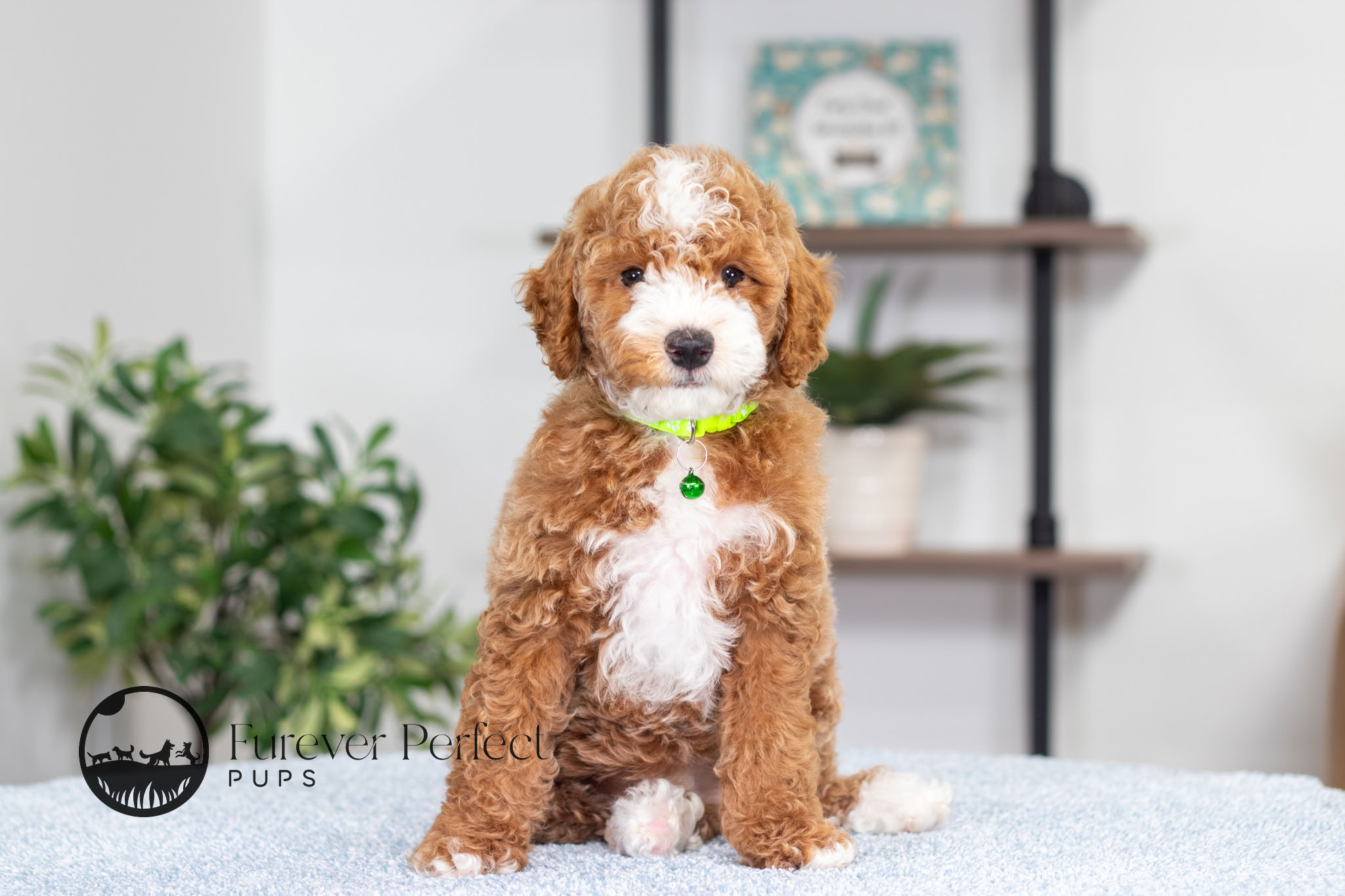
Seasonal Care for Poodles: Heat, Cold, and Allergy Management
Almost every seasonal care mistake we see Poodle owners make traces back to one anatomical fact: the Poodle does not have the coat that general dog advice is written for. The AKC places the breed’s origins in Germany as a water retriever, and the name descends from the German Pudel, a word tied to splashing in water. The traditional clip that people now read as decoration began as working equipment. Hunters shaved the hindquarters and legs to reduce drag and left dense hair over the chest and leg joints to insulate a dog swimming in cold water.
What that heritage produced is a single-coated dog. The AKC’s grooming guidance draws a hard line between double-coated breeds, which carry coarse guard hairs over a dense insulating undercoat, and single-coated breeds like the Poodle, whose hair grows continuously with no soft undercoat beneath it. That distinction is the reason a Poodle sheds very little, the reason it mats, the reason it can be clipped short in July when a Golden Retriever should not be, and the reason a Poodle in a short winter clip needs more protection in January than most owners expect.
It also means much of the seasonal advice circulating online does not apply here. The instruction to never shave a dog in summer, which the ASPCA and most groomers issue for good reason, is written about double coats. Applied to a Poodle it produces a matted, overheated dog. Advice written for northern breeds about cold tolerance produces the opposite error, owners assuming a Standard Poodle in a half-inch pet clip carries the same winter equipment as a Bernese Mountain Dog.
This post covers the three pressure points that actually generate calls to us and to veterinarians. It is honest about the inconvenient parts. Poodle seasonal care is not a sweater in December and a kiddie pool in June. It is a coat management schedule, a skin and ear routine, and a willingness to recognize that what most owners call seasonal allergies in a dog is not a sneezing problem at all.
A double-coated dog runs a two-layer thermal system. The undercoat thickens in autumn, blows out in spring, and works in both directions, trapping warm air in winter and holding a cushion of cooler air against the skin in summer. Remove it with clippers and the dog loses insulation it cannot properly rebuild, which is why post-clipping alopecia and heat intolerance follow bad summer shave-downs in those breeds.
The Poodle runs no such system. There is one layer, it grows without a natural stopping point, and it does not participate in a seasonal cycle.
Mats matter seasonally because they behave like small sealed compartments against the skin. They trap moisture, and moisture against skin degrades the skin barrier. In summer a swim or a humid week turns a tangle into a hot, damp patch. In winter wet snow packs into the coat and stays. The friction points are consistent across all three sizes: behind the ears, the armpits, the groin, under a collar or harness, and the leg furnishings.
The second consequence is that coat length becomes a decision rather than a given. Owners choose the insulation their dog carries into each season by choosing the clip. The third is that the schedule cannot lapse. Most Poodles in a pet clip need a full professional groom every four to six weeks with brushing and combing several times a week in between, and dogs who swim regularly often need shorter intervals.
Cornell’s Riney Canine Health Center is blunt about canine cooling: dogs have sweat glands only in their paws, so panting is their primary route for dissipating heat. Cornell also notes that all dogs are susceptible to heat stroke, and lists dogs with thick or dark coats among those needing extra precaution alongside overweight dogs, seniors, and dogs with heart or breathing conditions. A black Standard Poodle in full coat in August sits squarely in that group.
The AVMA’s warm weather guidance is direct on the environmental side: avoid walking, running, or hiking during the hottest part of the day, and never leave a pet in a vehicle, which can reach dangerous temperatures even on days that do not feel hot. AAHA adds a detail that surprises people, noting that the surface temperature of asphalt, concrete, sand, and metal can run 40 to 60 degrees hotter than the air.
The summer clip question, answered for Poodles specifically
Because the Poodle is single-coated, a shorter summer clip is appropriate and does not damage the coat’s ability to grow back. That is a genuine difference from double-coated breeds. The nuance is how short. The AKC’s guidance for single-coated dogs is to leave at least an inch of hair for warmth and protection, and the AKC also notes that a dog’s coat protects against sunburn and reduces skin cancer risk. Cream and apricot Poodles have the thinnest margin here. The AVMA frames the decision correctly: ask your veterinarian whether your particular dog would benefit from a warm weather haircut or from sunscreen, rather than applying a rule to every Poodle.
Recognizing and responding to heat stress
Cornell lists heavy panting, seeking shade, whining, reluctance to play, and drooling as early signs of overheating. Those precede the emergency and are the point at which to intervene. VCA Animal Hospitals classifies hyperthermia itself as an immediate medical emergency, and the current cooling guidance has changed in ways many owners have not caught up with.
STEP 1 Move the dog out of the heat immediately, into air conditioning or at minimum deep shade with air movement.
STEP 2 Pour cool water, not cold water, over the head, stomach, armpits, and feet, following VCA’s guidance on safe controlled temperature reduction.
STEP 3 Do not drape the dog in wet towels, because VCA notes that covering the dog prevents evaporative and radiative cooling. Misting plus a fan is the better combination, and ice packs and rubbing alcohol are no longer recommended.
STEP 4 Go to a veterinarian regardless of how quickly the dog appears to recover, because internal damage from hyperthermia is not visible from the outside.
There is also useful prevention work for active dogs. Research led by Dr. Cynthia Otto of the Penn Vet Working Dog Center, published in JAVMA, found that teaching dogs to voluntarily dunk their heads in water was the most effective method for rapid cooling after exercise. The reasoning is physiological: during heat stress, blood flow to the head, nose, tongue, and ears increases, so cooling those tissues cools the whole dog efficiently with limited water.
Dr. Cynthia M. Otto, Penn Vet Working Dog Center, on the JAVMA cooling research
For a breed descended from water retrievers this is an unusually easy skill to build, and it turns cooling into something the dog participates in rather than something done to it.
Winter is where the single coat cuts the other direction. Veterinary guidance ties cold tolerance to coat type, size, age, body condition, and acclimatization rather than to one temperature. PetMD’s guidance, reviewed by Dr. Jennifer Coates, suggests cold generally does not become a problem for most dogs until temperatures fall below 45°F, with meaningful caution warranted below 32°F for small, thin-coated, very young, and senior dogs. A Poodle carrying a half-inch pet clip belongs closer to the thin-coated end of that spectrum than its size alone suggests.
The AVMA gives the signs to act on directly: whining, shivering, anxiety, slowing down or stopping, weakness, or looking for warm places to burrow all indicate a dog that needs to come inside. The AVMA also notes that frostbite is harder to detect and may not be fully recognized until several days after the damage occurs, which is a good argument for erring early. The AKC describes mild hypothermia in dogs as beginning when body temperature drops below 99°F.
The winter length tradeoff, stated honestly
The common advice to keep a dog’s coat longer in winter is sound in principle and creates a real problem in practice for Poodles. A longer coat does insulate better. It also collects wet snow, packs it into the furnishings and between the toes, and mats faster than a short clip. There is no version of this that avoids the tradeoff.
What works, in our experience, is splitting the decision by body region rather than treating the coat as one length. Keep useful length on the body if your dog spends real time outdoors in winter, and keep the feet, the area between the pads, and the sanitary areas trimmed short regardless of season. Snow balls up in foot hair with remarkable speed, and ice accumulating between the toes is both painful and a route to cracked pads.
Chemical hazards are the part owners forget
The Merck Veterinary Manual is direct about winter poisoning risks. Salt used to melt ice can poison dogs that lick it off their paws, with signs beginning as vomiting within several hours and potentially progressing to weakness, diarrhea, muscle tremors, and seizures. Ethylene glycol antifreeze is worse. Merck notes it tastes sweet, is widely used, and has a lethal dose in dogs of only three to four teaspoons, with signs including clumsiness, excess thirst and urination, and progression to vomiting, seizures, or coma. Pet Poison Helpline adds that ice melt lodged in the paws causes direct damage including redness, cracking, and chapping.
- Wipe or wash the feet, legs, and belly after every winter walk: University of Wisconsin’s veterinary guidance recommends avoiding visible salt where possible and washing feet, legs, and belly on returning home, which matters more for a low-slung Miniature or Toy Poodle than for a Standard.
- Check between the pads before the dog settles in: The AVMA specifically recommends checking paws for cracked or bleeding pads and for ice and snow accumulation between the toes, which takes seconds and is easy to skip.
- Treat any antifreeze spill as an emergency-grade cleanup: Given the lethal dose Merck describes, a small puddle in a garage is a genuine hazard, and pet-safer propylene glycol products are worth choosing where available.
- Keep bathing consistent but dry the coat completely: The ASPCA advises limiting baths during cold spells to preserve skin oils, but a Poodle that goes unbathed pelts. The workable compromise is to keep the schedule, use a moisturizing formula, rinse thoroughly, and dry to the skin rather than leaving the coat damp.
- Humidify the house: Moving between dry indoor heat and cold outdoor air produces flaky, itchy skin, and the ASPCA’s recommendation to run a humidifier addresses the cause rather than the symptom.
When an owner says their dog has seasonal allergies, they usually picture the human version. The canine version presents almost entirely on the skin. Canine atopic dermatitis is defined in the ICADA guidelines authored by Hensel and colleagues as a genetically predisposed, inflammatory, and pruritic skin disease associated most commonly with IgE antibodies to environmental allergens, and the literature places its prevalence at up to roughly ten percent of dogs.
The Merck Veterinary Manual describes the pattern clearly. Age of onset is generally between six months and three years. Signs may be seasonal, non-seasonal, or non-seasonal with seasonal flares. Itching is the characteristic sign, and the areas most frequently affected are the paws, face, ears, the flexural surfaces of the front legs, the armpits, and the abdomen. Merck also notes that primary lesions are uncommon, so most of what owners actually see is secondary: hair loss, redness, scaling, crusts, thickened skin, and darkened pigment produced by the dog’s own scratching, plus the bacterial and yeast infections that follow.
What has to be ruled out first
Atopic dermatitis is a diagnosis of clinical criteria plus exclusion, not a test result. The ICADA diagnostic guidelines call for flea combing, skin scraping, and cytology as part of a thorough workup, and for elimination diet trials in patients with year-round itching or concurrent gastrointestinal signs. Three conditions in particular masquerade as seasonal allergy in Poodles.
Flea Allergy Dermatitis
A hypersensitivity to flea saliva rather than to pollen, and one that can flare from a burden too small to find in a dense curly coat. The ICADA guidelines note that many atopic dogs also have concurrent flea allergy, which complicates the clinical picture. This is one reason uninterrupted parasite control matters even for a dog that never seems to have fleas.
Food-Responsive Skin Disease
Clinically indistinguishable from environmental atopy in many dogs, which is why the ICADA guidelines require an elimination diet trial rather than a blood panel for dogs with perennial itching. No commercially marketed food allergy test replaces a properly conducted trial, and the trial has to be strict to mean anything.
Sebaceous Adenitis
A hereditary skin disease in which the sebaceous glands become inflamed, often producing progressive hair loss. The OFA notes it is seen primarily in Standard Poodles, Akitas, and Samoyeds, that onset has been documented anywhere from one to twelve years of age, and that its signs overlap with hypothyroidism and allergies, which makes it easy to misread. Visible signs include excessive scaling, hair loss, a musty odor, and secondary infections, and some affected dogs remain subclinical. Diagnosis requires biopsy read by an OFA-approved dermatopathologist.
That last one is a breeding question as much as an ownership question. The Poodle Club of America lists an OFA sebaceous adenitis evaluation among the health electives that can satisfy CHIC requirements for the Standard Poodle, alongside thyroid and cardiac evaluation, on top of required hip evaluation and annual ACVO eye examination. The PCA also asks breeders to register results with the OFA database, which is what makes verification possible for buyers.
What the evidence says actually helps
The 2015 ICADA treatment guidelines, authored by Olivry and colleagues, are worth understanding before you are in the middle of a flare. For chronic disease, the first steps are identifying and avoiding flare factors and ensuring adequate skin and coat hygiene, which may include more frequent bathing and increased essential fatty acid intake. The medications most effective at reducing chronic itching and lesions are topical and oral glucocorticoids, oral ciclosporin, and oral oclacitinib. Critically, the guidelines identify allergen-specific immunotherapy and proactive intermittent topical glucocorticoid application as the only interventions likely to prevent or delay recurrence rather than simply suppress an active flare.
Bathing deserves particular attention here. Merck notes that bathing may decrease itching, can reduce allergen load, and can be the most effective way to implement avoidance, with weekly to biweekly baths recommended for atopic dogs. For a Poodle already on a regular grooming rhythm, that is a smaller adjustment than it would be for most breeds. On immunotherapy, Merck cites an approximate success rate of 66 percent and emphasizes that treatment needs at least twelve months before response is evaluated, which is worth understanding at the outset rather than abandoning at month four.
- Rinse the feet and belly after outdoor time during flare season: Pollen is a contact exposure as much as an inhaled one for dogs, and a quick rinse removes a meaningful share of the load before the dog spends the evening licking it off.
- Keep the dog off freshly mowed grass: Mowing aerosolizes grass proteins and pollen, and the hours immediately afterward are the worst window for a sensitive dog.
- Wash bedding on a fixed schedule and vacuum when the dog is out of the room: Both reduce the accumulated indoor allergen load, which contributes even to cases that appear purely seasonal.
- Do not pause parasite prevention because the problem looks like pollen: Given how commonly flea allergy runs concurrently with atopy, uninterrupted control removes one variable from a picture that already has several.
- Track the calendar in writing: Note the week symptoms start and stop each year. Two seasons of records tell your veterinarian more about which allergens are involved than most owners can convey from memory.
The word “hypoallergenic,” used accurately
Poodles are marketed as hypoallergenic more often than almost any other breed, and the term does not survive contact with the evidence. No dog is genuinely hypoallergenic. All dogs produce Can f 1, the major dog allergen, primarily in saliva and skin glands, and it reaches hair, furniture, and air regardless of coat type. The most cited study on the question, Vredegoor and colleagues in the Journal of Allergy and Clinical Immunology in 2012, compared Can f 1 levels in the hair and coats and home environments of breeds marketed as hypoallergenic, including Poodles and Labradoodles, against Labrador Retrievers and a control group. The hypoallergenic group carried significantly higher Can f 1 concentrations in hair and coat samples, not lower, and no differences were found in airborne levels between groups. The authors concluded there is no evidence supporting the description of any breed as hypoallergenic.
If a Poodle is going to have a recurring problem, the ears are the most likely location, and the risk moves with the seasons. The Merck Veterinary Manual lists the predisposing factors for otitis externa plainly, and Poodles collect several at once: pendulous pinnae, a hairy concave pinna, excessive hair in the canals, and excessive moisture. Today’s Veterinary Nurse describes the mechanism specifically, noting that heavy canal hair as seen in Poodles and Schnauzers decreases ventilation and can form hair mats that retain debris and create obstructions.
Layer summer onto that and the picture worsens. Swimming, bathing, and high humidity all raise canal moisture. Merck describes chronic maceration as impairing the skin’s barrier function and predisposing the ear to opportunistic infection, and recommends topical astringents for dogs that swim frequently along with preventing water from entering the canals during bathing.
The ear hair plucking question
This one gets argued about, and both sides are quoting real veterinary sources. Merck states that clipping hair from the concave side of the pinna and plucking it from overly hairy ear canals improves ventilation and decreases humidity, while Merck’s owner-facing material adds that owners should consult their veterinarian before removing hair. Veterinary dermatology proceedings from Dr. Valerie Fadok list trauma from over-aggressive cleaning or hair plucking among the predisposing factors for otitis, and dermatology practices report that plucking can itself irritate a canal.
What we tell our families is that this is an individual decision rather than a default. A Poodle with heavy canal hair and a history of ear infections is a strong candidate for regular plucking. A Poodle with clean, quiet ears and no history is not automatically improved by having hair pulled out every six weeks because that is what the groomer does to every doodle. Decide it with your veterinarian, tell your groomer the decision, and if the ears seem painful after grooming, have them examined.
Two things should not vary by season at all. The first is parasite prevention. The Companion Animal Parasite Council’s general guidelines call for year-round broad-spectrum control effective against heartworm, intestinal parasites, fleas, and ticks, along with annual heartworm testing and annual testing for tick-transmitted pathogens in endemic regions. CAPC’s own case for year-round flea and tick control notes that seasonality is shifting and that reliable start and stop dates may be impossible to determine, which is the practical argument against pausing prevention in November. For an allergic Poodle the argument is stronger still, because a dog with atopic dermatitis and an unnoticed flea burden is a dog whose owner and veterinarian are chasing the wrong variable.
The second constant is the grooming schedule itself. What changes seasonally is the target length and where the attention concentrates, not whether the appointments happen.
At a Glance: Seasonal Priorities for Poodles
| Season | Coat and Grooming Focus | Primary Health Watch | Easy to Miss |
|---|---|---|---|
| Spring | Transition toward a shorter working length; increase brushing as outdoor time increases | First flares of seasonal atopy; tree and grass pollen exposure | Onset dates. This is the season to start the written record that identifies the pattern |
| Summer | Short clip with adequate length left for UV protection; more frequent baths for swimmers | Heat stress, hot pavement, ear infections from swimming and humidity | Mats forming under a damp coat at friction points after every swim |
| Autumn | Begin growing length back if the dog winters outdoors; keep feet short | Ragweed and mold flares; secondary infections after a long itchy summer | Assuming allergy season is over. Late-season weed pollen runs well into fall |
| Winter | Longer body coat if warranted, short feet and sanitary areas, thorough drying after every bath | Hypothermia signs, cracked pads, de-icer and antifreeze exposure, dry flaky skin | Snow packing between the toes and salt residue on the belly of smaller dogs |
Frequently Asked Questions
Is it actually safe to shave my Poodle in the summer?
A short summer clip is appropriate for a Poodle in a way it is not for a double-coated breed, because the single coat grows back normally and does not depend on an undercoat for thermoregulation. The caution is about how short. The AKC’s guidance for single-coated dogs is to leave at least an inch of hair for warmth and protection, and the AKC also points out that the coat protects against sunburn and reduces skin cancer risk. A dog taken to bare skin has no UV protection at all, and cream and apricot Poodles are the most exposed. The AVMA’s recommendation is to ask your veterinarian whether your specific dog would benefit from a warm weather haircut or sunscreen, which is a better way to make this call than applying a blanket rule.
How cold is too cold for a Poodle?
There is no single threshold, and any source offering one is oversimplifying. Tolerance depends on coat length at that moment, size, age, body condition, health, activity, and acclimatization. As general orientation, veterinary guidance from PetMD suggests cold does not become a problem for most dogs until below 45°F, with real caution below 32°F for small, thin-coated, young, and senior dogs, and a Poodle in a short pet clip should be treated as thin-coated regardless of size. More useful than a number is watching the dog. The AVMA lists whining, shivering, anxiety, slowing or stopping, weakness, and seeking places to burrow as the signs to bring a dog inside on, and notes that frostbite may not be fully apparent for several days afterward.
My Poodle chews her paws every August. Is that allergies or a habit?
A pattern that repeats in the same window each year is far more consistent with environmental atopy than with a behavioral habit, and the paws are among the most frequently affected sites in the clinical distribution the Merck Veterinary Manual describes. It is worth acting on for two reasons. First, atopic dermatitis in dogs often begins as a seasonal problem and extends over years as the dog becomes sensitized to more allergens, so early identification matters. Second, the self-trauma is what produces most of the visible damage and the secondary infections that follow. Bring your veterinarian the dates, not just the symptom, because the timing is diagnostic information.
Does a Poodle’s hypoallergenic coat mean my allergic family member will be fine?
No, and this deserves a direct answer because families make major decisions on this word. No dog is genuinely hypoallergenic. Every dog produces Can f 1, the major dog allergen, mainly through saliva and skin glands. The 2012 Vredegoor study in the Journal of Allergy and Clinical Immunology measured Can f 1 in the hair and coats of Poodles, Labradoodles, and other breeds marketed as hypoallergenic against Labrador Retrievers and controls, and found significantly higher concentrations in the hair and coats of the hypoallergenic group, with no difference in airborne levels. The authors concluded there is no evidence for describing any breed as hypoallergenic. What is true is narrower and still useful: a coat that traps hair rather than shedding it distributes less dander through the home, which can genuinely help a mildly sensitive person in a household with regular grooming and cleaning. It does not protect someone with significant allergic disease, and that decision belongs with an allergist rather than a breed description.
Should my groomer pluck my Poodle’s ear hair at every appointment?
Not automatically. The Merck Veterinary Manual states that plucking hair from overly hairy ear canals improves ventilation and decreases humidity, and Poodles are specifically named in the veterinary literature as a breed whose canal hair reduces ventilation and traps debris. At the same time, veterinary dermatology sources list trauma from over-aggressive cleaning or plucking among the factors that predispose an ear to otitis, and Merck’s owner-facing guidance advises consulting your veterinarian before removing hair. The reasonable position is that a dog with dense canal hair and a history of infections is a good candidate for routine plucking, while a dog with quiet, healthy ears may not need it. Make the decision with your veterinarian, communicate it to your groomer, and have the ears examined if they seem painful afterward.
What does Furever Perfect Pups do to prepare puppies before they go home?
Preparation starts before the litter is on the ground, with OFA health testing on the parents. For our Poodle lines that follows the Poodle Club of America’s framework, which includes hip evaluation, annual ACVO ophthalmologist eye examination, prcd-PRA DNA testing, and health electives including thyroid evaluation, cardiac evaluation, and sebaceous adenitis biopsy read by an OFA-approved dermatopathologist, with results submitted to the OFA’s public database where any family can search them by registered name. From days three through sixteen, every puppy goes through Early Neurological Stimulation, the five-exercise protocol developed out of the U.S. military’s Bio Sensor program and associated with improved stress tolerance and resilience, and through Early Scent Introduction, the daily scent exposure protocol developed by Gayle Watkins. Before placement, each puppy is introduced to the foundations of positive reinforcement training, including leash desensitization, the marker concept, an introduction to sit, and calm association with a handler, and families receive documentation of the vocabulary and mechanics we used so the transition builds on something rather than starting over. After placement we stay available, because the questions at nine months differ from the ones at twelve weeks. Seasonal care is a good example: the first summer clip decision and the first winter of cracked pads are conversations we would rather have with you than have you navigate alone.
Final Thoughts
Seasonal care for a Poodle is less about products than about accepting that the coat which makes this breed appealing is also the coat that requires the owner to make decisions the dog cannot make for itself. A double-coated dog adjusts its own insulation twice a year. A Poodle’s insulation is whatever you and your groomer agreed on six weeks ago, which means the clip length in June and the clip length in January are both active choices with consequences.
The allergy piece is what families most often discover too late, and it is where honest information before placement matters most. Canine atopic dermatitis is common, it typically declares itself between six months and three years of age, and it is manageable rather than curable. Owners who understand that from the beginning tend to catch it in its first season and end up with a comfortable dog. Owners who assume a low-shedding coat means low-maintenance skin tend to arrive at the veterinarian two years in with a dog that has chewed its feet raw and has secondary infections layered on top of the original problem.
None of this is a reason to be discouraged about the breed. The Poodle earned its reputation honestly, and its second-place ranking in Stanley Coren’s working and obedience intelligence research reflects a dog that is genuinely a pleasure to live with when its needs are met. Those needs include a coat schedule that does not lapse, ears that get checked, feet that get looked at, and an owner who knows which season brings which risk. That is the full picture, and we would rather you have it before you bring a puppy home than discover it in August.