
Maltipoo vs Toy Poodle: Which Small Dog Fits Your Home?
On paper, a Maltipoo and a Toy Poodle look like nearly the same dog. Both are small, both have low-shedding coats, both are bright and people-focused, and half of every Maltipoo is Poodle to begin with. Families who call us trying to choose between them often ask, reasonably, whether the difference is anything more than a name and a price tag.
It is. We raise both here in Millersburg, Ohio: AKC Toy and Miniature Poodles, and F1 Maltipoos from a Maltese parent and a Poodle parent. Living with both every day, we see clear patterns in how they carry themselves, how they learn, how their coats behave, and what their owners end up dealing with at a year old. None of those differences make one dog better. They make each one a better match for certain homes.
The biggest difference is predictability. A Toy Poodle is a purebred with a written standard and generations of selection behind it, so you have a reasonable idea of what you are getting before the puppy is born. An F1 Maltipoo is a first-generation cross, so it draws from two breeds at once and each puppy lands somewhere on a range. Some families value that range. Others want as few surprises as possible.
This post walks through where each dog comes from, how size and build compare, how they tend to think and learn, what grooming and allergies look like, the health issues each one carries, and which kinds of households tend to suit which dog. We will be direct about the downsides of both, because that is what actually helps you decide.
The Toy Poodle is one of three varieties of a single breed. The Poodle Club of America’s standard states that the Toy is held to the same standard as the Standard and Miniature in every respect except height, which the AKC sets at 10 inches or under at the shoulder. The breed began as a water retriever, and that working background still shows: the standard describes a very active, intelligent, proud-carrying dog and lists shyness or sharpness as a major fault. Shrinking the Poodle did not shrink its brain. A Toy Poodle is a full-sized Poodle mind in a very small body.
The Maltipoo is a cross, not a breed. An F1 Maltipoo has one purebred Maltese parent and one purebred Poodle parent, which makes it 50 percent of each. The Maltese is one of the oldest companion breeds, kept as a lap dog for well over two thousand years. The AKC standard describes it as gentle-mannered and affectionate, eager and sprightly, and under 7 pounds. Where the Poodle was bred to work, the Maltese was bred to keep people company, and much of what makes a Maltipoo different from a Toy Poodle comes from that half of its family.
Toy Poodles are defined by height, not weight, but most adults are small enough to carry easily, and the smallest are true pocket dogs. Because the standard is the same across all three varieties, a well-bred Toy is built like a scaled-down Standard: squarely proportioned, fine-boned, and quick on its feet. Our smallest Toys are the ones we sometimes call teacups, and each listing on our Poodle puppies page gives the expected adult weight so the word has a number behind it.
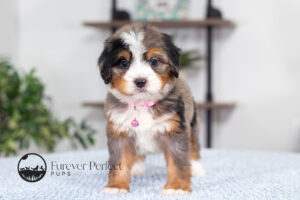
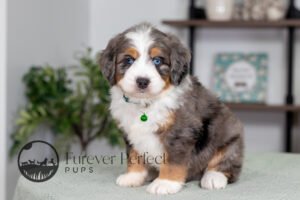
Most of our Maltipoo litters are expected to land around 5 to 10 pounds as adults, with a few pairings planned around 10 to 16 pounds for families who want a sturdier dog. In our experience, Maltipoos often look a little softer and rounder than Toy Poodles of the same weight, because the Maltese side brings a slightly more compact frame and a fluffier, less tightly curled coat. The Poodle variety on the sire’s side has a lot to do with where a Maltipoo litter ends up.
The more important difference is spread. Two Toy Poodle parents produce puppies that tend to finish fairly close to one another. In an F1 Maltipoo litter, each puppy inherits a different mix from two different breeds, so littermates can finish a few pounds apart. Neither breeder can promise an exact adult weight, and we never do, but the Toy Poodle range is usually narrower.
Poodles placed second of all breeds in Stanley Coren’s research on working and obedience intelligence, and Toy Poodles carry that full intelligence. In our experience, a Toy Poodle is alert, quick, a little sensitive, and happiest with a job to do. They pick up tricks and routines with startling speed, and they get bored with repetition just as fast. A Toy Poodle that is not given something to think about will find something, and you may not like its choice.
Maltipoos as a group tend to be a little softer. The Maltese half tilts them toward company over work: they still learn quickly, but in our experience they are often more content to curl up beside you than to be kept busy, and they lean harder into being Velcro dogs. Families who want a cuddly shadow often find a Maltipoo suits them. Families who want a small dog to train, run through tricks, or take into a sport such as agility or rally often enjoy a Toy Poodle more.
Both are sensitive dogs, and both respond best to reward-based training. The American Veterinary Society of Animal Behavior’s 2021 position statement recommends reward-based methods only, and a 2020 study of 92 companion dogs by Ana Catarina Vieira de Castro and colleagues found that dogs trained with aversive methods showed more stress behaviors and higher cortisol than dogs trained with rewards. With dogs this small and this tuned in to their people, harsh handling tends to produce a worried dog, not a better behaved one.
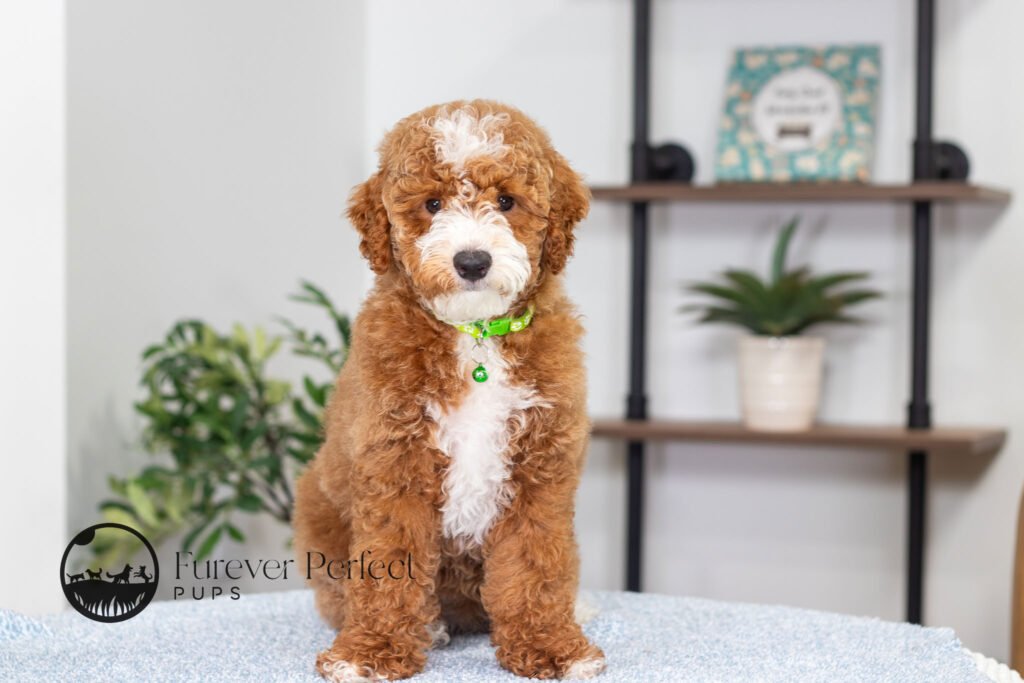
A Toy Poodle has a dense, tightly curled single coat that keeps growing. It sheds very little, but loose hair gets caught in the curls instead of falling out, so it mats if it is not brushed through to the skin. Most families keep a Toy Poodle in a short clip, with brushing a few times a week and a groomer visit every 6 to 8 weeks. Poodle coats are also endlessly shapeable, which is half the fun for some owners; our post on Poodle haircuts covers the common options.
An F1 Maltipoo coat sits between its parents: usually soft and wavy, sometimes a looser curl, and silkier than a Poodle’s. It also sheds very little and also keeps growing, but it tends to tangle in different places, behind the ears, under the collar, and in the armpits. Plan on a quick daily brush and a groomer visit every 8 to 12 weeks. Because F1 coats vary, two Maltipoo littermates can need noticeably different amounts of brushing.
The Allergy Question
Both dogs are often sold as hypoallergenic, and neither is. No dog is truly hypoallergenic, because every dog produces the main dog allergen, a protein called Can f 1, in its skin, saliva, and dander. A 2012 study by Dorine Vredegoor and colleagues in the Journal of Allergy and Clinical Immunology measured Can f 1 in the coats and homes of so-called hypoallergenic breeds, including Poodles, and found no evidence that those homes had less allergen in them. What a low-shedding coat can do is spread less hair around the house, which some mildly sensitive people notice. It does not protect someone with serious dog allergies, and nothing we know of suggests a Maltipoo is better or worse than a Toy Poodle on this point. Our post on Poodles and allergies goes into more detail.
One of the most common reasons families give for choosing a cross is that it will be healthier. The evidence on that is mixed. A 2013 Royal Veterinary College study of dogs in English veterinary practices, led by Dan O’Neill, found crossbred dogs lived about 1.2 years longer than purebreds on average. But a much larger 2024 UK study of more than 580,000 dogs, published in Scientific Reports, found purebreds lived slightly longer than crossbreds, and its authors suggested the rise of deliberately bred designer crosses may be part of the reason. A 2013 JAVMA study by Thomas Bellumori and colleagues at UC Davis, covering more than 27,000 dogs, found no difference between purebreds and mixed breeds in the rate of several inherited conditions, including patellar luxation and hip dysplasia.
The practical takeaway is that a cross only avoids a problem when the two parent breeds do not share it. The Maltese and the Toy Poodle share several of the same toy-breed issues, so for those, the health testing of the parents matters far more than the cross itself.
Shared by Both
- Luxating patella: The kneecap slips out of place. The American Maltese Association names it one of the most common problems in Maltese and other toy breeds, and the Poodle Club of America includes a patellar evaluation in its recommended screening for Toy Poodles.
- Dental disease: A 2021 Royal Veterinary College study of more than 22,000 dogs found Toy Poodles had the highest odds of periodontal disease of any breed studied, and that risk fell as body weight rose. Daily tooth brushing matters for both dogs.
- Low blood sugar in young puppies: The AKC notes toy puppies are most vulnerable between about 6 and 12 weeks old and recommends small meals four to five times a day until about four months. Both of our breeds go home at 9 weeks, right inside that window.
- PRA-prcd: An inherited, recessive eye disease that leads to blindness. The Poodle Club of America calls for a PRA-prcd DNA test on Toy Poodle parents, and a tested pair cannot produce an affected puppy.
Where They Differ
Legg-Calvé-Perthes Disease
The top of the thigh bone loses its blood supply and breaks down, causing a limp that usually worsens over a few weeks. The Orthopedic Foundation for Animals says it is most often seen in miniature and toy breeds between about 4 months and a year old, lists the Poodle among breeds at risk, and keeps a registry for it. It is believed to be inherited, though the exact mode is not known. A Maltipoo can inherit risk from its Poodle parent too.
Liver Shunt (Portosystemic Shunt)
An abnormal blood vessel lets blood bypass the liver. A JAVMA review of 2,400 cases by Karen Tobias and Barton Rohrbach (2003) identified the Maltese among the breeds at increased risk. It is uncommon, but a puppy that grows poorly or seems dull or wobbly after meals should see a vet, who has simple blood tests to check for it.
Lifespans for both are long, which is one of the quiet advantages of a small dog. Research by Cornelia Kraus and colleagues published in The American Naturalist in 2013 found that larger dogs age faster than smaller ones, and small breeds as a group live longer. The AKC lists 12 to 15 years for the Maltese and 10 to 18 years for the Poodle. No one can promise a specific lifespan for any dog, and we will not.
Our Maltese and Poodle parents are DNA tested through Embark or Animal Genetics for conditions including PRA-prcd, vWD1, and DM, and OFA tested once they are old enough. Our health testing page explains how that works, and our guide to genetic testing in Poodles covers what each test means.
When families talk through this choice with us, the answer usually comes from how they live day to day, not from the dog’s description. These are the patterns we see most.
A Toy Poodle Is Often the Better Fit If
- You want a dog to train: Tricks, rally, agility, or simply a dog that loves learning something new each week. Toy Poodles tend to thrive on it.
- Predictability matters to you: Size, coat, and adult appearance are easier to estimate from two Poodle parents than from an F1 cross.
- You enjoy grooming styles: A Poodle coat can be clipped and shaped in ways a Maltipoo coat cannot.
- You want AKC registration: For showing, sports titles, or simply the paperwork, only the Poodle qualifies.
A Maltipoo Is Often the Better Fit If
- You want a companion first: Many Maltipoos are happiest on your lap or following you from room to room, with a little less need to be kept busy.
- You like the softer look: The wavy, silky F1 coat and rounder face are a big part of the Maltipoo’s appeal, and you can keep that look without a lot of styling.
- You want a slightly sturdier small dog: Our larger Maltipoo pairings, around 10 to 16 pounds, are easier around active children than our smallest Toys.
- You are comfortable with a range: You would rather choose a pairing you love and accept some variation than pin down every detail in advance.
Both dogs suit apartments, seniors, and families with gentle, supervised children. Both are small enough to fly in the cabin on many airlines, and both are good candidates for our flight nanny service, where your puppy flies home in the cabin with one person caring for it the whole way; details are on our puppy transportation page. Neither does well left alone for long workdays, and neither is a good fit for a home with toddlers who cannot yet be gentle with a very small dog.
At a Glance: Maltipoo vs Toy Poodle
| Factor | F1 Maltipoo | Toy Poodle |
|---|---|---|
| What it is | Cross: 50% Maltese, 50% Poodle | Purebred, AKC registered |
| Size | Most of our litters around 5 to 10 lb; some pairings 10 to 16 lb | 10 inches or under at the shoulder; each listing gives expected weight |
| Predictability | Wider range within a litter | Narrower range from Poodle parents |
| Temperament tendency | Affectionate companion, strong Velcro streak | Bright, busy, loves to learn |
| Coat | Soft, wavy to loosely curled | Dense, tight curls |
| Grooming | Daily brush; groomer every 8 to 12 weeks | Brush a few times a week; groomer every 6 to 8 weeks |
| Allergies | Low shedding, not hypoallergenic | Low shedding, not hypoallergenic |
| Health to ask about | Knees, teeth, puppy blood sugar, PRA, liver shunt | Knees, teeth, puppy blood sugar, PRA, Legg-Calvé-Perthes |
| Goes home | 9 weeks | 9 weeks |
Frequently Asked Questions
Is a Maltipoo healthier than a Toy Poodle because it is a cross?
Not reliably. Crossing two breeds lowers the odds of a recessive disease only when the two breeds do not share it, and the Maltese and Toy Poodle share several of the same toy-breed problems, including luxating patella and dental disease. Large studies disagree on whether crossbreeds live longer, and a JAVMA study of more than 27,000 dogs found no difference in the rate of several inherited conditions. What protects a puppy most is health-tested parents, whichever dog you choose.
Which one is easier to house-train?
In our experience they are about the same, and both are a bit harder than larger dogs for one simple reason: a small bladder gives you very little warning. Toy Poodles tend to pick up the routine slightly faster, but consistency matters far more than breed. Crate training, taking the puppy out first thing in the morning and about every two hours at first, and a potty bell on each trip out work well for both. Our guide to housebreaking a Poodle applies to Maltipoos almost word for word.
Which is better with children?
Neither is a natural fit for very young children, because both are small enough to be hurt by squeezing, dropping, or a fall from a couch. With gentle, supervised school-age kids, both can do well. If your children are younger or very active, a Maltipoo from one of our larger pairings is usually the sturdier choice. Whichever you pick, have children sit on the floor to hold the puppy and teach them to let it walk away when it wants to.
Do Maltipoos and Toy Poodles come in the same colors?
There is overlap, but Toy Poodles come in a wider range. Our Poodles include red, ruby, apricot, cream, parti, and merle patterns, while our Maltipoos are mostly cream, apricot, ruby and red, and white with apricot. Reds and apricots in both often lighten somewhat as they grow, so a puppy’s color at 9 weeks is not always its adult color. We know the color genes our parents carry, so we can tell you what a pairing is likely to produce before the litter is born.
Can I see both before deciding?
Yes, and we encourage it. Visits are by appointment here in Millersburg, and seeing a Toy Poodle and a Maltipoo side by side, along with their parents, usually answers the question faster than any article can. If you are too far away to visit, we are glad to set up a call or video chat and walk you through the parents and current litters on our Maltipoo and Poodle pages.
What does Furever Perfect Pups do to prepare puppies before they go home?
It starts with the parents. Our Maltese and Poodle parents are DNA tested and OFA tested once they are old enough, with results posted on their profile pages. From day 3 through day 16, every puppy goes through Early Neurological Stimulation, short daily handling exercises meant to help them handle stress and new experiences, along with Early Scent Introduction, a new scent each day from a scent tin. After their eyes and ears open we add household sounds, new textures, the crate, and the leash, and we handle them constantly so they are relaxed for nail trims, the groomer, and the vet. That is all part of our ENS pre-training program. At six weeks an independent professional trainer evaluates every litter and writes each puppy’s description, so what you read about a puppy comes from an outside professional rather than from us. Both our Maltipoos and our Poodles go home at 9 weeks, and the conversation continues after that, because buying a puppy from us means gaining a lifelong resource for every question that comes up as your dog grows.
Final Thoughts
A Toy Poodle and a Maltipoo share a lot: small size, a low-shedding coat, a bright mind, and a strong attachment to their people. The differences are in degree. The Toy Poodle tends to be the busier, more predictable, more trainable of the two. The Maltipoo tends to be the softer companion, with a little more variety from puppy to puppy.
Neither choice is a mistake, and neither dog is healthier just because of what it is. Choose based on how you live, how much predictability matters to you, and how much time you want to spend training versus cuddling. Then choose parents whose health testing you can see.
If you would like to talk it through, we are always happy to. You can also read our Maltipoo 101 guide for a deeper look at life with a Maltipoo.